A life in context
The person behind the prize
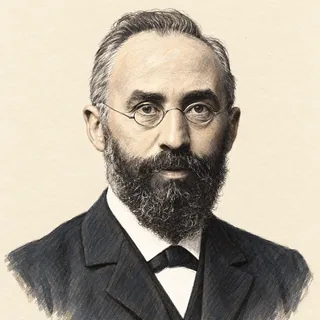
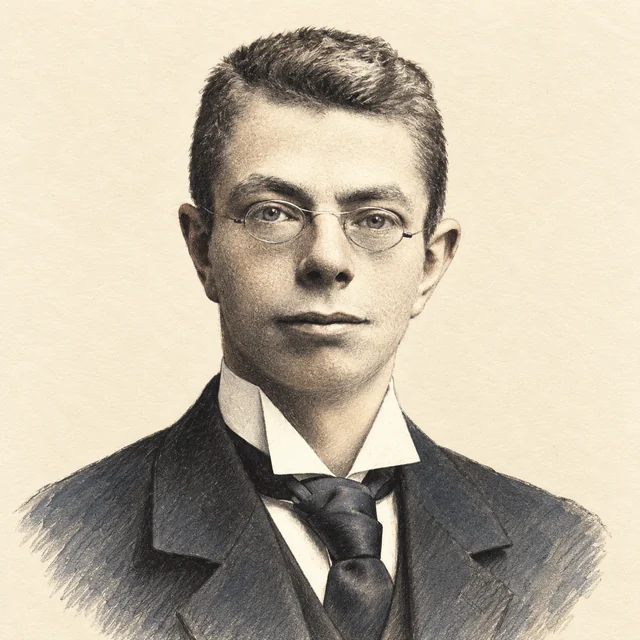
Pieter Zeeman was born at Zonnemaire in Zeeland. His early interest in observation was evident in an account of an aurora published in Nature in 1883, while he was still a school student. He entered Leiden University in 1885 and studied with Kamerlingh Onnes and Lorentz. Work on the Kerr effect, an optical phenomenon involving magnetism, formed the subject of his doctorate in 1893. After a period in Strasbourg he returned to Leiden and continued investigating connections between light and magnetic fields. In 1896 he examined whether a magnetic field changed the radiation emitted by a substance. The investigation revealed changes in spectral lines, including their splitting into components. A line in a spectrum represents a particular wavelength or frequency; changing its pattern therefore gave a precise way to study the relation between matter, light and magnetism. Lorentz’s electron theory supplied an explanation for a simple case and predictions about polarisation. Further measurements linked the experimental effect with the behaviour of charged constituents of matter. Zeeman moved to Amsterdam as a lecturer in 1897, became extraordinary professor in 1900 and later succeeded van der Waals as professor and laboratory director in 1908. He shared the 1902 Physics Prize equally with Lorentz. Their collaboration should not obscure the limits of the initial account: many patterns could not be explained by the original classical model, and the later development of quantum theory and spin was essential. The effect also offered a way to investigate magnetic fields in astronomical objects through their spectra, an application developed through further work including observations by George Ellery Hale. A new Amsterdam laboratory opened for Zeeman in 1923, and he retired in 1935. He died in Amsterdam in 1943. His career shows how a small change in a carefully observed line can become a probe of physical processes that are otherwise difficult to see.
The contribution
Zeeman observed how a magnetic field changes spectral lines emitted by matter. His half share recognised the experimental discovery, paired with Lorentz’s theoretical contribution; the effect concerns the source’s spectrum, not a magnet simply bending a free beam.
The idea in plain language
A spectrum separates light by wavelength. A narrow emission line provides a precise feature to compare. When the emitting substance is placed in a magnetic field, that line can split into components: the Zeeman effect. The change concerns the source’s emission, not simply a magnet bending a beam travelling through empty space.
Read the full award story ↗