A life in context
The person behind the prize
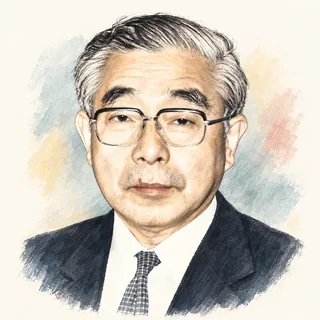
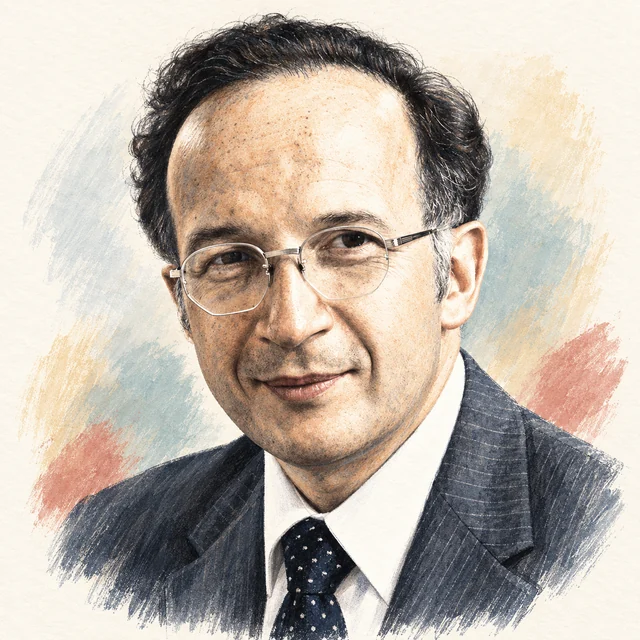
Born Roald Safran into a Jewish family, Hoffmann survived Nazi persecution with his mother after escaping a labour camp and being hidden by a Ukrainian family. His father was killed. After the war the family lived in displaced-persons camps and reached the United States in 1949. At Columbia, chemistry and the humanities both attracted him. He earned his Harvard doctorate in 1962, working with William Lipscomb and Martin Gouterman. His approximate molecular-orbital calculations developed into a practical language for bonding and reactions. Collaboration with Robert Woodward led to orbital-symmetry rules; Hoffmann joined Cornell in 1965. Teaching remained central to his career. His later published poetry and television teaching extend beyond the work recognised in 1981.
The contribution
Hoffmann used molecular orbitals and symmetry to explain the course of chemical reactions, notably through collaboration with Woodward on concerted reactions. He received one half of the Chemistry Prize, alongside Fukui. Orbital diagrams connect quantum descriptions with chemical intuition, while their predictions depend on the reaction mechanism and conditions.
The idea in plain language
Knowing which atoms are present does not by itself explain why a reaction follows one path rather than another. Electrons occupy molecular orbitals: quantum states with energies and spatial wave-function patterns. Fukui focused attention on frontier orbitals, especially the highest occupied and lowest unoccupied states. Their energies and patterns help describe how electrons can be redistributed when reactants approach.
Read the full award story ↗