A life in context
The person behind the prize
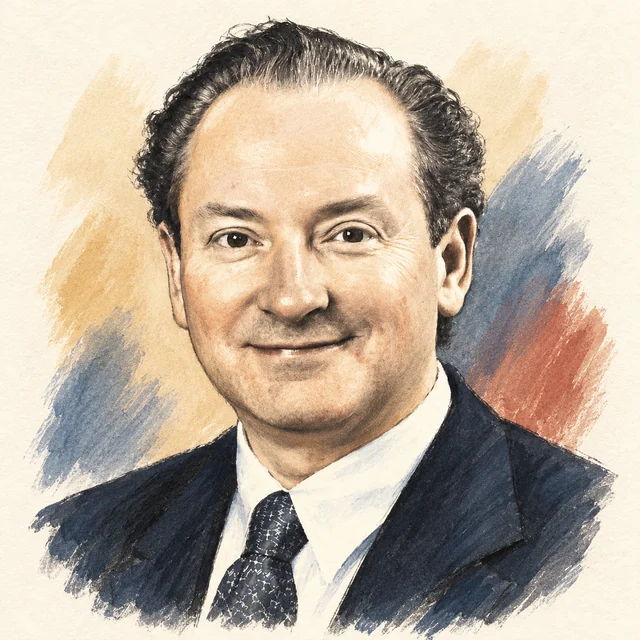
Merton grew up in New York with interests in mathematics, engineering and cars. He studied at Columbia and Caltech before turning to economics at MIT. He later taught at MIT and Harvard. His research used mathematical tools to analyze decisions made over time, linking uncertainty, investment and the valuation of financial contracts.
The contribution
Merton developed a continuous-time approach to option valuation and an alternative derivation of the formula associated with Black and Scholes. He generalized the method to a wider range of contingent claims. The key was to relate a derivative’s value to a dynamically adjusted portfolio and a no-arbitrage condition, rather than independently guessing a risk premium for the option. The result depends on the model’s market assumptions.
The idea in plain language
An option gives a right, without an obligation, to make a specified transaction. Its value depends on an uncertain underlying price. Black and Scholes’s 1973 work and Merton’s alternative derivation showed how to link that value to a portfolio of other assets adjusted over time. If the portfolio reproduces the option’s payoff, a no-arbitrage argument connects their prices.
Read the full award story ↗