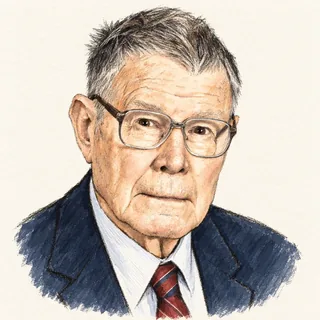
A life in context
The person behind the prize
Aumann was born in Frankfurt into a Jewish family that moved to New York in 1938 because of Nazi persecution. He received his mathematics doctorate at MIT in 1955 and moved to Jerusalem in 1956, joining the Hebrew University. His research brought mathematical precision to questions about strategic interaction, information and what people know about one another’s knowledge.
The contribution
Aumann developed rigorous analysis of repeated games: situations in which the same participants interact again and again. The prospect of future rewards or responses can make cooperation sustainable even when a one-off encounter creates incentives to defect. His work also addressed incomplete information, common knowledge and correlated equilibrium. Cooperation is a possible outcome under specified conditions, not an automatic result of repetition.
The idea in plain language
When the outcome depends on what several people do, choosing well means considering their choices too. Schelling showed how a credible commitment can change another party’s expectations, and how a shared focal point can help people coordinate even without an explicit agreement. An option that looks attractive in isolation may become less useful once others respond to it.
Read the full award story ↗