A life in context
The person behind the prize
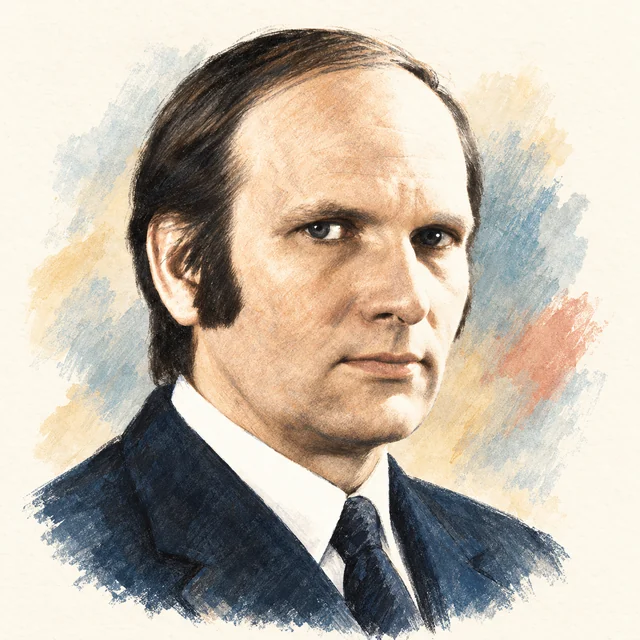
Schrieffer grew up in Illinois, New York and Florida. At MIT he began in electrical engineering and changed to physics, writing a bachelor’s thesis on atomic structure with John Slater. Graduate study at Illinois brought him into Bardeen’s group. After research on semiconductor surfaces, he joined Bardeen and Cooper in developing superconductivity theory. The collective quantum description became his doctoral dissertation in 1957. Postdoctoral work took him to Birmingham and Copenhagen, followed by appointments at Chicago and Illinois. He joined Pennsylvania in 1962 and became its Mary Amanda Wood professor in 1964. Later positions at Santa Barbara and Florida State came after the award. His contribution belonged to the joint BCS account of correlated electrons, rather than an experimental discovery of superconductivity.
The contribution
Schrieffer helped formulate the many-electron superconducting state within the BCS theory, developed during his graduate research. He received one third of the Physics Prize.
The idea in plain language
In the lattice-based mechanism described by the 1972 announcement, electron interactions with crystal vibrations can provide an effective attraction. Cooper’s 1956 model showed how a bound pair could arise above a filled Fermi sea. A pair here is a quantum correlation, not two charged balls glued together or a tiny isolated molecule.
Read the full award story ↗