A life in context
The person behind the prize
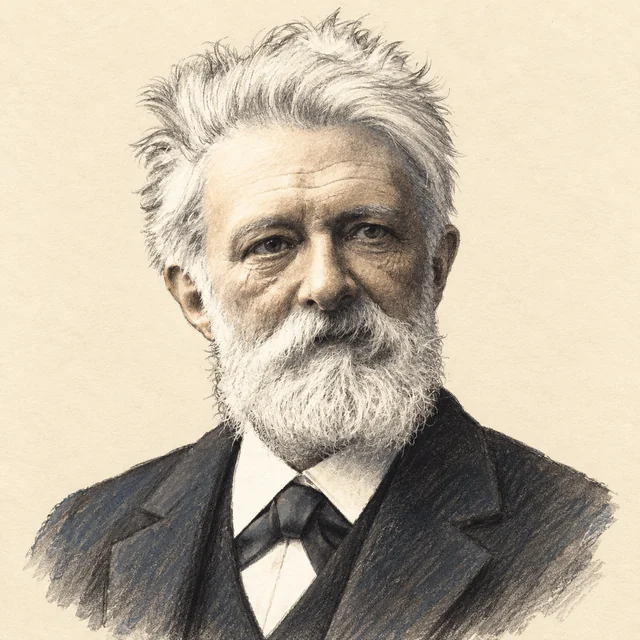
Rudolf Christoph Eucken grew up in Aurich in East Friesland and studied philosophy, classical philology and history at Göttingen. He completed a doctorate in 1866, taught in secondary schools and became professor of philosophy in Basel in 1871. In 1874 he moved to Jena, where he remained until retirement in 1920. Historical study of philosophical language and earlier thinkers became a route towards a philosophy concerned with how people should live. The Problem of Human Life as Viewed by the Great Thinkers appeared in 1890, followed by works on spiritual life, religion and the meaning of existence. His Basic Concepts of Modern Thought, first published in 1878, grew into the expanded 1908 edition called Main Currents of Modern Thought. Eucken argued that people should actively cultivate an ethical and spiritual life rather than let external circumstances or material interests determine every aim. This was an idealistic philosophical position, expressed through accessible and forceful prose, rather than a scientific discovery. The Swedish Academy awarded him the full Literature Prize in 1908 for the thought and presentation of his broader authorship. His home with his wife Irene, an artist, became a meeting place for international students and cultural figures. Yet international contact did not prevent political nationalism: he supported the monarchy and participated in First World War propaganda. In 1912 he held an exchange professorship at Harvard, and his writings reached readers beyond Germany. He died in Jena in 1926. His Nobel recognition illustrates the prize’s historical inclusion of philosophical prose, while his political record complicates any simple picture of universal spiritual fellowship.
The contribution
Eucken received the full Literature Prize for an idealistic philosophy of life expressed with breadth and force. His philosophical prose addressed ethical effort, spiritual purpose and the human meaning of modern civilisation.
The idea in plain language
Eucken studied the changing language and problems of philosophy rather than treating every new system as an entirely fresh beginning. His historical accounts of great thinkers asked how different ages understood human life. Concepts were tools shaped by their time, and examining them could reveal the assumptions of modern civilisation.
Read the full award story ↗

