c.curionodeThe Nobel Archive

1908 · Literature

Make the meaning of life a question of active thought

Modern science and industry changed the conditions of life without settling its purposes. Eucken used philosophical prose to ask how ethical effort and spiritual life could give human action direction.

Philosophical proseIdealismEthical action
1908Literature

Visual guide

The prize, pictured

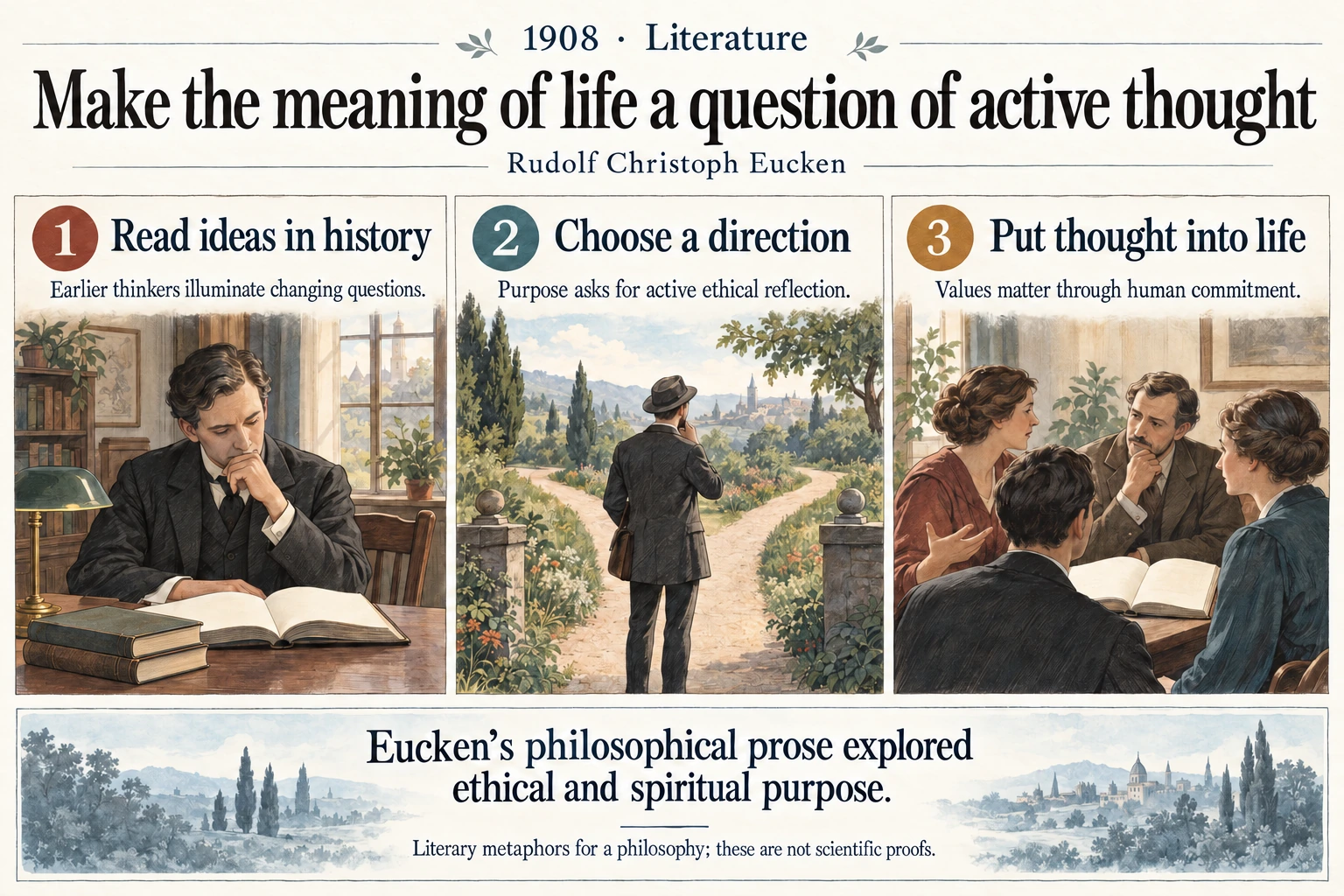
Infographic explaining Make the meaning of life a question of active thought
Original AI-generated infographic. A conceptual overview; the explanations and sources below provide context.
Read the poster text

Eucken’s philosophical prose explored ethical and spiritual purpose.

  1. Read ideas in history

    Earlier thinkers illuminate changing questions.

  2. Choose a direction

    Purpose asks for active ethical reflection.

  3. Put thought into life

    Values matter through human commitment.

Literary metaphors for a philosophy; these are not scientific proofs.

01 · The contribution

The idea, in everyday language

Eucken studied the changing language and problems of philosophy rather than treating every new system as an entirely fresh beginning. His historical accounts of great thinkers asked how different ages understood human life. Concepts were tools shaped by their time, and examining them could reveal the assumptions of modern civilisation.

His own idealistic philosophy emphasised active participation in a life of ethical and spiritual purpose. People should not simply drift with habit, external pressures or material advantage. The Swedish Academy recognised both the range of this thought and the warmth and force of its presentation. The award concerned a broad body of philosophical writing, not one novel, an experiment or a proof that his metaphysical views were true.

Why it matters

The prize illustrates a wide historical understanding of literature that includes philosophical prose reaching a general readership. Eucken made questions about values, self-determination and modern life accessible beyond specialist debates.
02 · The people

Who brought the idea to life?

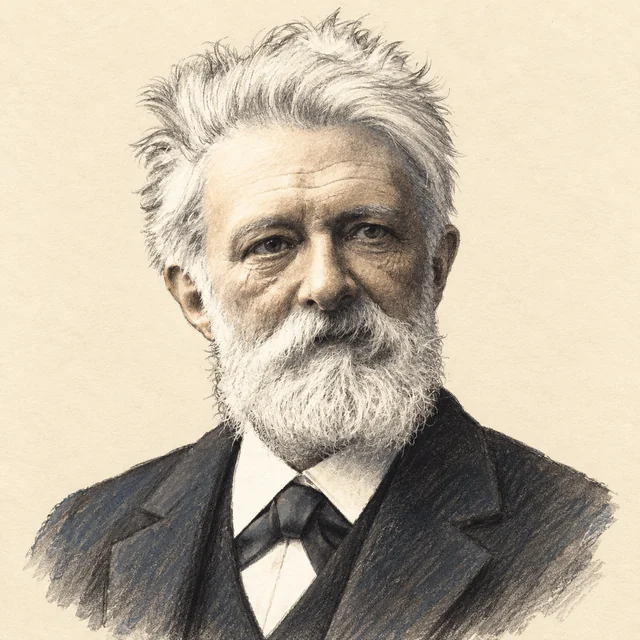
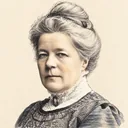
Illustrated portrait of Rudolf Christoph Eucken

Rudolf Christoph Eucken

Prize share · 1

Eucken received the full Literature Prize for an idealistic philosophy of life expressed with breadth and force. His philosophical prose addressed ethical effort, spiritual purpose and the human meaning of modern civilisation.

Read the biography ↗

03 · Years in the making

The path here

  1. 1866

    Eucken completes his doctorate at Göttingen.

  2. 1871

    He becomes professor in Basel.

  3. 1874

    He moves to the University of Jena.

  4. 1878

    Basic Concepts of Modern Thought first appears.

  5. 1890

    His study of the life views of great thinkers appears.

  6. 1908

    An expanded Main Currents edition appears; he receives the Literature Prize.

  7. 1920

    He retires from Jena.

  8. 1926

    He dies in Jena.

04 · Read further

From the original sources

Original explanations by Curionode, based on the official records below. Biographical details and affiliations refer to the award year.

  1. Official award summary nobelprize.org
  2. Award ceremony speech nobelprize.org
  3. University of Jena: Eucken’s philosophy and public life lichtgedanken.uni-jena.de

More in Literature

Browse this subject ↗