01 · The contribution
The idea, in everyday language
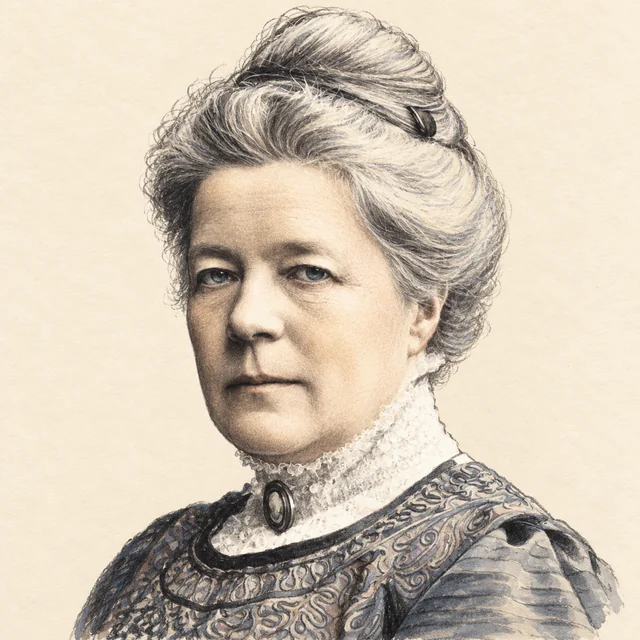
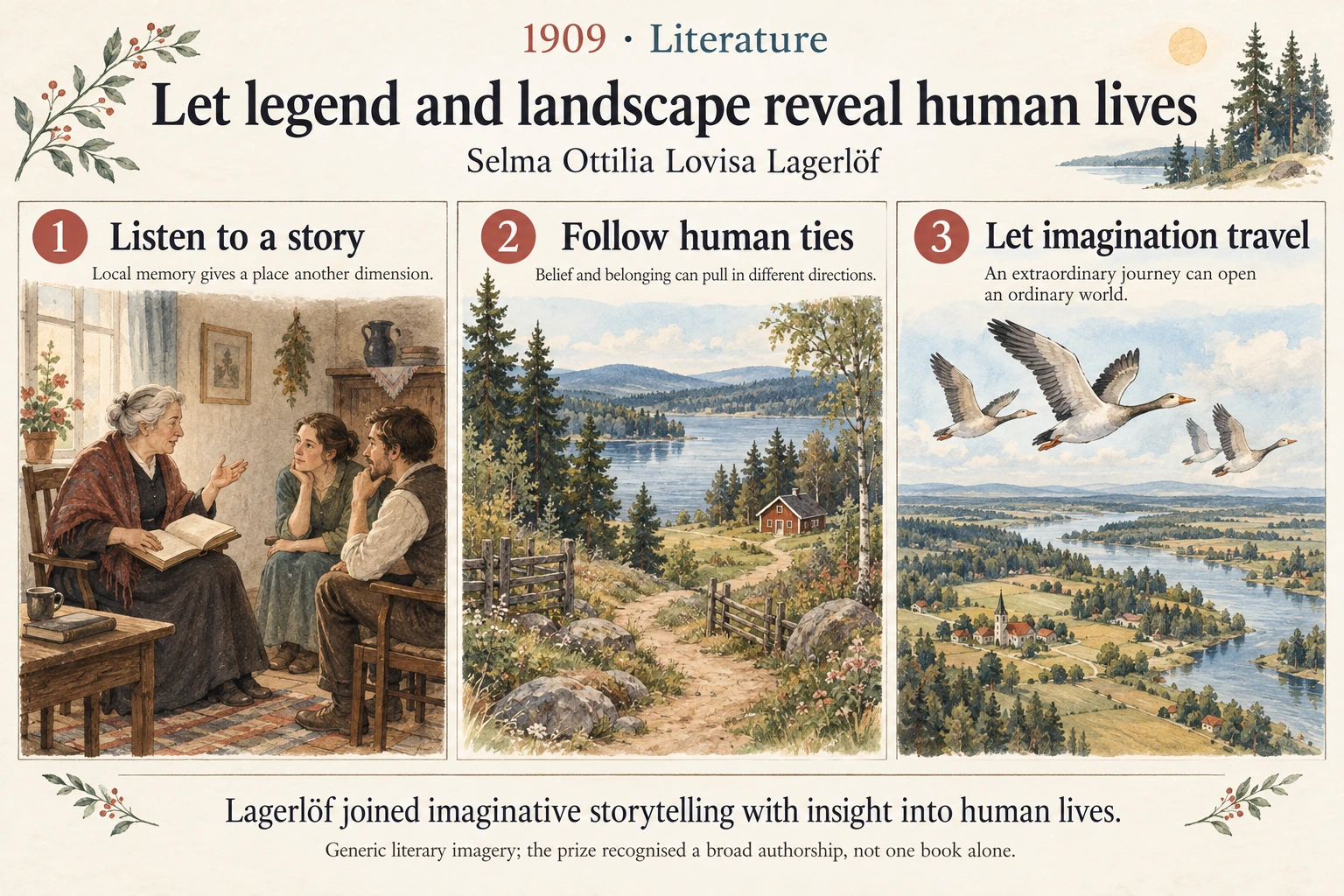
Gösta Berling’s Saga joined the stories and people of Värmland with an expansive narrative imagination. Legendary and marvellous elements did not remove the human questions of dependence, love, guilt and responsibility. In Jerusalem, the pull of religious conviction and a journey away from home gave form to tensions between faith, community and attachment to the land.
The Wonderful Adventures of Nils took a different route: a school geography and reading project became an imaginative journey through Sweden, published in two parts in 1906 and 1907. It belongs within a broad authorship, not as the sole book rewarded in 1909. The Nobel citation recognised idealism, imagination and insight into inner life across her writing. These were judgements about literature, not findings that its supernatural events were factual.
Why it matters
Her prose expanded the place of legend and imaginative storytelling in modern literature, carrying local material across languages and generations. The first woman’s Literature Prize also marked an institutional milestone, distinct from the work’s artistic qualities.