A life in context
The person behind the prize
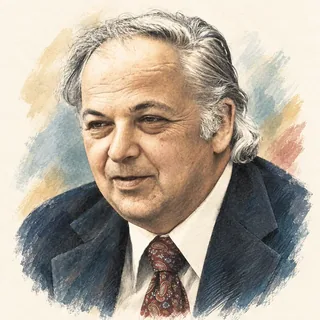
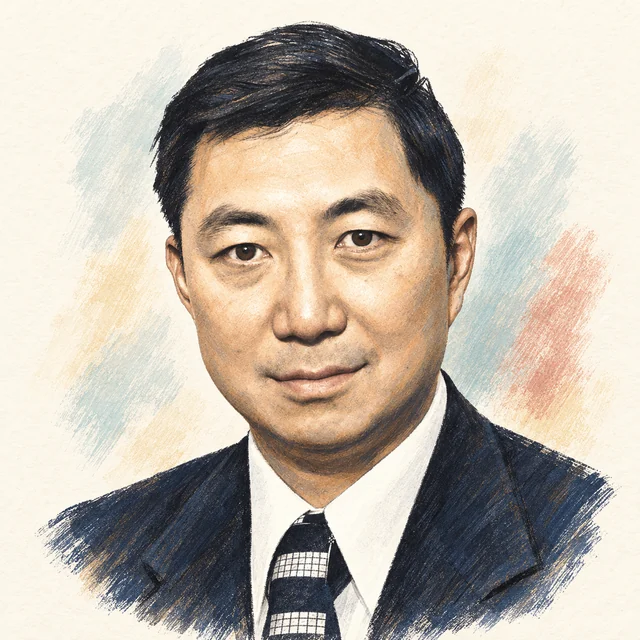
Ting was born in Ann Arbor while his parents were visiting the United States and grew up in China during wartime. His mother and grandmother’s commitment to education left a lasting impression. He returned to the United States in 1956, studied mathematics and physics at Michigan and completed his doctorate in 1962. Work at CERN, Columbia and DESY developed his expertise in detecting electron or muon pairs against intense backgrounds. He joined MIT in 1969 and began an experiment at Brookhaven in 1971. In 1974 his team found a sharp feature in electron–positron pair masses, evidence of a new heavy particle that they called J. Richter’s separate experiment found the same particle. The award recognised precision experiments and teamwork rather than a directly photographed isolated quark.
The contribution
Ting’s group used a proton beam and a fixed beryllium target at Brookhaven, inferring the J particle from its decay products. He received half the Physics Prize alongside Richter for independent discoveries of J/psi.
The idea in plain language
At SLAC, Richter’s collaboration varied the energy of electrons and positrons colliding in the SPEAR storage ring. At a particular energy, particle production rose sharply: a narrow resonance signalled an unexpectedly long-lived state. At Brookhaven, Ting’s team directed protons into a stationary beryllium target and selected rare electron–positron pairs from a large background. Their measured energies and momenta allowed the team to infer the mass of a parent particle. These were independent experiments with different methods, not two stages of one apparatus.
Read the full award story ↗