A life in context
The person behind the prize
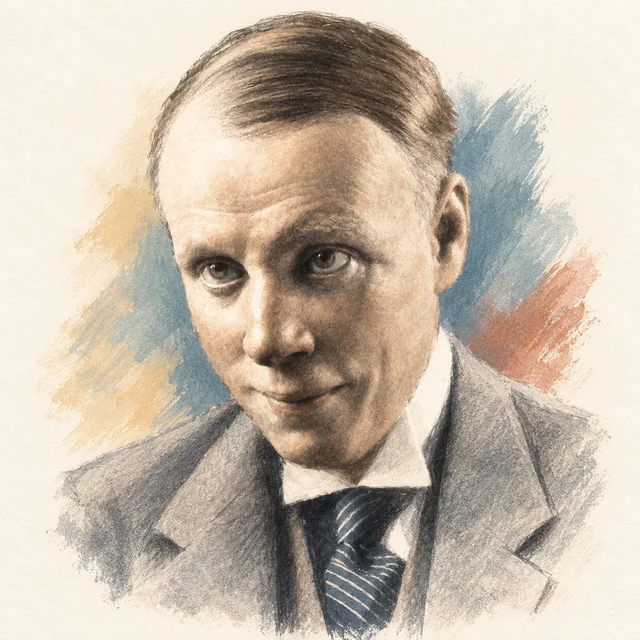
Lewis grew up in a Minnesota town and studied at Yale, where he contributed poems and stories to the literary magazine. Journalism, publishing and editorial work gave him experience with the language of public life and commerce. His early fiction included a 1912 book under the name Tom Graham and Our Mr. Wrenn in 1914. Main Street, published in 1920, brought wide attention to his portrayal of small-town conformity and frustrated reform. Babbitt followed in 1922, Arrowsmith in 1925, Elmer Gantry in 1927 and Dodsworth in 1929. He declined the 1926 Pulitzer Prize awarded to Arrowsmith. The 1930 Nobel Prize recognized his descriptive art, wit and creation of memorable social characters, rather than one later political novel. It Can’t Happen Here appeared in 1935, after this award. Lewis’s fiction combined criticism of institutions with contradictory, recognizable human voices. He continued writing in later decades and died in Rome in 1951.
The contribution
Lewis received the full Literature Prize for vivid descriptive art and the witty creation of new character types. His novels made the speech, aspirations and contradictions of American social life material for satire.
The idea in plain language
Main Street follows Carol Kennicott’s frustrated efforts to reform a small town. Babbitt explores a prosperous businessman’s attachment to respectability, success and the opinions of his peers. Their speech, habits and self-justifications give Lewis’s satire its force. The characters can be comic and compromised without becoming simple examples of good and evil.
Read the full award story ↗

