c.curionodeThe Nobel Archive

1930 · Literature

Turning everyday speech into social satire

Lewis made the voices of small towns, business and public institutions into sharp, recognizable fiction. His 1930 prize recognized descriptive art, wit and character creation.

SatireAmerican fictionMain StreetBabbitt
1930Literature

Visual guide

The prize, pictured

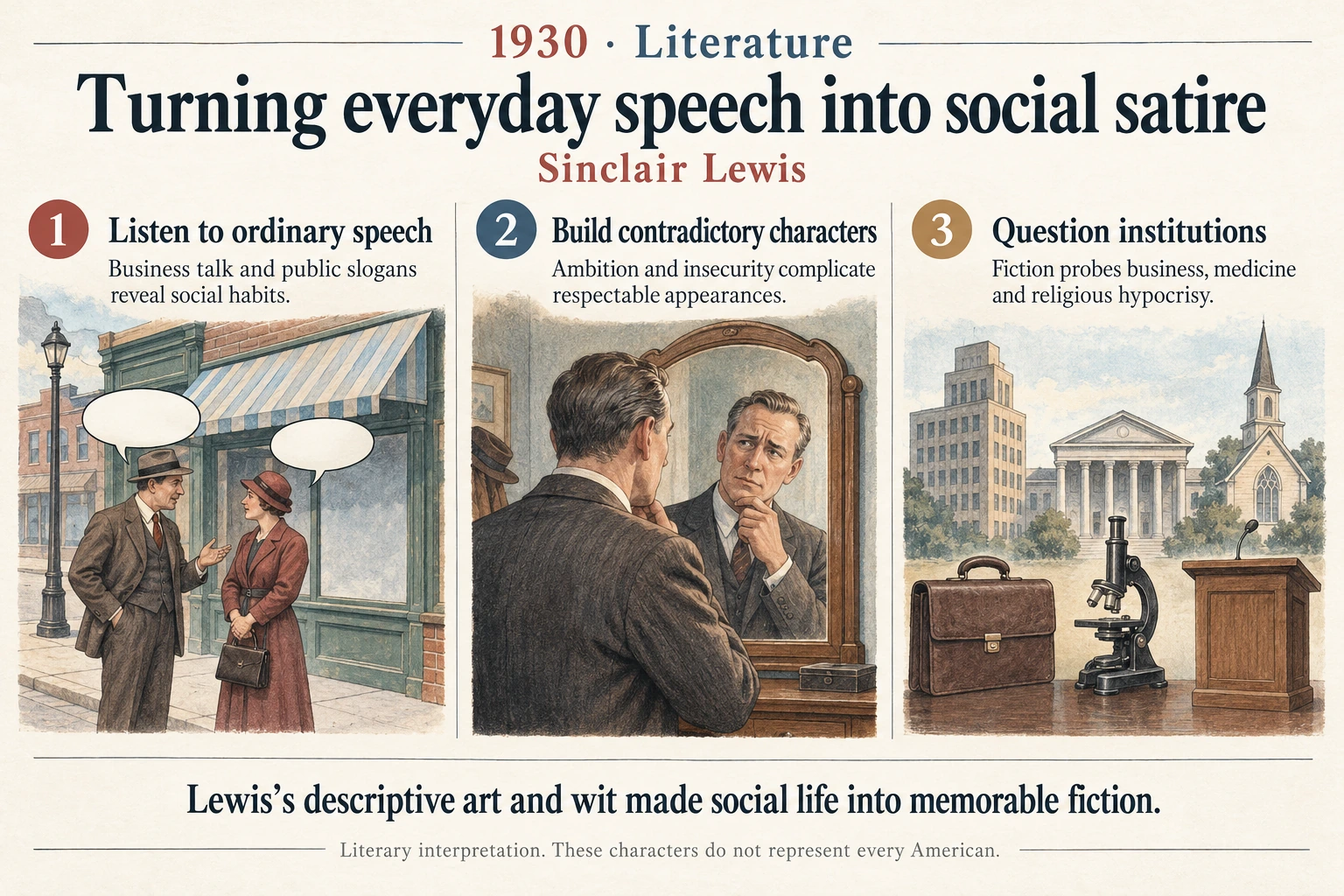
Infographic explaining Turning everyday speech into social satire
Original AI-generated infographic. A conceptual overview; the explanations and sources below provide context.
Read the poster text

Lewis’s descriptive art and wit made social life into memorable fiction.

  1. Listen to ordinary speech

    Business talk and public slogans reveal social habits.

  2. Build contradictory characters

    Ambition and insecurity complicate respectable appearances.

  3. Question institutions

    Fiction probes business, medicine and religious hypocrisy.

Literary interpretation. These characters do not represent every American.

01 · The contribution

The idea, in everyday language

Main Street follows Carol Kennicott’s frustrated efforts to reform a small town. Babbitt explores a prosperous businessman’s attachment to respectability, success and the opinions of his peers. Their speech, habits and self-justifications give Lewis’s satire its force. The characters can be comic and compromised without becoming simple examples of good and evil.

Other novels widen the field. Arrowsmith examines scientific integrity under professional and commercial pressures; Elmer Gantry attacks religious hypocrisy; Dodsworth explores American and European manners through a marriage in conflict. These works appeared before the 1930 award. It Can’t Happen Here, published in 1935, belongs to Lewis’s later career and was not the book for which this prize was given.

Why it matters

Lewis gave recognizable social types individual voices and contradictions. His wit made institutions and comfortable assumptions open to criticism through narrative rather than abstract argument. The award concerned this body of literary achievement, not a scientific discovery or a verdict that his characters represent everyone in the United States.
02 · The people

Who brought the idea to life?

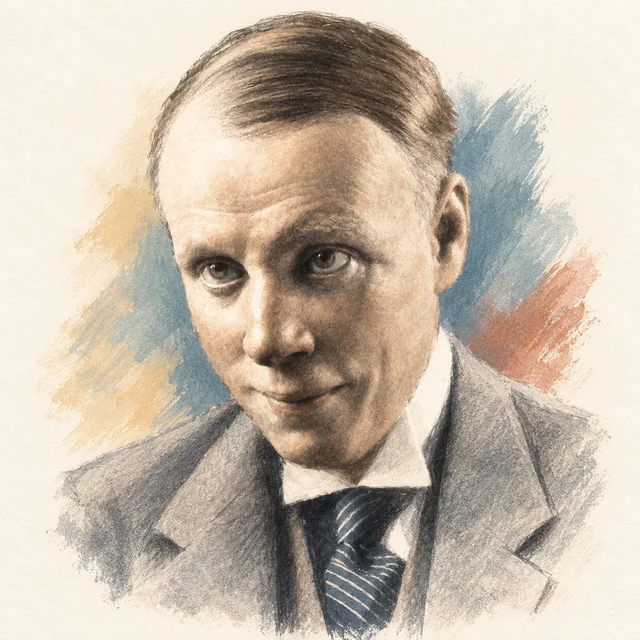
Illustrated portrait of Sinclair Lewis

Sinclair Lewis

Prize share · 1

Lewis received the full Literature Prize for vivid descriptive art and the witty creation of new character types. His novels made the speech, aspirations and contradictions of American social life material for satire.

Read the biography ↗

03 · Years in the making

The path here

  1. 1920–1922

    Main Street and Babbitt establish Lewis’s widely read social satire.

  2. 1925–1929

    Arrowsmith, Elmer Gantry and Dodsworth extend his range.

  3. 1930

    The Literature Prize recognizes his descriptive art and witty creation of characters.

04 · Read further

From the original sources

Original explanations by Curionode, based on the official records below. Biographical details and affiliations refer to the award year.

  1. Official award summary nobelprize.org
  2. Award ceremony speech nobelprize.org
  3. Official recipient bibliography nobelprize.org
  4. Pulitzer: the 1926 Arrowsmith award pulitzer.org

More in Literature

Browse this subject ↗