A life in context
The person behind the prize
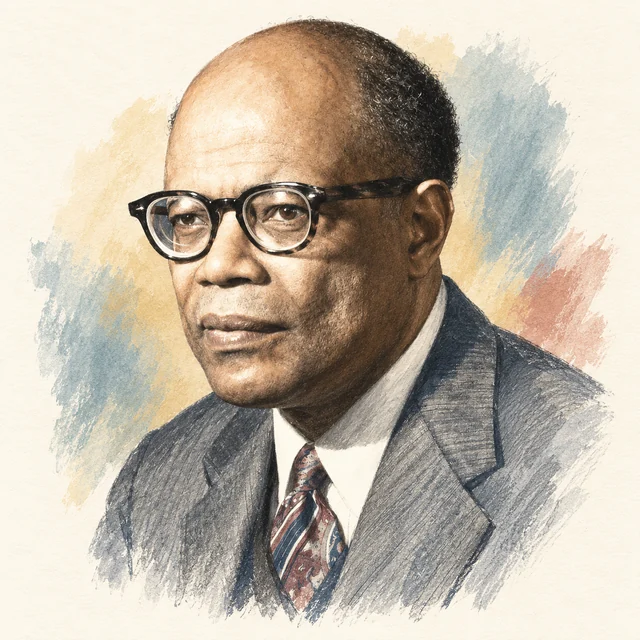
Lewis grew up in Saint Lucia, where colonial racial barriers narrowed the professions open to a young Black student. A scholarship took him to the London School of Economics in 1933. He studied commerce and industrial economics, began teaching there in 1938, and became a professor at Manchester in 1948. Teaching students from Asia and Africa helped focus his development research. His 1954 article examined an economy with abundant labour and a growing capitalist sector, connecting investment, profits and wages. He also worked in public administration, led the University of the West Indies and helped establish the Caribbean Development Bank. He joined Princeton in 1963; historical data and policy experience remained important to his scholarship.
The contribution
Lewis developed a model of structural change linking a labour-abundant sector with capital accumulation and expanding employment. He received one half of the Sveriges Riksbank memorial prize. The model identifies a conditional mechanism, not a universal instruction to move workers from farms to cities.
The idea in plain language
Schultz challenged explanations that treated poor farmers as incapable of making sensible choices. With limited technology and incentives, people may use their available resources carefully and still remain poor. New productive opportunities, education, skills and health can change what is possible. His human-capital approach made investment in capabilities part of economic analysis, alongside the costs and conditions of that investment.
Read the full award story ↗