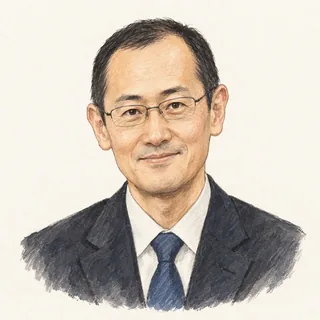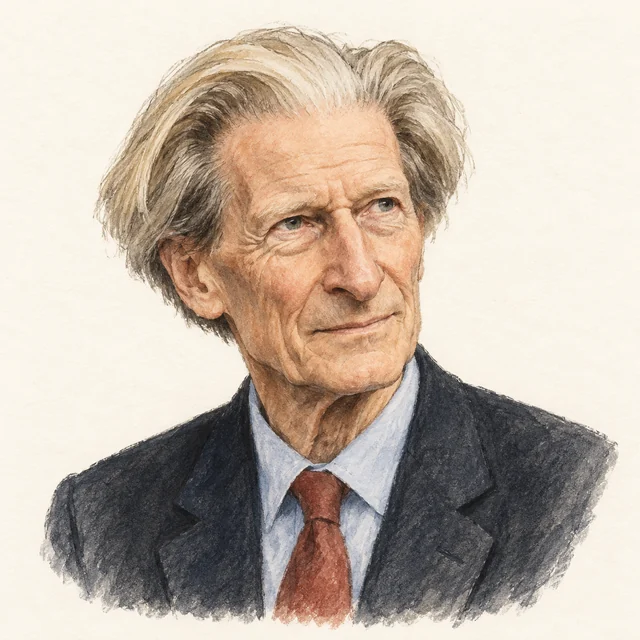
A life in context
The person behind the prize
Gurdon grew up in Britain and pursued biology despite an early school report that discouraged his scientific ambitions. He earned his doctorate at Oxford in 1960, undertook postdoctoral research at Caltech and later worked in Oxford and Cambridge. His experiments used frogs to ask a fundamental developmental question: when a cell becomes specialised, does its nucleus lose the genetic information needed to make other cell types?
The contribution
Gurdon transferred nuclei from differentiated tadpole intestinal cells into frog eggs whose own nuclear contribution had been inactivated. Some reconstructed eggs developed into normal tadpoles. The work showed that specialisation need not involve losing the genetic instructions for other cell types: the environment of the egg could reset how a transferred nucleus was used.
The idea in plain language
A developing body produces many kinds of cells from the same starting material. For a long time, it was unclear whether specialisation permanently removed genetic possibilities. Gurdon transferred nuclei from differentiated tadpole intestinal cells into frog eggs whose own nuclear contribution had been inactivated. Some developed into normal tadpoles. The specialised nucleus had retained information needed for other cell types; the egg’s environment could change how that information was used.
Read the full award story ↗