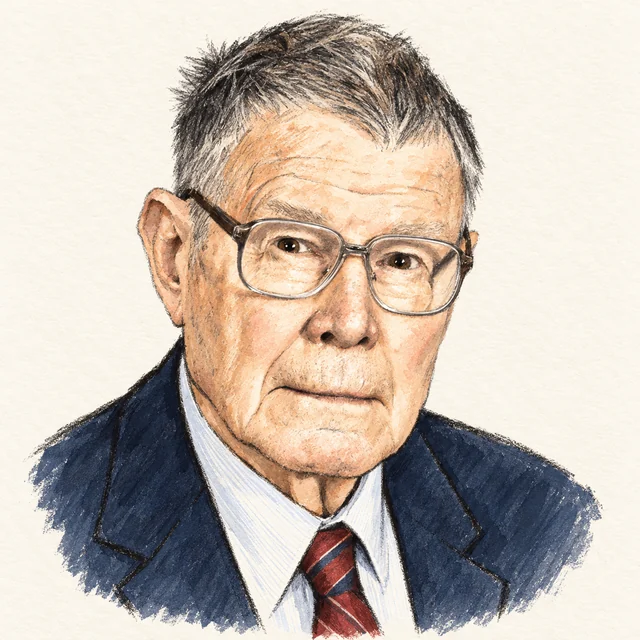
A life in context
The person behind the prize
Schelling studied economics at Berkeley and received his Harvard doctorate in 1951. He worked with the Marshall Plan and in the US government, later teaching at Harvard and the University of Maryland. He often developed economic ideas through vivid everyday examples, connecting individual choices with outcomes in bargaining, public policy and international relations.
The contribution
In The Strategy of Conflict, published in 1960, Schelling showed how commitments, expectations and shared points of reference shape strategic interaction. Sometimes restricting one’s own options can make a promise credible; sometimes a focal point helps people coordinate without communication. His work also showed how individual preferences can create unexpected collective patterns. These are analytical insights, not a general claim that threats or inflexibility always improve an outcome.
The idea in plain language
When the outcome depends on what several people do, choosing well means considering their choices too. Schelling showed how a credible commitment can change another party’s expectations, and how a shared focal point can help people coordinate even without an explicit agreement. An option that looks attractive in isolation may become less useful once others respond to it.
Read the full award story ↗