A life in context
The person behind the prize
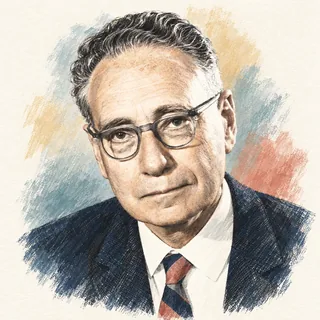
Von Euler entered Karolinska as a medical student in 1922, completed his thesis in 1930 and became an assistant professor. Research visits to laboratories in Britain and continental Europe broadened his physiological and pharmacological training. He became professor of physiology at Karolinska in 1939. His detailed Nobel biography dates identification of noradrenaline as the adrenergic neurotransmitter to 1946, whereas the short facts page gives 1947. The biography’s date is used here. With Nils-Åke Hillarp and other colleagues, he investigated storage in subcellular nerve granules and the processes of uptake, storage and release. Vesicles remain part of the nerve terminal’s machinery; the transmitter molecules released from them carry the chemical signal. His father, Hans von Euler-Chelpin, had received the Chemistry Prize in 1929; this was a distinct award to a different person. Ulf’s 1970 prize recognised neurotransmitter research, with Karolinska as his award-year affiliation.
The contribution
Von Euler identified noradrenaline as an adrenergic transmitter and investigated its storage in nerve granules. He received one third of the Medicine Prize.
The idea in plain language
Von Euler identified noradrenaline as the transmitter of adrenergic nerves and, with colleagues including Hillarp, investigated its storage in small nerve granules. Katz studied a different transmitter, acetylcholine, at the nerve–muscle junction. Small electrical responses supported the idea that release occurs in discrete quanta containing many molecules.
Read the full award story ↗