A life in context
The person behind the prize
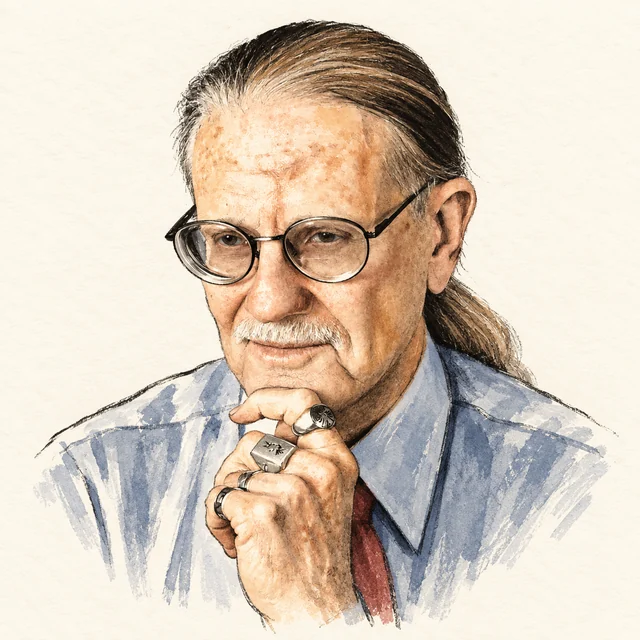
Smith began in electrical engineering, graduating from Caltech in 1949, then turned to economics and earned his Harvard doctorate in 1955. Much of the research recognised by the prize was conducted at the University of Arizona between 1976 and 2001. By the time of the award he was at George Mason University. His distinctive contribution was to make economic institutions something researchers could construct, vary and observe in controlled experiments.
The contribution
Smith gave participants the roles of buyers and sellers, with explicit rules and financial incentives. He compared outcomes with theoretical predictions and investigated how changing market rules changed the results. His work established methods for inducing values through rewards and for testing auction and trading mechanisms. Some experiments showed surprisingly effective price coordination; others exposed differences between institutions. The lesson was to test the mechanism and its assumptions, rather than assume all markets behave alike.
The idea in plain language
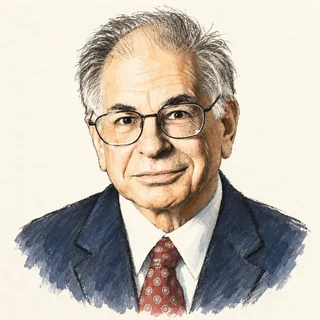
Economic models often begin with assumptions about how people evaluate choices. Kahneman, working closely with Amos Tversky, used psychological experiments to examine those assumptions. Their research showed systematic effects of mental shortcuts, reference points and framing. Prospect theory described choices under risk in ways that could account for patterns standard expected-utility models struggled to explain.
Read the full award story ↗