A life in context
The person behind the prize
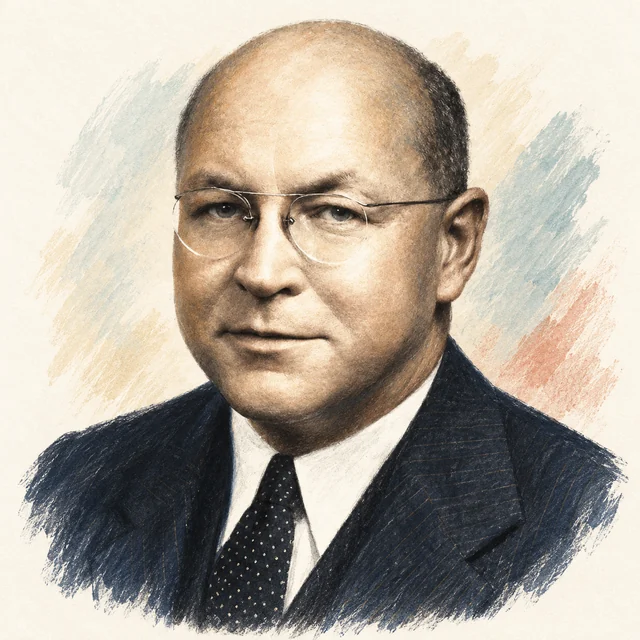
Stanley graduated from Earlham College in 1926 and earned his master’s degree in 1927 and doctorate in chemistry in 1929 at Illinois. Research with Heinrich Wieland in Munich in 1930–1931 preceded his return to the United States and appointment at the Rockefeller Institute in 1931. He investigated the chemical nature of tobacco mosaic virus, reporting a crystalline preparation in 1935. The preparation made virus material available for chemical and physical study, but his initial protein-only interpretation required revision. His later Nobel lecture acknowledged Pirie and colleagues’ report of nucleic acid in 1936 and their nucleoprotein conclusion in 1937, which he initially questioned before accepting. This distinction preserves the value of the isolation without giving Stanley sole credit for identifying every component. Princeton was his affiliation for one quarter of the 1946 Chemistry Prize. He moved to the University of California in 1948, after the award. Tobacco mosaic virus contains RNA and protein and depends on host cells for reproduction.
The contribution
Stanley prepared tobacco mosaic virus material in crystalline form, opening it to chemical investigation. He received one quarter of the Chemistry Prize; the later identification of its components involved other researchers as well.
The idea in plain language
An enzyme can make a reaction happen without being easy to isolate from the mixture in which it works. In 1926 Sumner obtained active urease crystals and argued that the enzyme itself was a protein. Northrop and collaborators, including Kunitz, extended purification and characterisation to digestive enzymes such as pepsin and trypsin.
Read the full award story ↗