A life in context
The person behind the prize
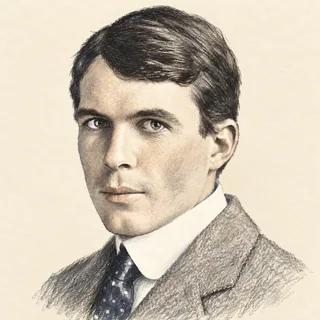
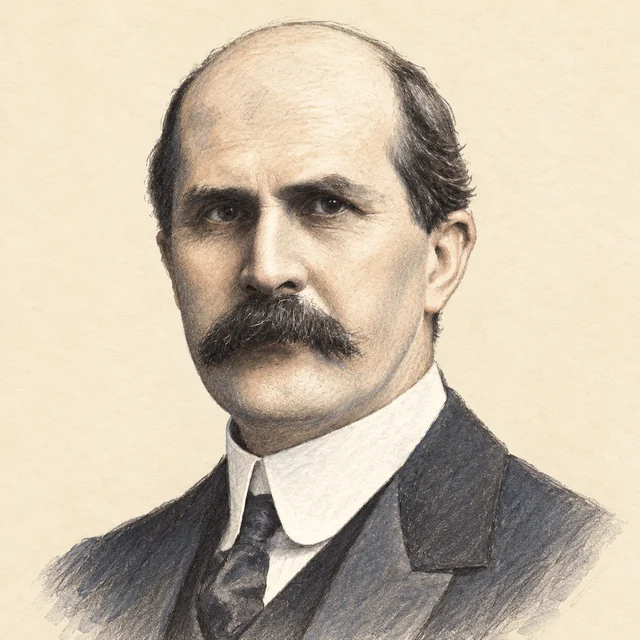
William Henry Bragg grew up in Britain, studied mathematics at Trinity College, Cambridge, and spent part of 1885 studying physics at the Cavendish Laboratory. He then took a mathematics and physics professorship at the University of Adelaide, where his son William Lawrence was born. He returned to Britain as a professor at Leeds in 1909 and moved to University College London in 1915, the affiliation recorded for his Nobel award. His interests included radioactivity, the nature of X-rays and the construction of instruments. After Max von Laue and colleagues demonstrated X-ray diffraction in crystals, Bragg and his son developed ways to use the phenomenon to investigate crystal structure. The father’s X-ray spectrometer and measurements helped turn the diffracted radiation into evidence about atomic arrangements; Lawrence supplied a powerful geometrical interpretation and structural methods. Their collaboration led to the book X-rays and Crystal Structure in 1915 and to equal shares of that year’s Physics Prize. This was a joint research achievement with distinct contributions, not a single experiment performed by two interchangeable researchers. During the First World War, William Henry worked on detecting underwater sound. He later worked at the Royal Institution and served as president of the Royal Society. His knighthood came in 1920, after the Nobel award. He died in 1942.
The contribution
William Henry Bragg received half the Physics Prize for developing X-ray analysis of crystal structure with his son. His spectrometer, experimental measurements and interpretation of X-ray behaviour made systematic structural investigation possible.
The idea in plain language
A crystal scatters X-rays from a repeating arrangement of atoms. Contributions from different parts can reinforce or cancel. Lawrence Bragg described the strong directions using families of parallel crystal planes: 2d sin θ = nλ. Here d is the spacing between planes, λ the wavelength, n an integer and θ the angle measured from the planes, not from their normal. This geometrical reflection picture expresses an interference condition; the planes are not ordinary tiny mirrors.
Read the full award story ↗