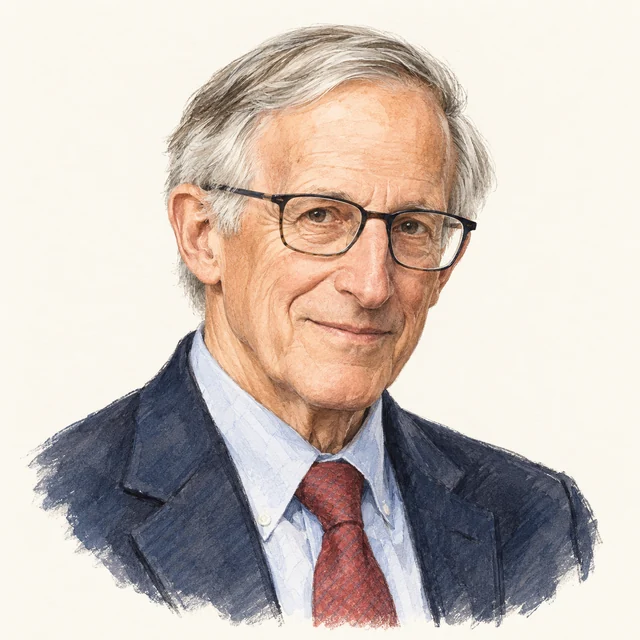
A life in context
The person behind the prize
Nordhaus studied at Yale and earned his doctorate at MIT in 1967, then returned to Yale. From the 1970s he investigated how economic activity and climate change affect one another. This required bringing ideas from natural science into economic analysis. His models created a framework for comparing possible climate policies over long periods, making assumptions and trade-offs explicit rather than treating the environment as an unchanging backdrop.
The contribution
He pioneered integrated assessment models linking economic production, emissions, climate change and economic damages. These models can compare policy scenarios such as different carbon prices. Their conclusions depend on assumptions about damages, climate responses and the weight given to future generations.
The idea in plain language
An economy changes the environment in which it operates. Production can generate emissions; emissions alter the climate; climate change can damage livelihoods and production. William Nordhaus brought these connections into integrated assessment models. Instead of analysing the economy and climate separately, the models let them affect one another over time. Researchers can compare scenarios, including different policies, while making the underlying assumptions about costs, damages and physical processes explicit.
Read the full award story ↗