01 · The discovery
The idea, in everyday language
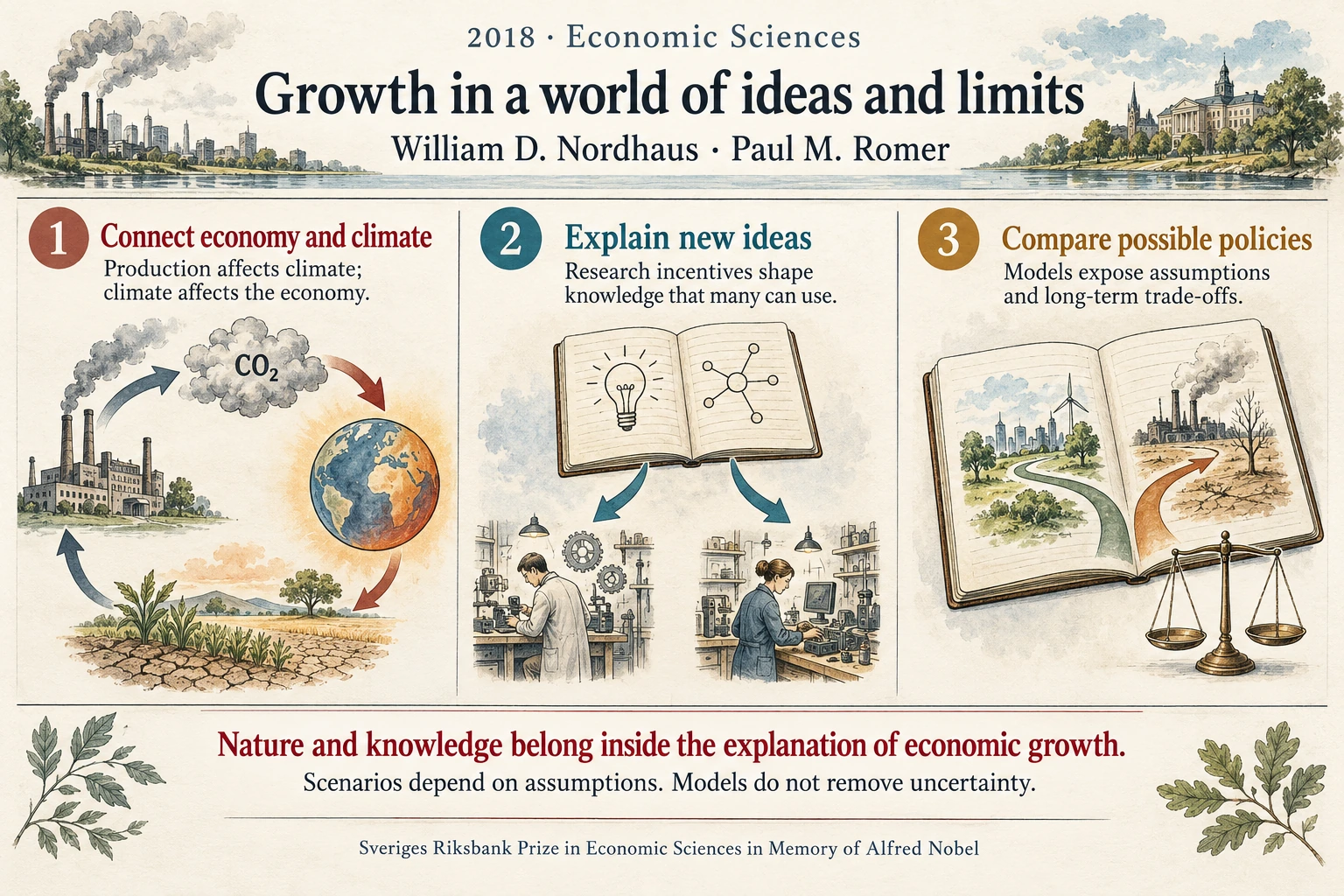
An economy changes the environment in which it operates. Production can generate emissions; emissions alter the climate; climate change can damage livelihoods and production. William Nordhaus brought these connections into integrated assessment models. Instead of analysing the economy and climate separately, the models let them affect one another over time. Researchers can compare scenarios, including different policies, while making the underlying assumptions about costs, damages and physical processes explicit.
Paul Romer examined another connection that earlier growth models often left outside the explanation: where new technology comes from. People and firms invest in research because they have incentives to create useful ideas. An idea is non-rival: several people can use the same design at once, unlike one machine that cannot be in two factories simultaneously. Yet access to an idea may be restricted through patents or other means. Romer showed how these properties affect innovation, competition and long-run growth.
Why it matters
These approaches made climate and knowledge part of the economic explanation rather than background conditions. They give researchers tools for examining carbon pricing, research incentives and the balance between rewarding inventors and allowing ideas to spread. The prize recognised two distinct contributions to understanding long-run economic change.