c.curionodeThe Nobel Archive

2020 · Economic Sciences

Better rules for uncertain bids

Auction theory explains how information shapes bidding—and helps design ways to allocate related resources.

The Sveriges Riksbank Prize in Economic Sciences in Memory of Alfred Nobel.

AuctionsInformationMarket design
2020Economic Sciences

Visual guide

The prize, pictured

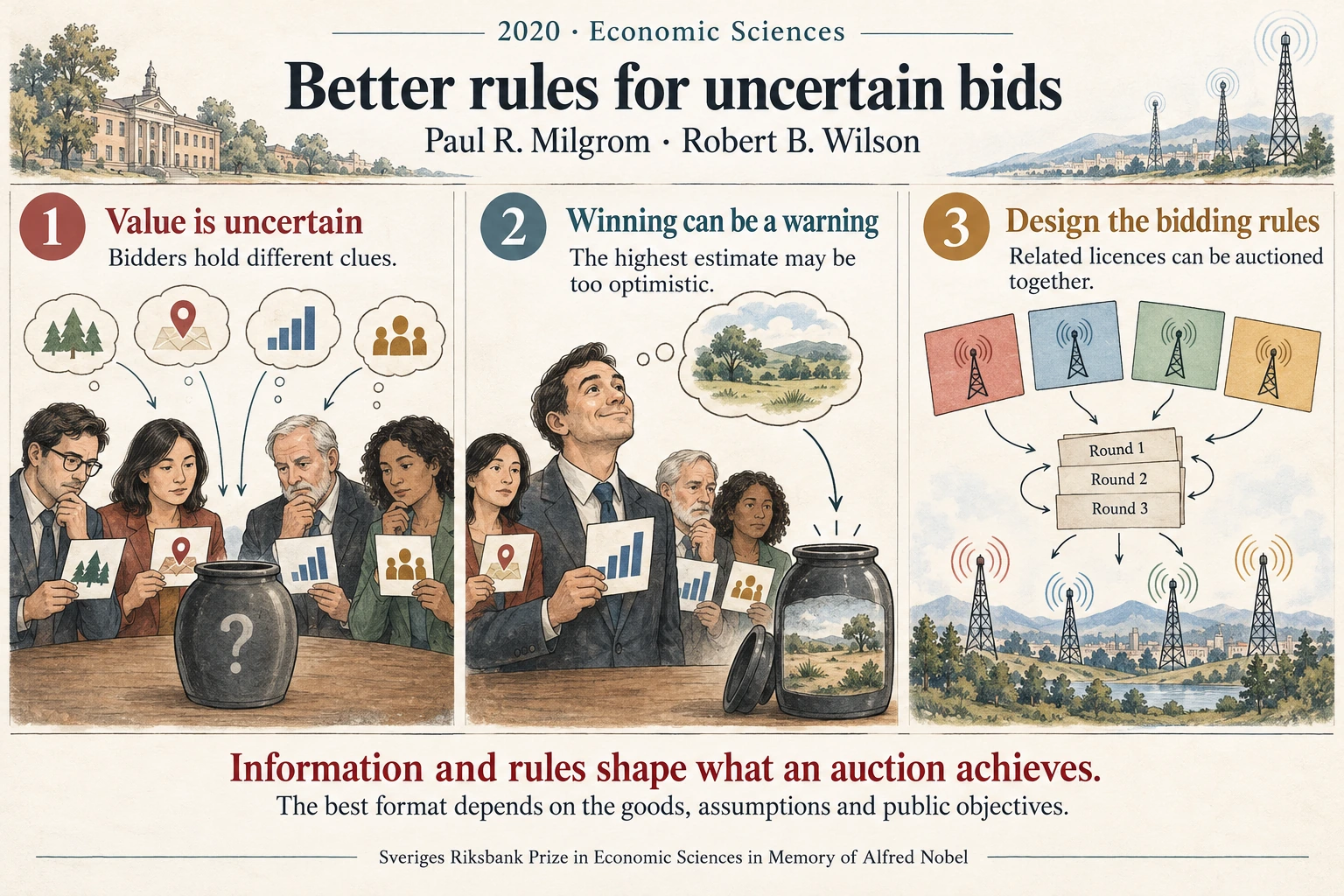
Infographic explaining Better rules for uncertain bids
Original AI-generated infographic. A conceptual overview; the explanations and sources below provide context.
Read the poster text

Information and rules shape what an auction achieves.

  1. Value is uncertain

    Bidders hold different clues.

  2. Winning can be a warning

    The highest estimate may be too optimistic.

  3. Design the bidding rules

    Related licences can be auctioned together.

The best format depends on the goods, assumptions and public objectives.

01 · The discovery

The idea, in everyday language

An auction is more than a contest to name the largest number. Bidders may value an item differently, and they may also hold different clues about a value shared by everyone, such as the amount of oil in a field. Wilson showed why winning can be bad news: the winning estimate may have been the most optimistic one.

Milgrom developed a broader account of private and common values and of what bidders learn as an auction unfolds. The two researchers and their collaborators used such ideas to design auctions for related resources, including radio-spectrum licences. Selling related items together over multiple rounds can let bidders adapt as prices and information develop.

Why it matters

Their work connected strategic models with practical market design. Spectrum auctions provided a prominent application, with consequences for how scarce communication rights are allocated. Good design considers the resources, information and public objectives involved.

02 · The people

Who brought the idea to life?

Illustrated portrait of Paul R. Milgrom

Paul R. Milgrom

Prize share · 1/2

He developed auction theory that combines private and common-value elements and explains how information revealed during bidding can affect outcomes. With Wilson and other collaborators, he helped design practical formats for allocating radio-spectrum licences.

Read the biography ↗
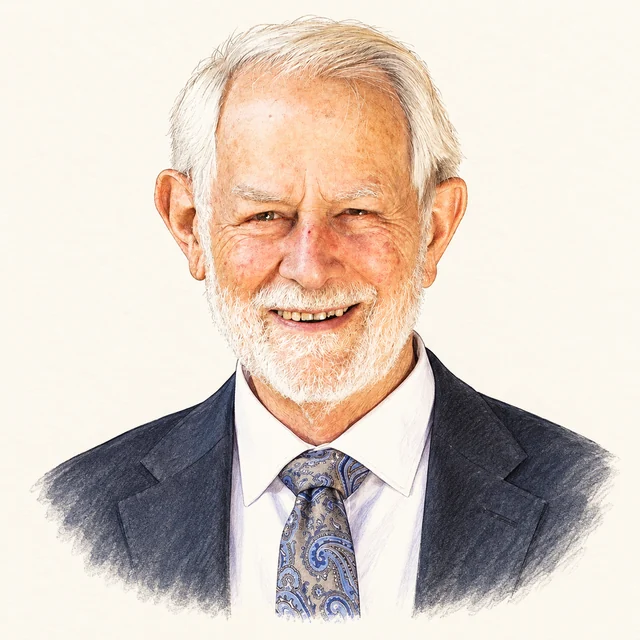
Illustrated portrait of Robert B. Wilson

Robert B. Wilson

Prize share · 1/2

He explained bidding in common-value auctions, including why a bidder must account for the possibility that winning means having made the most optimistic estimate. His work on the winner’s curse helped inform new auction formats developed with Milgrom and others.

Read the biography ↗

03 · Years in the making

The path here

  1. 1960s–1970s

    Wilson develops theory for bidding when an item’s common value is uncertain.

  2. 1994

    US authorities use a new simultaneous multi-round format for spectrum licences.

  3. 2020

    The prize recognises auction theory and the invention of practical formats.

04 · Read further

From the original sources

Original explanations by Curionode, based on the official records below. Biographical details and affiliations refer to the award year.

  1. Official award announcement nobelprize.org
  2. Nobel Committee’s accessible background nobelprize.org

More in Economic Sciences

Browse this subject ↗