A life in context
The person behind the prize
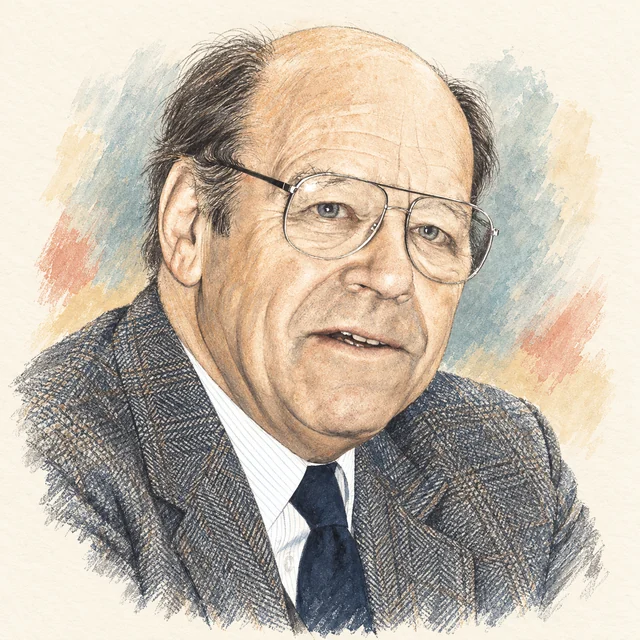
Paul grew up in Munich, where his chemist father and a grounding in classical languages shaped his education. An apprenticeship in precision mechanics preceded university studies in Munich and Berlin and research with Hans Kopfermann. He worked at Göttingen before moving to Bonn in 1952. Molecular beams and mass spectrometry led to quadrupole fields and particle traps. His work with Helmut Steinwedel and students joined theory to apparatus; later responsibilities included accelerator research and CERN.
The contribution
Paul developed the radio-frequency quadrupole trap, in which changing electric fields provide dynamic confinement of charged particles. A static electric field alone cannot stably hold a charge in every direction; the time-dependent field is essential to this method. The related quadrupole mass filter distinguishes ions by their motion in applied fields. Paul received one quarter of the Physics Prize. He is a different physicist from Wolfgang Pauli.
The idea in plain language
An atomic transition provides a reproducible frequency to compare with an applied signal, but motion, collisions and imperfect fields complicate measurement. Ramsey’s method uses two coherent interactions separated by free evolution. The phase accumulated between them affects the outcome of the second interaction, producing a sensitive frequency comparison. This became a foundation of atomic clocks and precision spectroscopy.
Read the full award story ↗