A life in context
The person behind the prize
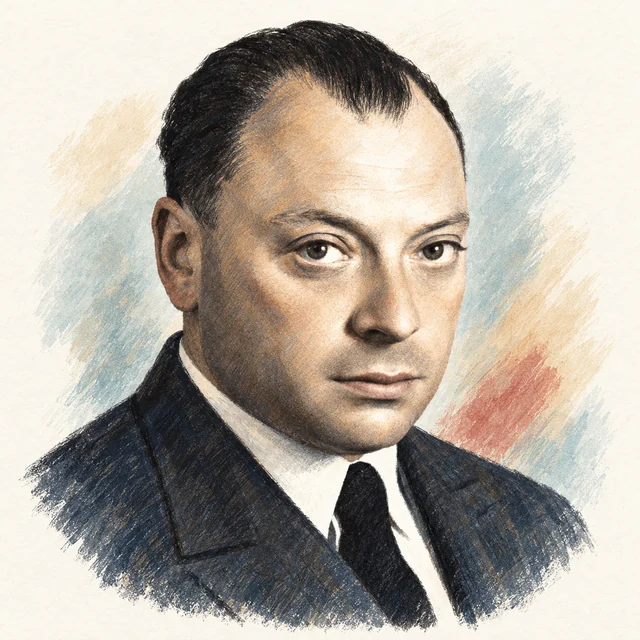
Pauli studied theoretical physics in Munich under Arnold Sommerfeld and completed his doctorate in 1921. He then worked with Max Born in Göttingen and Niels Bohr in Copenhagen, lectured in Hamburg and became a professor at ETH Zurich in 1928. His 1925 exclusion principle supplied a missing rule for the organisation of electrons in atoms: a completely specified electron state can be occupied only once. A two-valued quantum property, subsequently understood through electron spin, was essential to that specification. His wider work included a proposal for the neutrino and contributions to quantum field theory, but the 1945 award specifically recognised the exclusion principle. During the war he worked at the Institute for Advanced Study in Princeton, whose institutional record lists his membership from 1940 to 1946. The Nobel facts page lists Princeton University as his award affiliation; the two institutions should not be confused. He received the whole Physics Prize and was absent from the Stockholm presentation.
The contribution
Pauli formulated the exclusion principle in 1925, explaining why two electrons in an atom cannot have the same complete set of quantum numbers. He received the full Physics Prize.
The idea in plain language
Why do electrons form a structured atom rather than all take the same lowest available state? Energies and electrical attraction alone did not supply the missing rule. In 1925 Pauli stated that two electrons in an atom cannot have identical complete sets of quantum numbers. A two-valued property, later understood through spin, is part of that complete description.
Read the full award story ↗

