c.curionodeThe Nobel Archive

1903 · Peace

Organise support for international arbitration

Cremer carried habits of labour organising into the peace movement. With Frédéric Passy and other parliamentarians, he built support for cooperation across borders and procedures to settle disputes.

ArbitrationParliamentary cooperationPeace organising
1903Peace

Visual guide

The prize, pictured

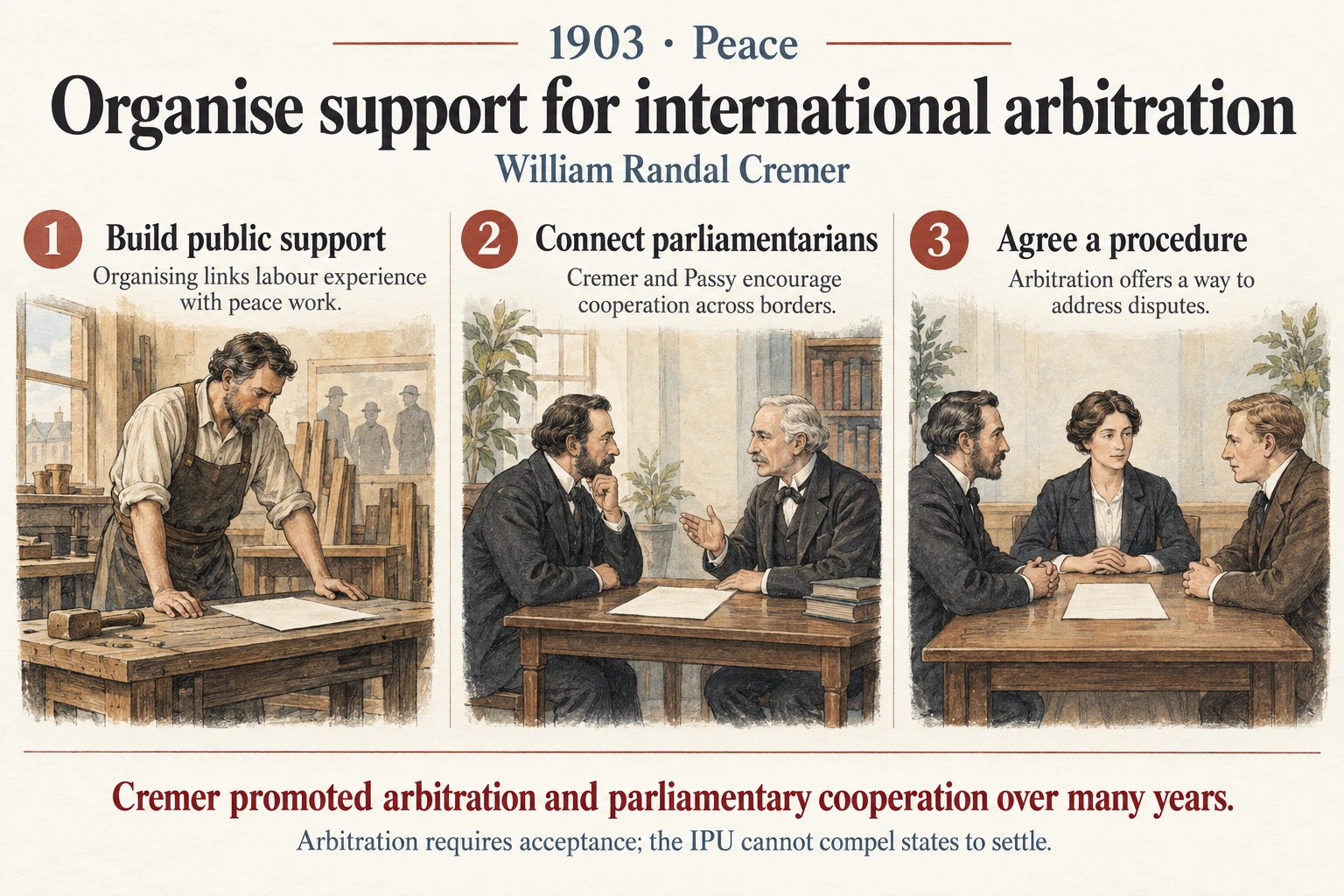
Infographic explaining Organise support for international arbitration
Original AI-generated infographic. A conceptual overview; the explanations and sources below provide context.
Read the poster text

Cremer promoted arbitration and parliamentary cooperation over many years.

  1. Build public support

    Organising links labour experience with peace work.

  2. Connect parliamentarians

    Cremer and Passy encourage cooperation across borders.

  3. Agree a procedure

    Arbitration offers a way to address disputes.

Arbitration requires acceptance; the IPU cannot compel states to settle.

01 · The contribution

The idea, in everyday language

Arbitration asks disputing states to accept a process in which an agreed third party examines a case. It depends on consent and institutional support; simply proposing it does not make governments obey or remove the political causes of conflict.

Cremer combined campaigning, parliamentary petitions and international meetings. His 1887 approach to President Cleveland and cooperation with Passy led toward the 1889 Inter-Parliamentary Conference. Legislators could build relationships and political support even when they could not themselves compel their governments to accept arbitration.

Why it matters

The work gave peaceful settlement a durable constituency in parliaments and public organisations. The Inter-Parliamentary Union grew from cooperation that connected legislators across national borders, while arbitration remained a separate agreed method for addressing disputes.
02 · The people

Who brought the idea to life?

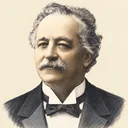
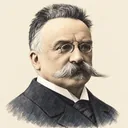
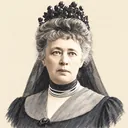
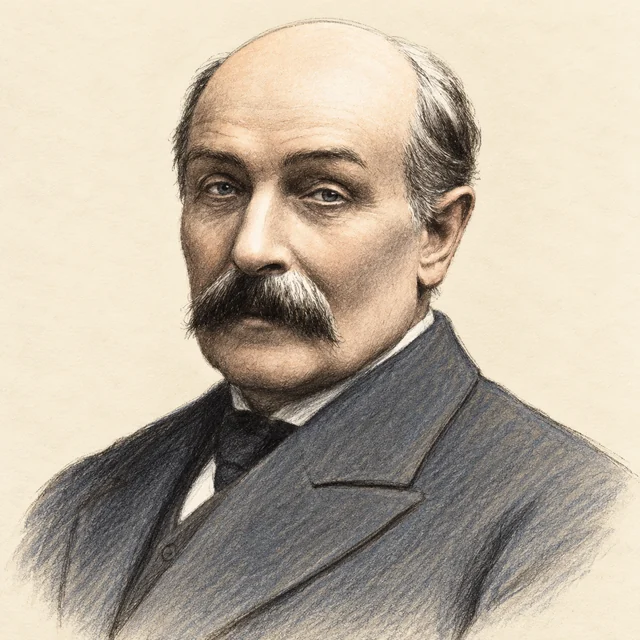
Illustrated portrait of William Randal Cremer

William Randal Cremer

Prize share · 1

Cremer promoted international arbitration and helped build cooperation among parliamentarians with Frédéric Passy. His full 1903 award was the first unshared Peace Prize; earlier shared awards had already recognised individuals.

Read the biography ↗

03 · Years in the making

The path here

  1. 1828

    Cremer is born at Fareham.

  2. 1852

    He moves to London and becomes active in labour organising.

  3. 1871

    The Workmen’s Peace Association is formed.

  4. 1887

    He takes an arbitration proposal to President Cleveland.

  5. 1889

    Cooperation with Passy leads to the Inter-Parliamentary Conference.

  6. 1903

    He receives the full Peace Prize.

  7. 1905

    A later welcome address is delivered in his honour.

  8. 1908

    He dies in the United Kingdom.

04 · Read further

From the original sources

Original explanations by Curionode, based on the official records below. Biographical details and affiliations refer to the award year.

  1. Official award summary nobelprize.org
  2. Historical welcome address (1905) nobelprize.org
  3. Inter-Parliamentary Union: co-founder Randal Cremer ipu.org