c.curionodeThe Nobel Archive

1904 · Physiology or Medicine

Study digestion as a coordinated living process

Digestion depends on regulated secretions and movements, not simply food passing through a tube. Pavlov’s research school studied how organs, nerves and the anticipation of food work together.

Digestive physiologyNervous regulationResearch school
1904Physiology or Medicine

Visual guide

The prize, pictured

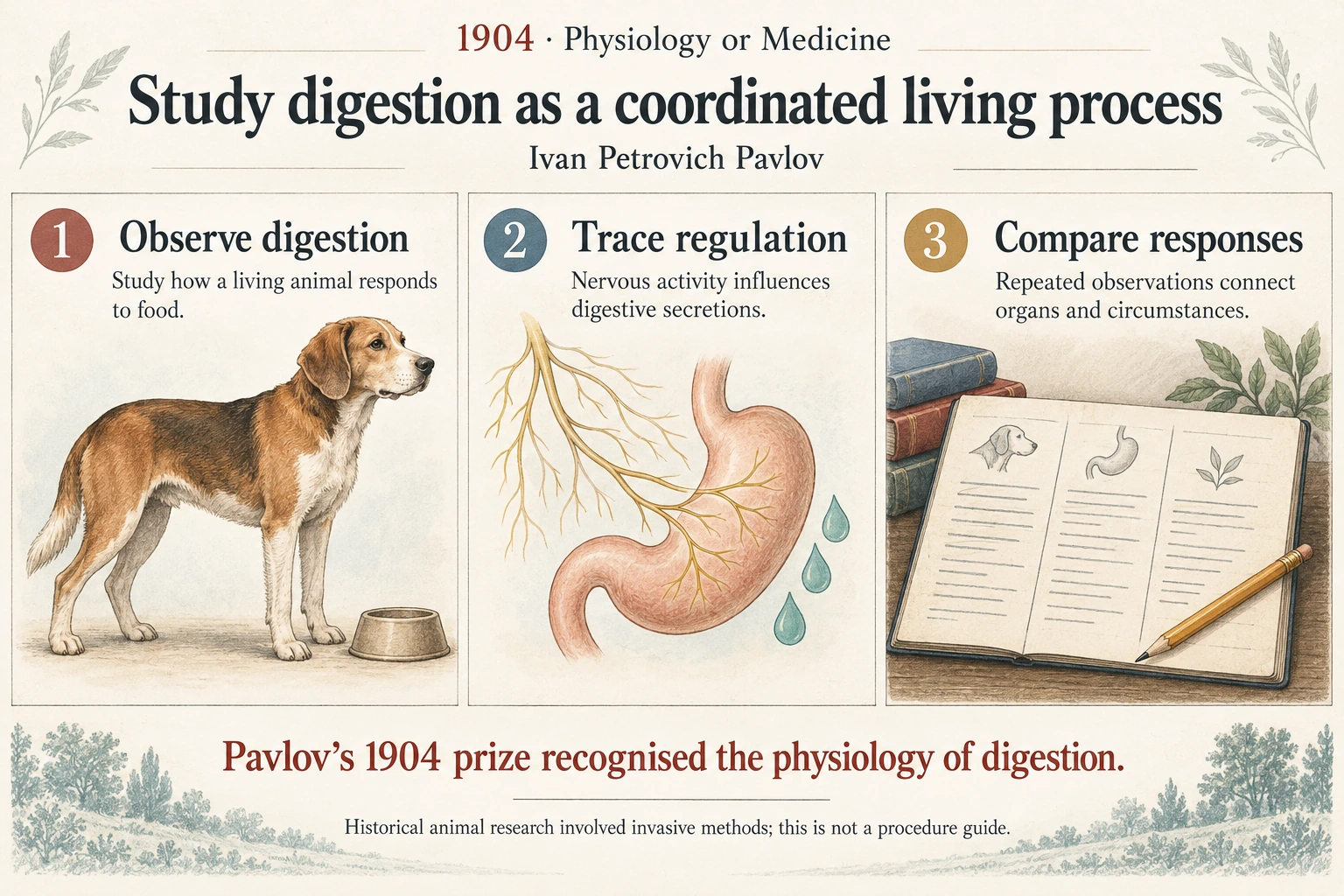
Infographic explaining Study digestion as a coordinated living process
Original AI-generated infographic. A conceptual overview; the explanations and sources below provide context.
Read the poster text

Pavlov’s 1904 prize recognised the physiology of digestion.

  1. Observe digestion

    Study how a living animal responds to food.

  2. Trace regulation

    Nervous activity influences digestive secretions.

  3. Compare responses

    Repeated observations connect organs and circumstances.

Historical animal research involved invasive methods; this is not a procedure guide.

01 · The discovery

The idea, in everyday language

Earlier investigations could isolate a digestive substance or examine an organ, but relating those findings to the coordinated activity of a living animal was difficult. Pavlov and his colleagues developed ways to observe digestive secretions over time and compare responses to different foods and circumstances. The work involved invasive animal experiments.

The studies showed the importance of nervous regulation and of signals connected with eating. Digestive glands could respond in anticipation of food, as well as to processes occurring after food arrived. Such questions led towards conditioned-reflex research, but the 1904 award specifically honoured the physiology of digestion.

Why it matters

The work helped connect the activity of particular organs with the regulation of the whole living system. It also opened questions about how experience and environmental cues influence bodily responses, a direction developed further in later research.
02 · The people

Who brought the idea to life?

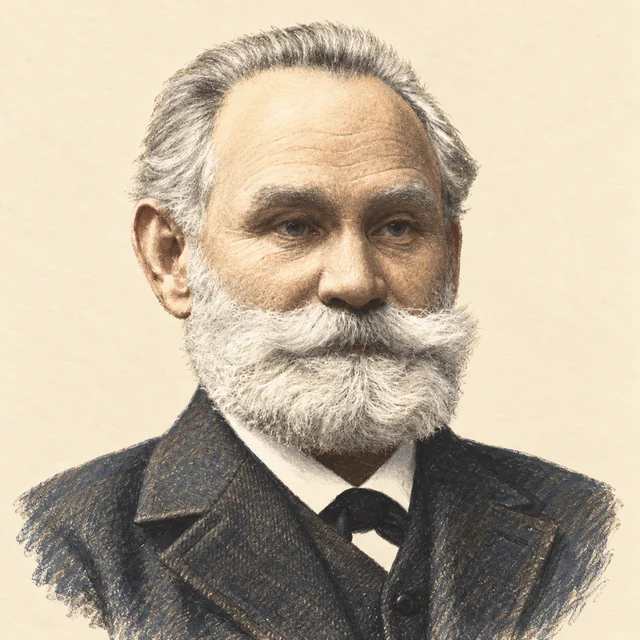
Illustrated portrait of Ivan Petrovich Pavlov

Ivan Petrovich Pavlov

Prize share · 1

Pavlov received the full Medicine Prize for research on digestive physiology. His school investigated how nervous activity, food and sensory experience regulate digestive secretions and other aspects of digestion.

Read the biography ↗

03 · Years in the making

The path here

  1. 1849

    Pavlov is born in Ryazan.

  2. 1870

    He begins natural-science studies in St. Petersburg.

  3. 1883

    His doctoral work investigates nerves of the heart.

  4. 1890

    He takes charge of physiology at the Institute of Experimental Medicine.

  5. 1897

    His work on the digestive glands is collected in a book.

  6. 1903

    He discusses conditioned reflexes in Madrid.

  7. 1904

    The Medicine Prize recognises digestive physiology.

  8. 1936

    He dies in Leningrad.

04 · Read further

From the original sources

Original explanations by Curionode, based on the official records below. Biographical details and affiliations refer to the award year.

  1. Official award summary nobelprize.org
  2. Award ceremony speech nobelprize.org
  3. Todes: Pavlov’s laboratory (abstract only) pubmed.ncbi.nlm.nih.gov

More in Physiology or Medicine

Browse this subject ↗