01 · The discovery
The idea, in everyday language
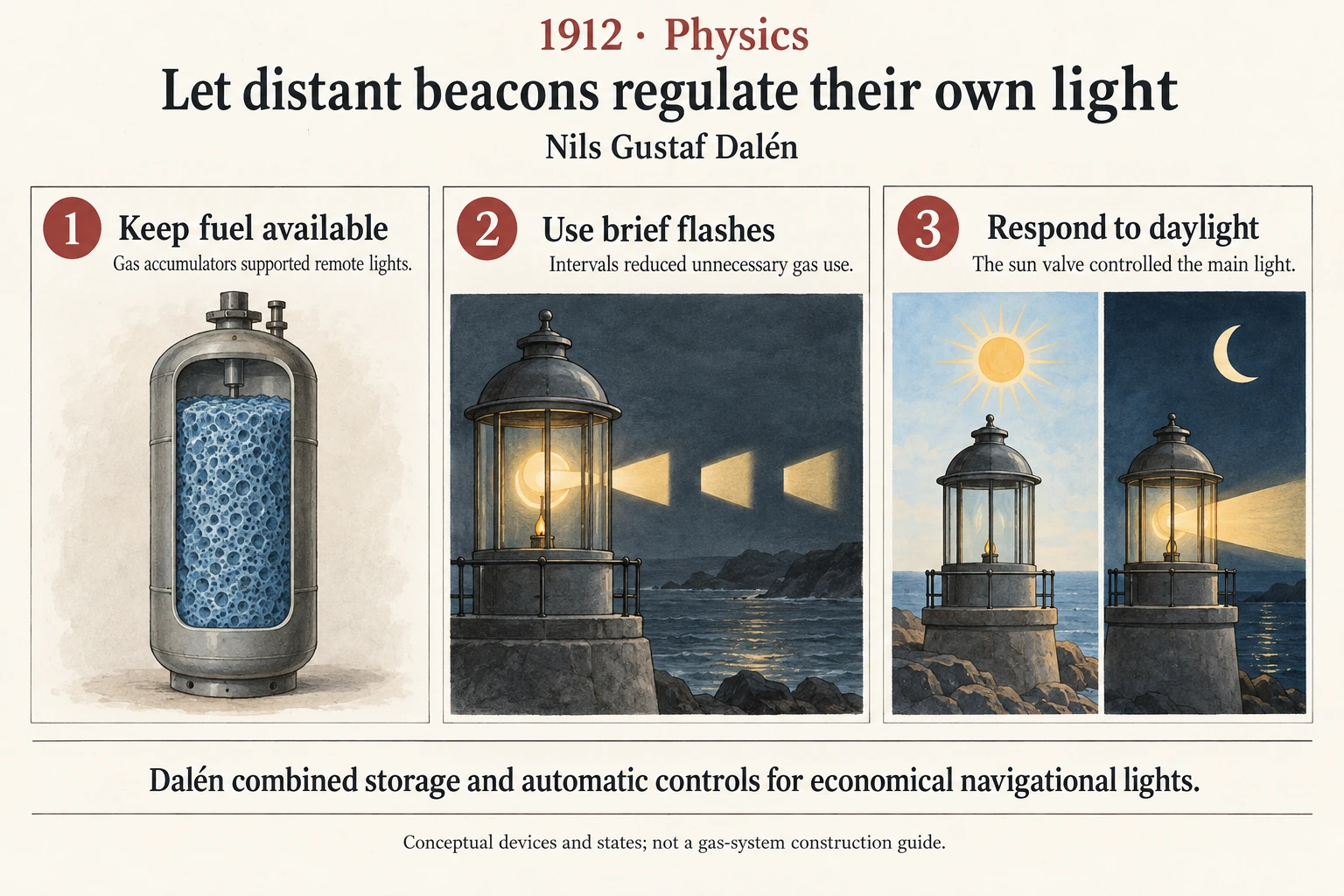
Remote navigational lights needed a dependable fuel supply and a recognisable signal without wasting gas. Dalén developed a flashing regulator that released small amounts of gas for brief light pulses, ignited by a small continuing pilot flame. Intervals between flashes reduced consumption and helped distinguish signals. The regulator worked with gas accumulators whose porous filling supported the storage of dissolved acetylene.
The sun valve added a separate control. One blackened rod absorbed more sunlight than neighbouring shiny rods. Its greater heating and expansion operated a mechanical valve, closing the main supply in daylight; cooling as the light faded allowed it to reopen. The mechanism used heat and movement rather than generating electricity. Storage, flashing and daylight control worked together to make unattended beacons more practical.
Why it matters
The devices helped extend navigational lighting to difficult coastal sites and reduce the fuel and attendance required. Their importance lay in combining reliable physical mechanisms into a useful engineering system, rather than discovering a new kind of light.