01 · The discovery
The idea, in everyday language
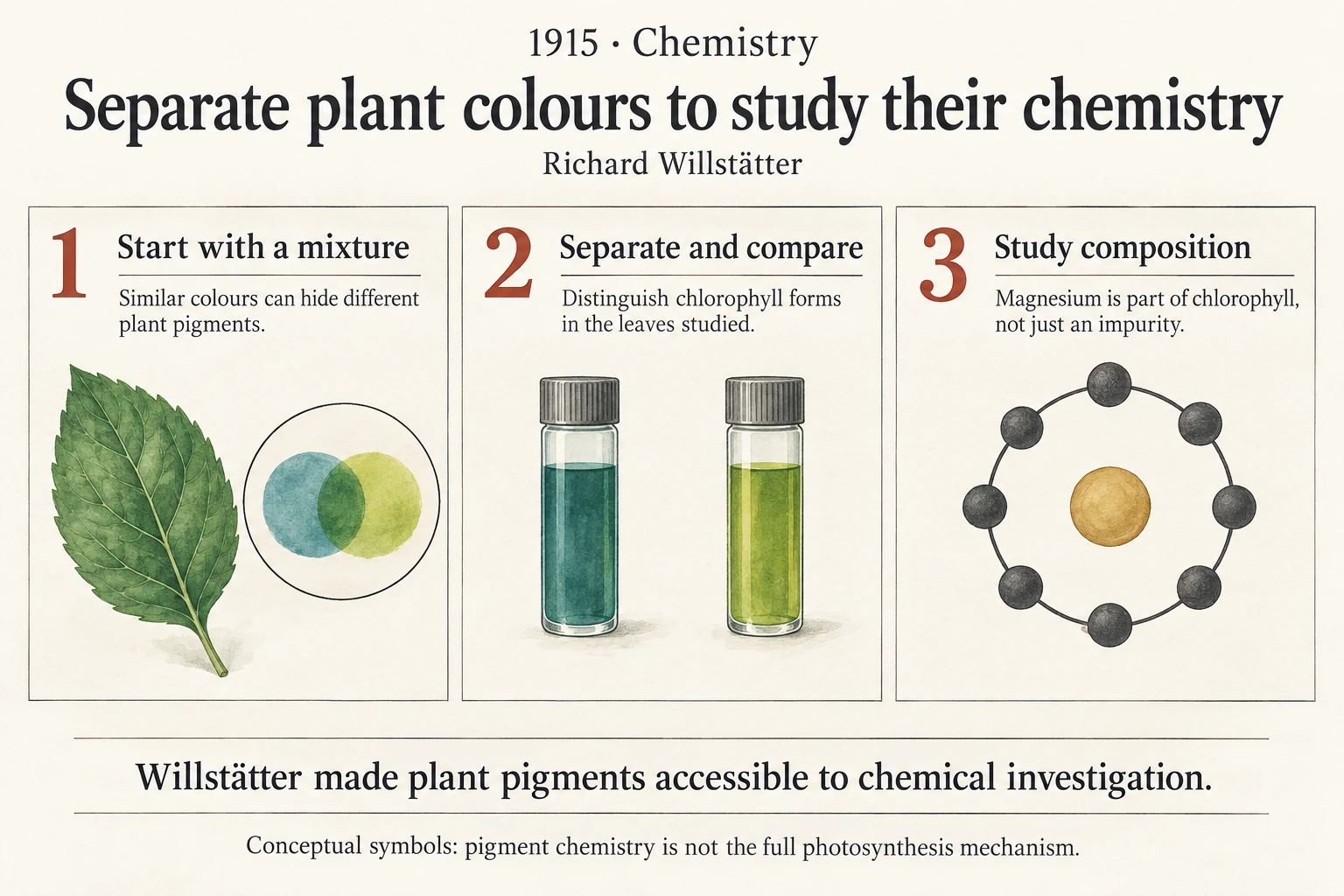
A green leaf is not a sample of one pure green substance. Studying its pigments required methods that separated related compounds and allowed their chemical properties to be compared. Willstätter and coworkers distinguished chlorophyll a and b in the green leaves they studied. They also established that magnesium was an essential part of chlorophyll, rather than merely an accidental impurity in a preparation.
These results made the pigments involved in photosynthesis more accessible to chemical investigation. Willstätter also worked on carotenoids and anthocyanins, other families responsible for plant colours. The 1915 prize recognised this plant-pigment research, especially chlorophyll. It did not award a complete account of how a plant converts light into chemical energy, nor the full modern structural explanation of every pigment.
Why it matters
Careful work on pigments helped connect visible plant colours to identifiable chemical substances. It provided foundations for later research on chlorophyll and photosynthesis while distinguishing the chemical components from the larger processes in which they participate.