01 · The contribution
The idea, in everyday language
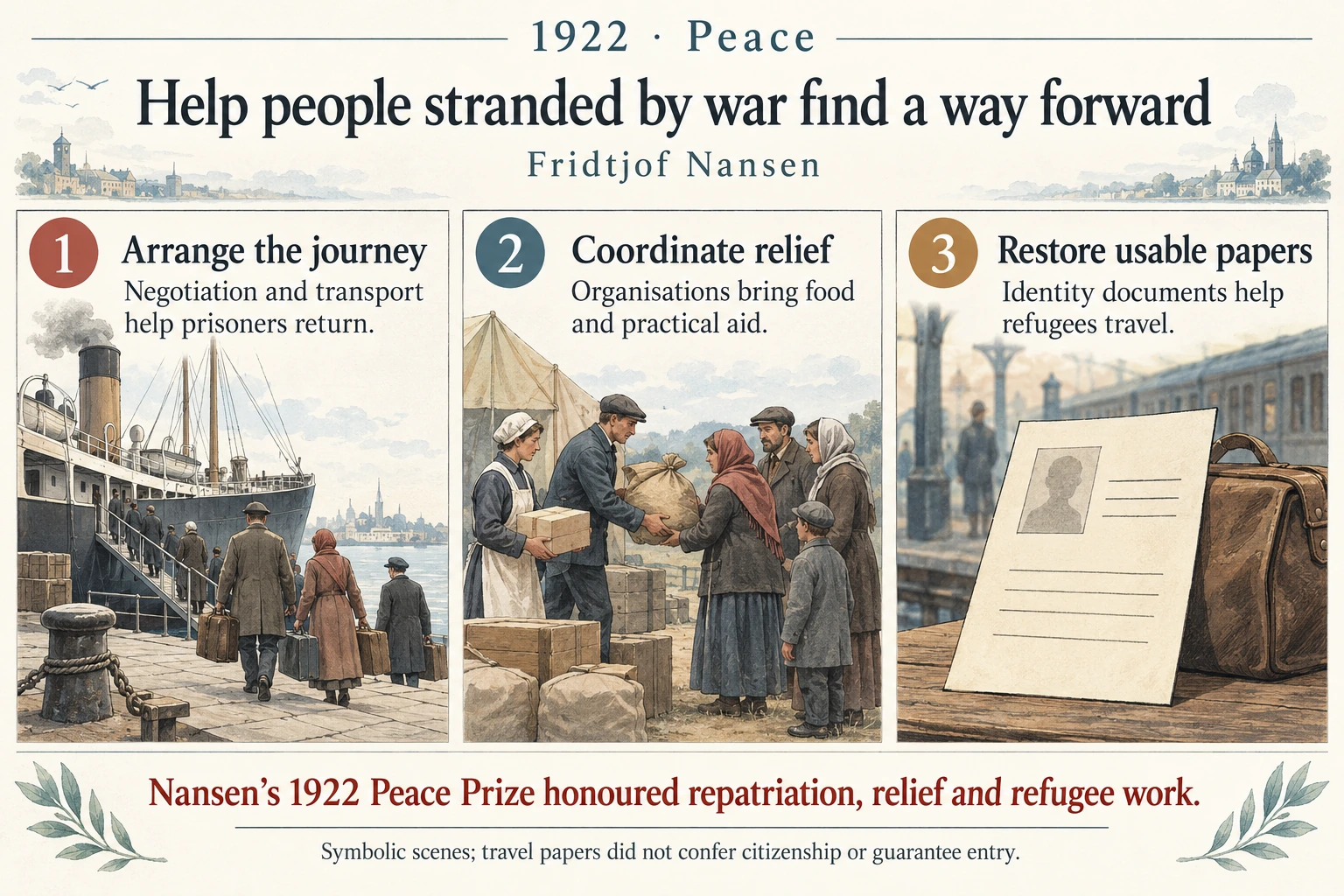
War could end while people remained far from home, without food, transport or recognised papers. The League of Nations asked Nansen in 1920 to coordinate the return of prisoners of war. He negotiated with governments and worked with relief organisations to arrange money, supplies and transport across divided Europe and beyond.
As High Commissioner for Refugees from 1921, he faced another barrier: people who could not obtain ordinary national passports could be unable to travel to work or rebuild their lives. An international agreement in 1922 introduced a recognised identity and travel certificate, the Nansen passport. His work also included organising famine relief in Russia. These efforts depended on many organisations and workers, not on one heroic individual acting alone.
Why it matters
Nansen helped turn international concern into organised repatriation, relief and practical refugee protection. The travel certificate became an important step in international responses to displacement, while negotiations and aid networks showed how cooperation could address needs left unresolved by war.