c.curionodeThe Nobel Archive

1922 · Peace

Help people stranded by war find a way forward

Nansen organised prisoner repatriation, famine relief and refugee work. His practical international cooperation included the identity and travel documents known as Nansen passports.

Prisoner repatriationRefugee documentsInternational relief
1922Peace

Visual guide

The prize, pictured

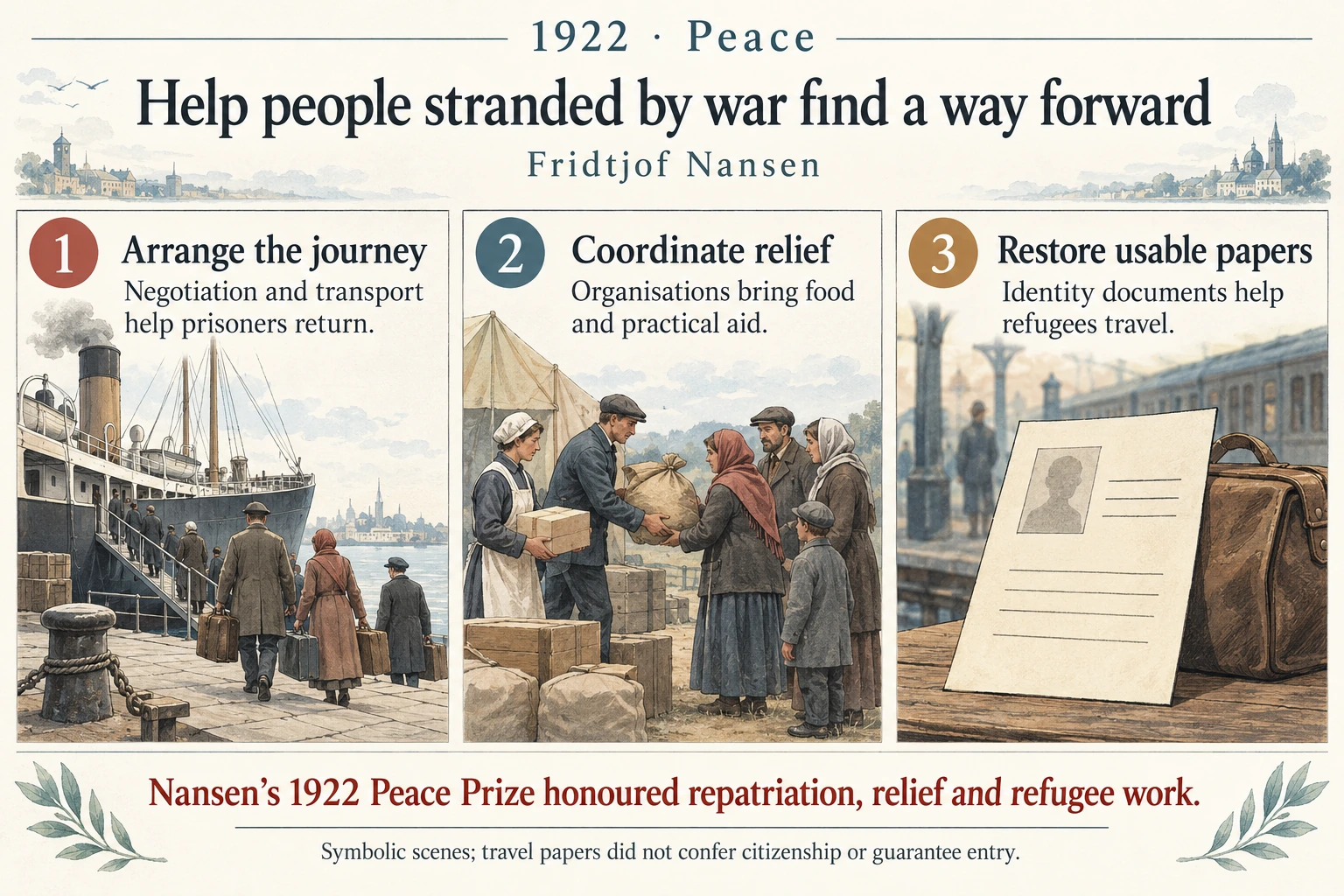
Infographic explaining Help people stranded by war find a way forward
Original AI-generated infographic. A conceptual overview; the explanations and sources below provide context.
Read the poster text

Nansen’s 1922 Peace Prize honoured repatriation, relief and refugee work.

  1. Arrange the journey

    Negotiation and transport help prisoners return.

  2. Coordinate relief

    Organisations bring food and practical aid.

  3. Restore usable papers

    Identity documents help refugees travel.

Symbolic scenes; travel papers did not confer citizenship or guarantee entry.

01 · The contribution

The idea, in everyday language

War could end while people remained far from home, without food, transport or recognised papers. The League of Nations asked Nansen in 1920 to coordinate the return of prisoners of war. He negotiated with governments and worked with relief organisations to arrange money, supplies and transport across divided Europe and beyond.

As High Commissioner for Refugees from 1921, he faced another barrier: people who could not obtain ordinary national passports could be unable to travel to work or rebuild their lives. An international agreement in 1922 introduced a recognised identity and travel certificate, the Nansen passport. His work also included organising famine relief in Russia. These efforts depended on many organisations and workers, not on one heroic individual acting alone.

Why it matters

Nansen helped turn international concern into organised repatriation, relief and practical refugee protection. The travel certificate became an important step in international responses to displacement, while negotiations and aid networks showed how cooperation could address needs left unresolved by war.
02 · The people

Who brought the idea to life?

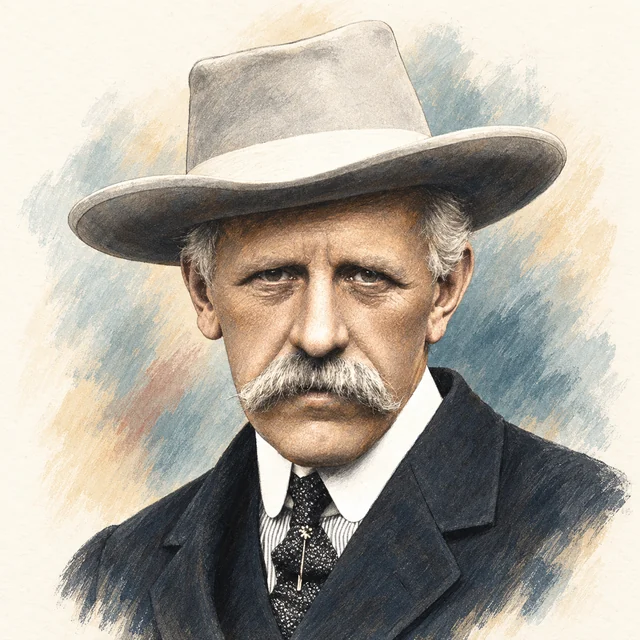
Illustrated portrait of Fridtjof Nansen

Fridtjof Nansen

Prize share · 1

Nansen received the full Peace Prize for leading prisoner repatriation, international relief and refugee work through the League of Nations. He combined negotiation, transport and aid coordination with practical efforts to restore refugees’ ability to travel.

Read the biography ↗

03 · Years in the making

The path here

  1. 1888

    Nansen completes his zoology doctorate and leads a crossing of Greenland’s ice sheet.

  2. 1920

    The League of Nations asks him to coordinate prisoner-of-war repatriation.

  3. 1921

    He becomes High Commissioner for Refugees and takes on famine-relief work.

  4. 1922

    International agreement introduces the Nansen passport; the Peace Prize recognises his humanitarian work.

  5. 1930

    He dies after continuing refugee work as High Commissioner.

04 · Read further

From the original sources

Original explanations by Curionode, based on the official records below. Biographical details and affiliations refer to the award year.

  1. Official award summary nobelprize.org
  2. Award ceremony speech nobelprize.org
  3. UN Geneva: the League at work ungeneva.org