c.curionodeThe Nobel Archive

1921 · Peace

Build institutions that keep countries talking

Branting and Lange worked for peace through democratic politics, parliamentary networks and the League of Nations. Their shared 1921 prize recognised sustained organised internationalism.

Organised internationalismArbitrationParliamentary cooperation
1921Peace

Visual guide

The prize, pictured

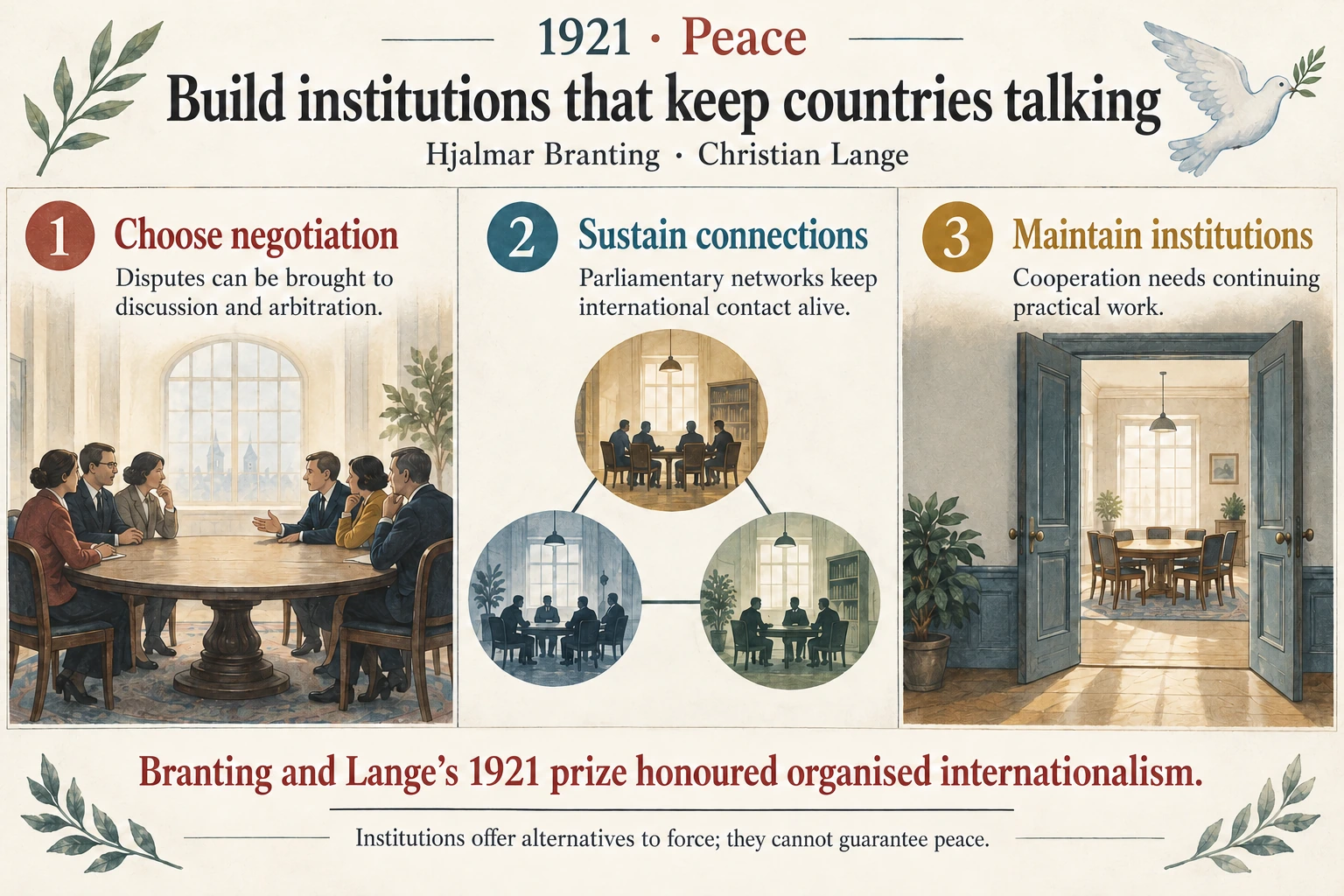
Infographic explaining Build institutions that keep countries talking
Original AI-generated infographic. A conceptual overview; the explanations and sources below provide context.
Read the poster text

Branting and Lange’s 1921 prize honoured organised internationalism.

  1. Choose negotiation

    Disputes can be brought to discussion and arbitration.

  2. Sustain connections

    Parliamentary networks keep international contact alive.

  3. Maintain institutions

    Cooperation needs continuing practical work.

Institutions offer alternatives to force; they cannot guarantee peace.

01 · The contribution

The idea, in everyday language

International disputes need more than goodwill if governments are to keep talking when interests conflict. Branting supported negotiation and arbitration through national politics and the League of Nations. His opposition to using force against Norway in 1905 illustrated a commitment to resolving a specific conflict peacefully.

Lange supplied a different kind of sustained work: maintaining the Inter-Parliamentary Union’s contacts and organisation, including through the First World War, and studying the history of internationalism. He supported the League as a place for cooperation among states. The prize was divided equally between two people with complementary careers, not for one joint treaty or the invention of the League.

Why it matters

Their work treated peace as an ongoing task of representation, rules, negotiation and practical organisation. Parliamentary contacts and international institutions could give disputes alternatives to force. Their importance lay in sustained efforts to create and use those alternatives, not a guarantee that war would end.
02 · The people

Who brought the idea to life?

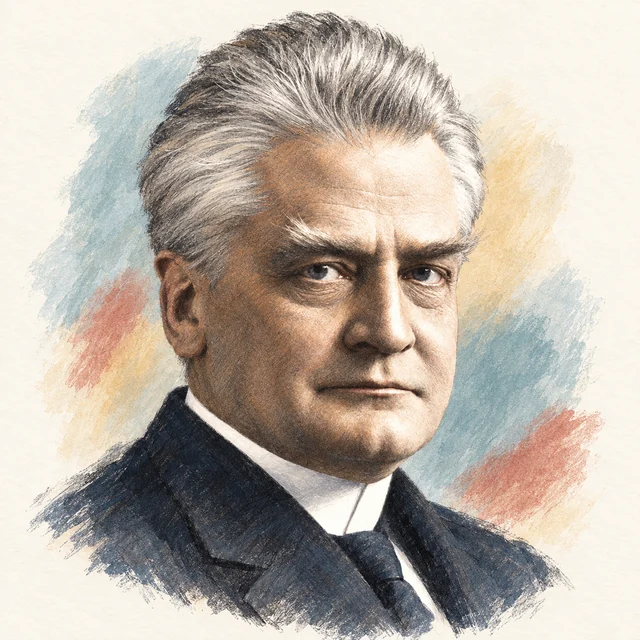
Illustrated portrait of Hjalmar Branting

Hjalmar Branting

Prize share · 1/2

Branting received half the Peace Prize for lifelong work for peace and organised internationalism. Through democratic politics, opposition to a forced union with Norway, and League of Nations work, he supported negotiated solutions to international disputes.

Read the biography ↗
Illustrated portrait of Christian Lange

Christian Lange

Prize share · 1/2

Lange received half the Peace Prize for lifelong contributions to peace and organised internationalism. He sustained the Inter-Parliamentary Union’s cross-border work, including during the First World War, and combined historical scholarship with support for the League of Nations.

Read the biography ↗

03 · Years in the making

The path here

  1. 1899

    Lange organises work for an Inter-Parliamentary Union meeting.

  2. 1905

    Branting opposes force to maintain the union with Norway.

  3. 1909

    Lange becomes secretary-general of the Inter-Parliamentary Union.

  4. 1920

    Branting becomes prime minister and represents Sweden at the League of Nations.

  5. 1921

    The two share the Peace Prize for lifelong work towards peace and organised internationalism.

04 · Read further

From the original sources

Original explanations by Curionode, based on the official records below. Biographical details and affiliations refer to the award year.

  1. Official award summary nobelprize.org
  2. Report of the Peace Prize address nobelprize.org