c.curionodeThe Nobel Archive

1923 · Literature

Irish traditions find new poetic forms

Yeats reshaped legends, landscapes and cultural memory through a distinctive poetry in English. His 1923 prize recognised poetic achievement connected with Ireland’s literary revival.

Irish literary revivalPoetic formLyric and theatre
1923Literature

Visual guide

The prize, pictured

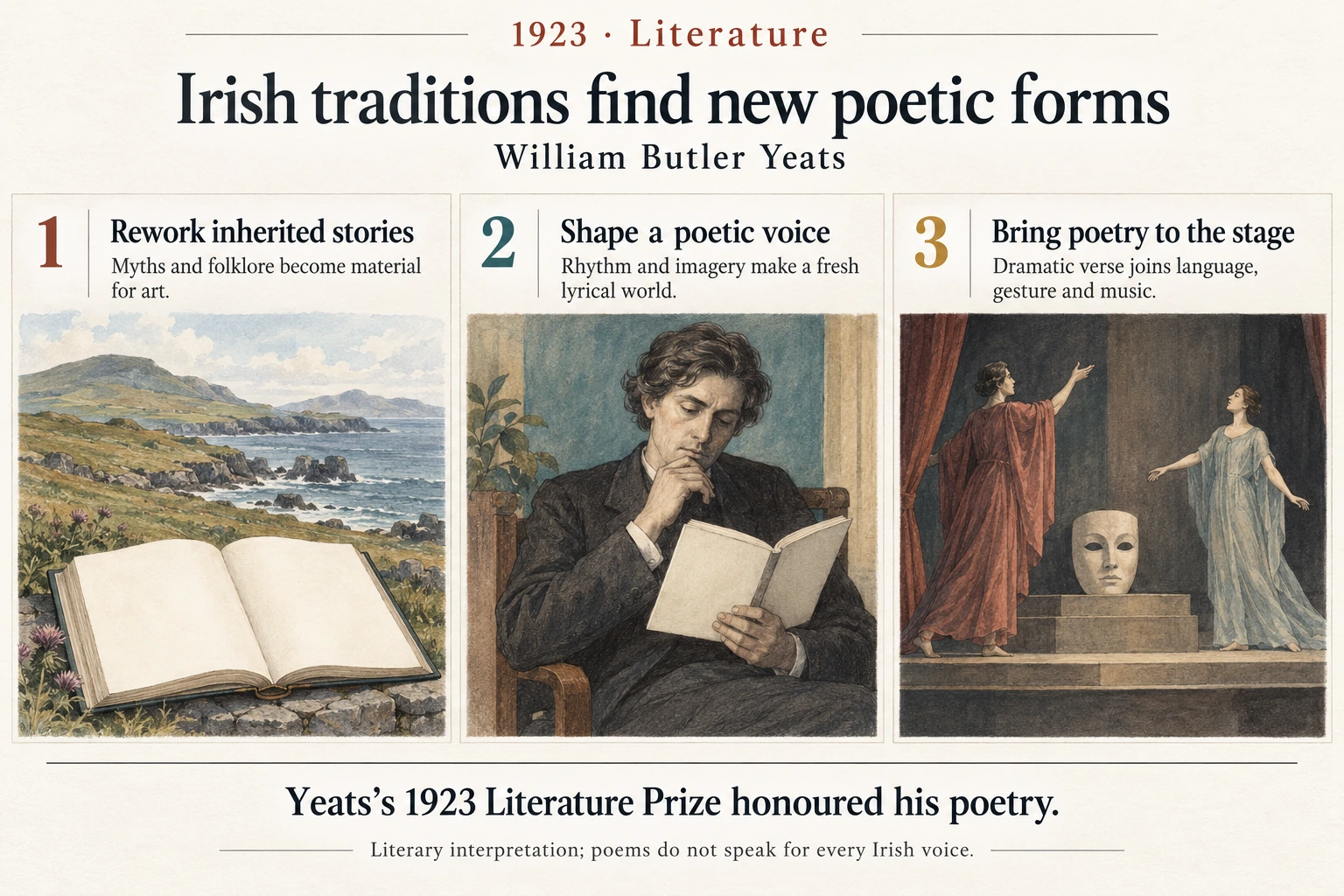
Infographic explaining Irish traditions find new poetic forms
Original AI-generated infographic. A conceptual overview; the explanations and sources below provide context.
Read the poster text

Yeats’s 1923 Literature Prize honoured his poetry.

  1. Rework inherited stories

    Myths and folklore become material for art.

  2. Shape a poetic voice

    Rhythm and imagery make a fresh lyrical world.

  3. Bring poetry to the stage

    Dramatic verse joins language, gesture and music.

Literary interpretation; poems do not speak for every Irish voice.

01 · The contribution

The idea, in everyday language

An inherited story can become something new when a poet changes its rhythm, imagery and point of view. Yeats drew on Irish folklore and legends while developing a highly individual artistic language. The poems are crafted works, rather than transcripts of an unchanged national tradition.

Lyric poetry and poetic drama were connected parts of this work. Collections such as The Wind among the Reeds and The Wild Swans at Coole developed memorable images and a strong musical quality. In theatre, his work with Lady Gregory and experiments with masks, gesture and music helped give poetic language a different form of performance.

Why it matters

Yeats helped make the Irish literary revival a force in English-language literature. The Academy’s recognition linked formal artistic achievement with cultural experience, across a body of poetry and poetic drama rather than a single named book.

02 · The people

Who brought the idea to life?

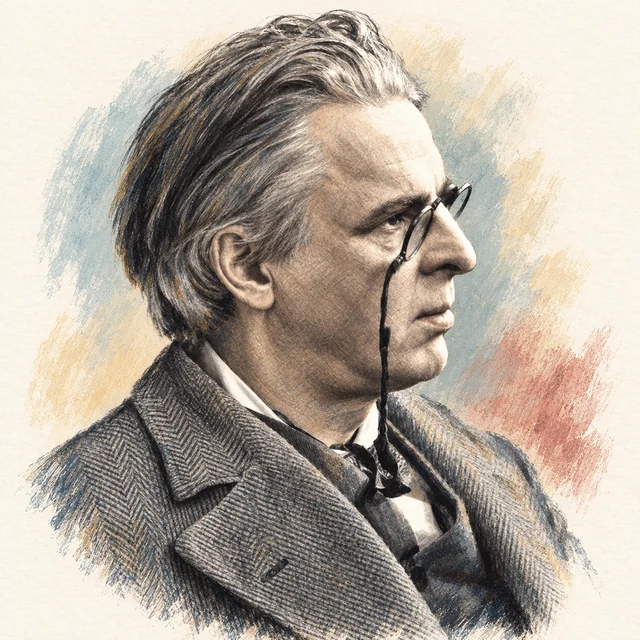
Illustrated portrait of William Butler Yeats

William Butler Yeats

Prize share · 1

Yeats received the full Literature Prize for poetry that joined highly individual artistic form with Irish cultural experience. Lyric poetry, poetic drama and his work in the literary revival formed connected parts of that achievement.

Read the biography ↗

03 · Years in the making

The path here

  1. 1899

    The Wind among the Reeds appears, developing a distinctive lyric voice.

  2. 1917

    The Wild Swans at Coole is published in its early form.

  3. 1921

    Michael Robartes and the Dancer joins Yeats’s pre-Nobel poetry.

  4. 1923

    The Literature Prize recognises his poetry and its artistic expression of Irish experience.

04 · Read further

From the original sources

Original explanations by Curionode, based on the official records below. Biographical details and affiliations refer to the award year.

  1. Official award summary nobelprize.org
  2. Award ceremony speech nobelprize.org
  3. Official recipient bibliography nobelprize.org

More in Literature

Browse this subject ↗