c.curionodeThe Nobel Archive

1926 · Literature

Sardinian lives, wider human conflicts

Deledda drew on Sardinian landscapes and communities to explore desire, guilt, responsibility and renewal. Her 1926 Literature Prize was awarded in 1927.

Sardinian fictionMoral conflictLandscape and character
1926Literature

Visual guide

The prize, pictured

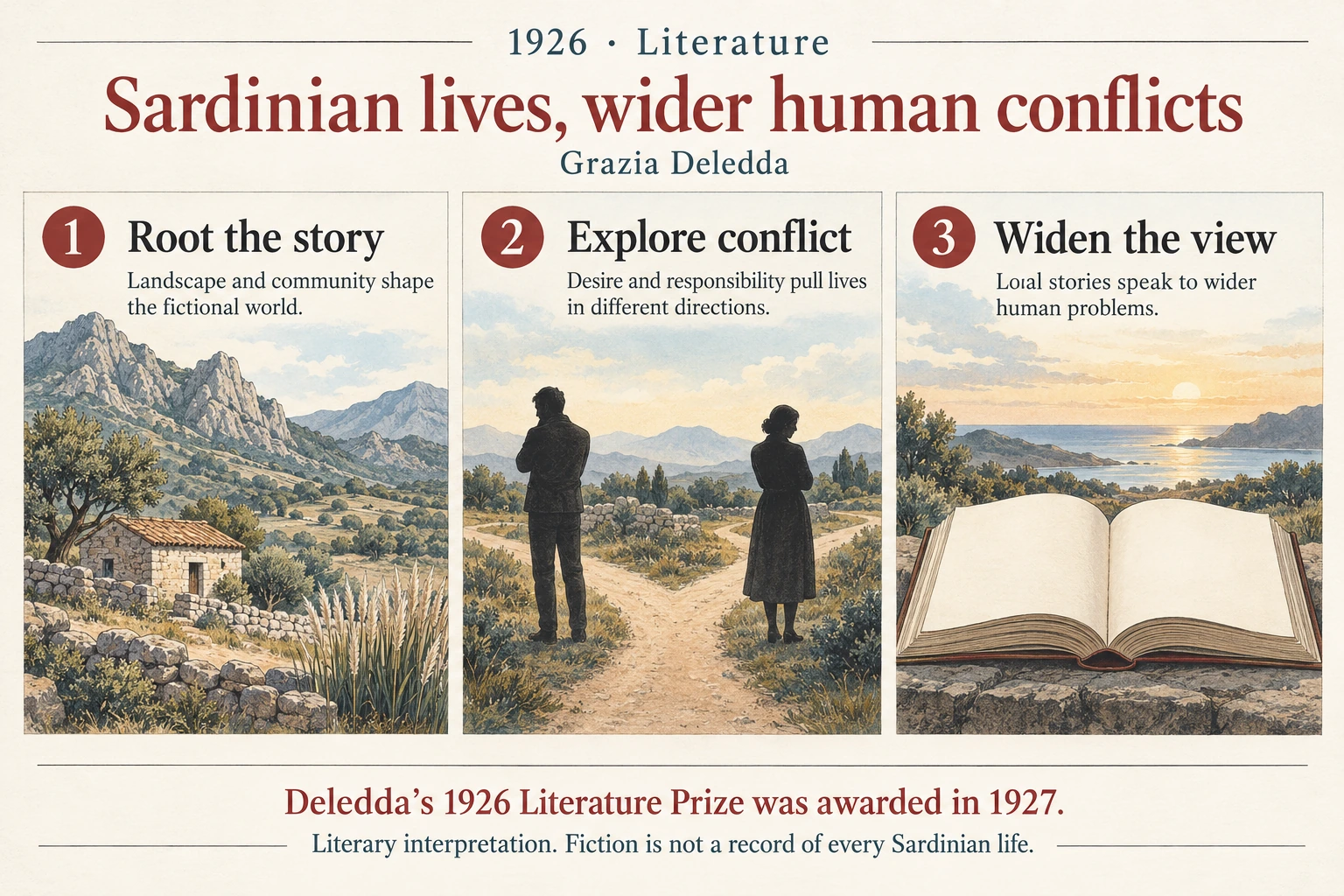
Infographic explaining Sardinian lives, wider human conflicts
Original AI-generated infographic. A conceptual overview; the explanations and sources below provide context.
Read the poster text

Deledda’s 1926 Literature Prize was awarded in 1927.

  1. Root the story

    Landscape and community shape the fictional world.

  2. Explore conflict

    Desire and responsibility pull lives in different directions.

  3. Widen the view

    Local stories speak to wider human problems.

Literary interpretation. Fiction is not a record of every Sardinian life.

01 · The contribution

The idea, in everyday language

How can writing rooted in one place speak beyond that place? Deledda made the landscapes, customs and family relationships of Sardinia part of the emotional structure of her fiction. Mountains, journeys and domestic spaces help reveal what characters fear, want and believe they owe to others.

Works such as Elias Portolú, Cenere, Canne al vento and La Madre explore conflicts between desire and obligation, individual choice and inherited expectations. The prize recognised her wider literary achievement, not a single novel alone. The Academy valued both the vividness of her local world and the sympathy with which she treated human problems.

Why it matters

Her work brought a Sardinian literary world to international attention and showed how a regional setting could carry moral and psychological complexity. The landscape participates in the story rather than merely decorating it.

02 · The people

Who brought the idea to life?

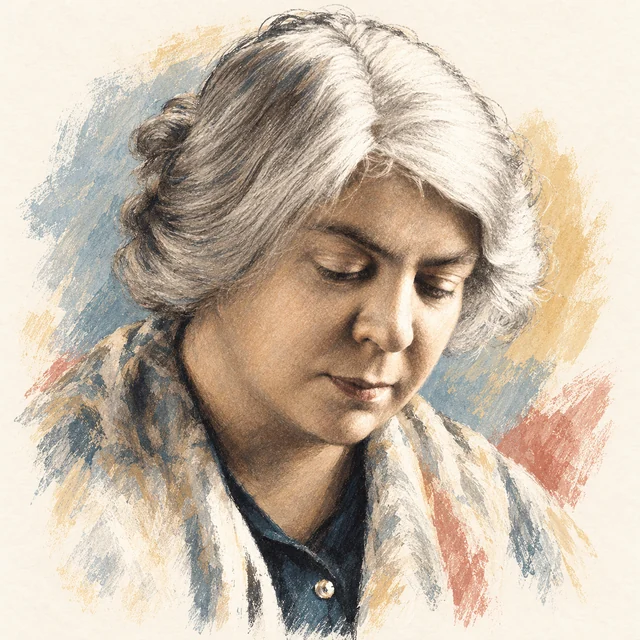
Illustrated portrait of Grazia Deledda

Grazia Deledda

Prize share · 1

Deledda received the full 1926 Literature Prize, awarded in 1927, for fiction combining vivid representations of Sardinian life with sympathetic treatment of wider human problems.

Read the biography ↗

03 · Years in the making

The path here

  1. 1900

    Deledda marries and moves to Rome while continuing to draw on Sardinian material.

  2. 1903

    Elias Portolú develops the moral and emotional conflicts of her fiction.

  3. 1913

    Canne al vento is published.

  4. 1927

    The reserved 1926 Literature Prize is announced and presented to Deledda.

04 · Read further

From the original sources

Original explanations by Curionode, based on the official records below. Biographical details and affiliations refer to the award year.

  1. Official award summary nobelprize.org
  2. Award ceremony speech nobelprize.org

More in Literature

Browse this subject ↗