01 · The contribution
The idea, in everyday language
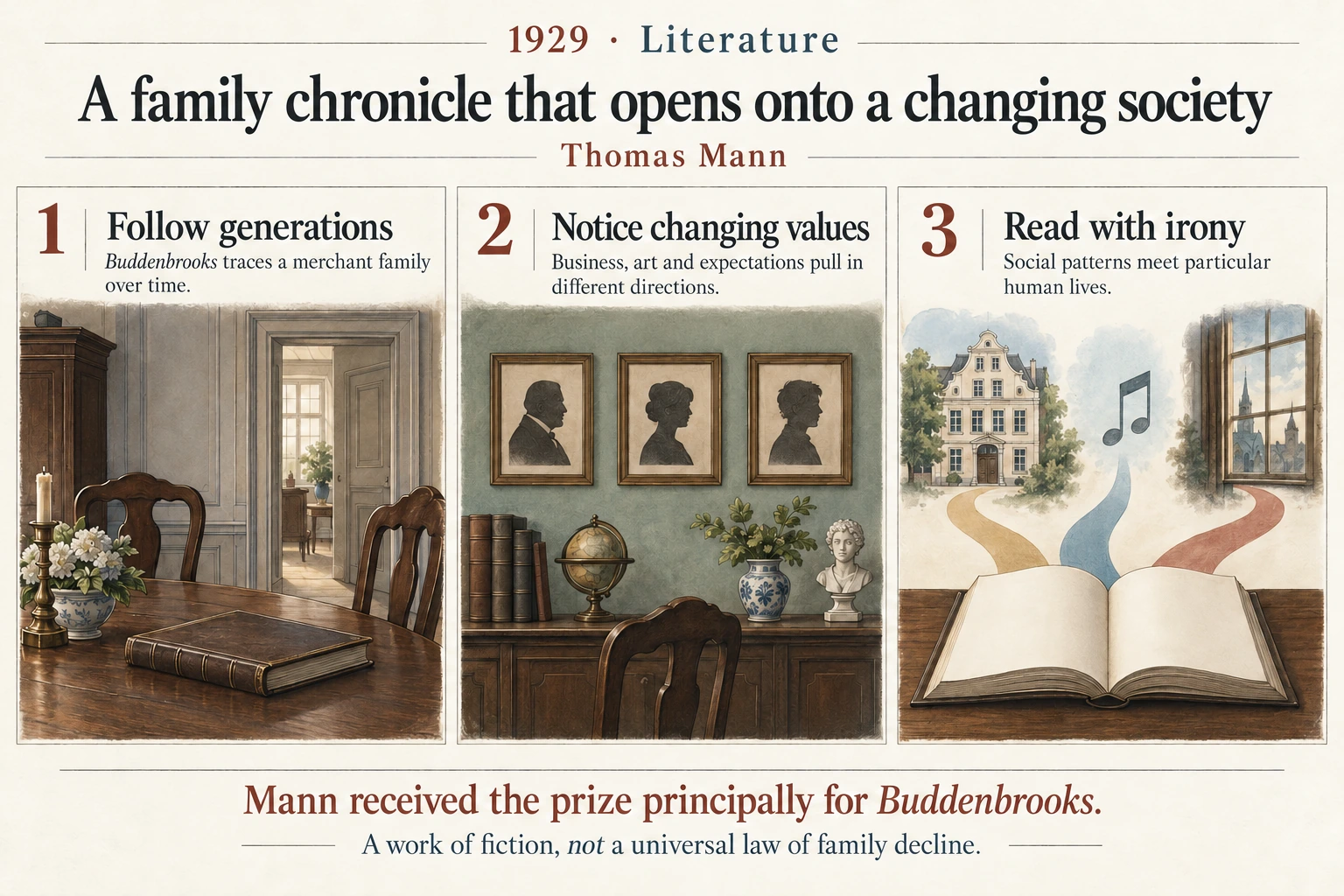
Published in 1901, Buddenbrooks traces the life and decline of a prosperous merchant family. Business, marriage, habits, speech and music become ways of seeing how individuals inhabit a social world. The family story accumulates its meaning across generations rather than through one decisive discovery or heroic act.
Mann combines close description with irony and sympathy. Artistic sensitivity and reflective distance can sit uneasily beside commercial confidence and inherited expectations. The 1929 citation singled out Buddenbrooks principally, while recognizing the stature it had gained over time. The Magic Mountain was another major novel, published in 1924, but it was not the book named principally in the citation.
Why it matters
The novel became a major work of literary realism, joining a detailed social chronicle with questions about art, reflection and ordinary life. Its continuing interest lies in the tension between recognizable social patterns and particular, contradictory individuals.