01 · The contribution
The idea, in everyday language
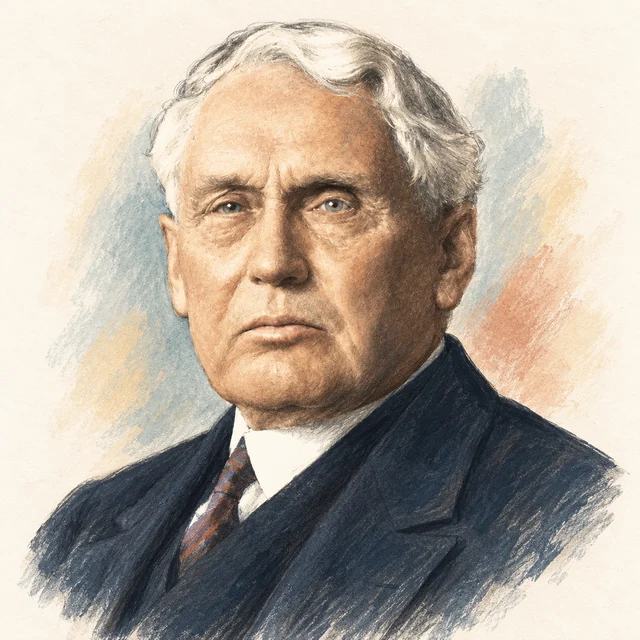
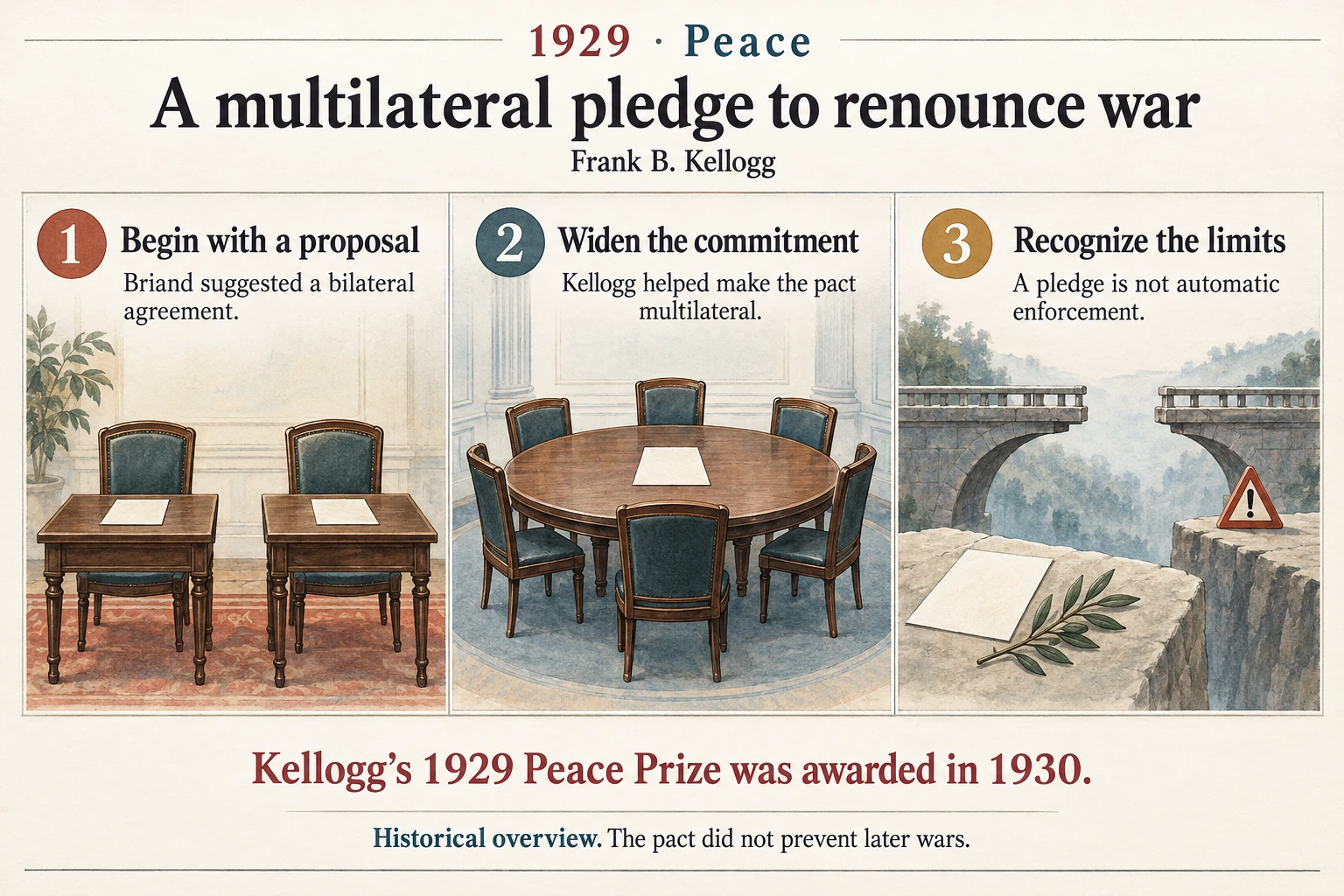
After the First World War, advocates sought ways to prevent another catastrophe. French foreign minister Aristide Briand proposed a bilateral agreement with the United States. Kellogg helped redirect the negotiations toward a multilateral agreement open to more states. Peace advocates including Nicholas Murray Butler and James T. Shotwell also contributed to the movement.
The pact signed in Paris on 27 August 1928 renounced war as an instrument of national policy and called for peaceful settlement of disputes. Its reach as a public international commitment mattered, but signatures were not the same as effective enforcement. Interpretations of self-defence and the lack of reliable sanctions left serious limits.
Why it matters
The pact became a prominent expression of the interwar effort to make aggressive war unacceptable. Kellogg’s recognition belonged to a collective diplomatic and civic movement. Later aggression, including Japan’s invasion of Manchuria in 1931, showed how far the pledge remained from a dependable system for preventing war.