c.curionodeThe Nobel Archive

1933 · Literature

Making a remembered world vivid in prose

Bunin used concentrated description, rhythm and sensory detail to give landscape, social tension and memory a vivid presence. The prize recognized his artistry within the Russian classical prose tradition.

Russian proseMemoryThe VillageIvan Bunin
1933Literature

Visual guide

The prize, pictured

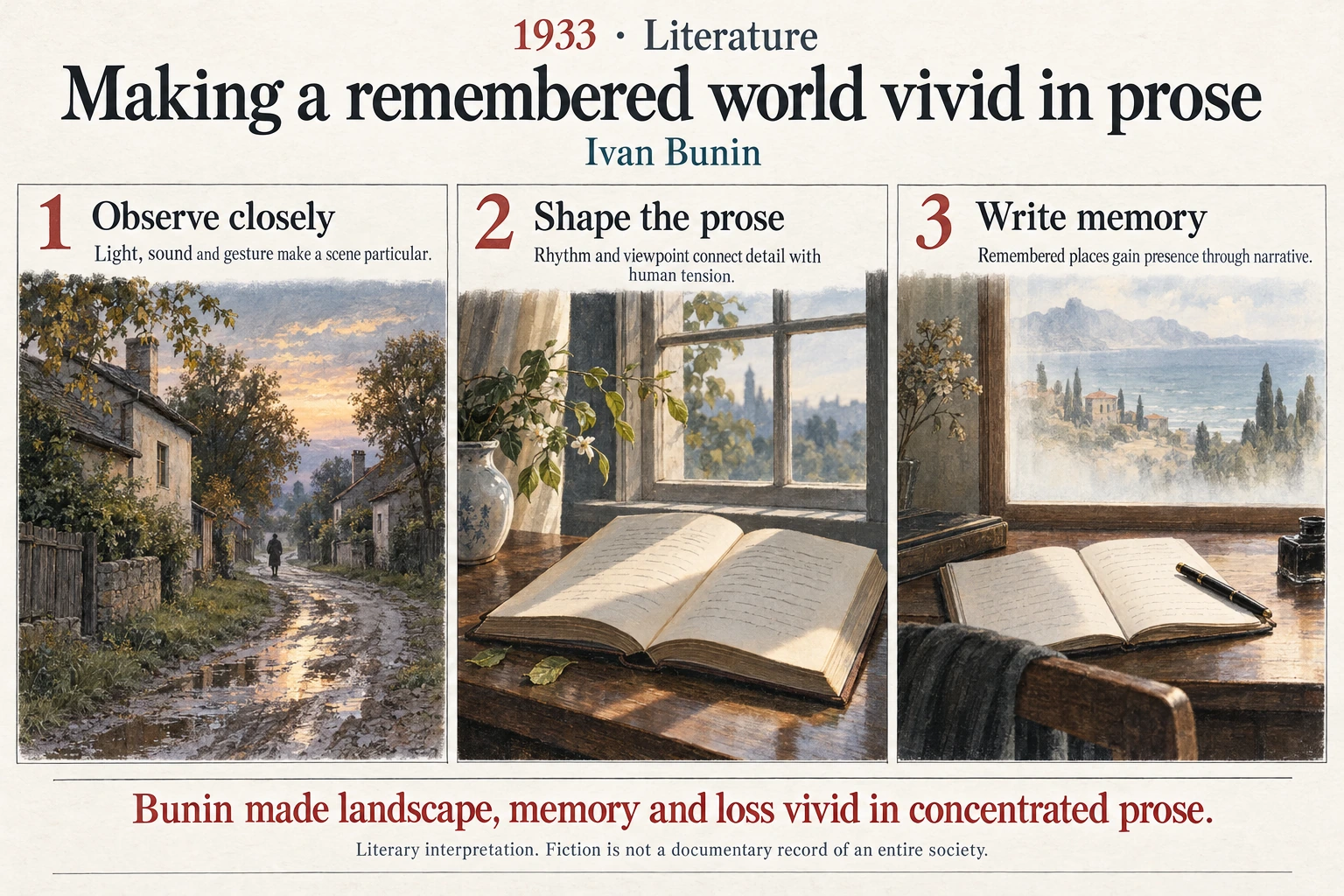
Infographic explaining Making a remembered world vivid in prose
Original AI-generated infographic. A conceptual overview; the explanations and sources below provide context.
Read the poster text

Bunin made landscape, memory and loss vivid in concentrated prose.

  1. Observe closely

    Light, sound and gesture make a scene particular.

  2. Shape the prose

    Rhythm and viewpoint connect detail with human tension.

  3. Write memory

    Remembered places gain presence through narrative.

Literary interpretation. Fiction is not a documentary record of an entire society.

01 · The contribution

The idea, in everyday language

How can prose make a vanished place or a passing sensation feel present without merely listing what was there? Bunin selected details of light, weather, sound and gesture, shaping them through rhythm and point of view. The Village and Sukhodol portray rural life and changing social relations without turning the countryside into a simple idyll. Their harshness and beauty coexist; the characters’ experiences are literary constructions, not a complete sociological account of Russia.

His writing ranged across poems, stories, translations and autobiographical prose. The Gentleman from San Francisco places wealth, vulnerability and social performance in tension, while the early part of The Life of Arseniev turns memory itself into a subject. Bunin had emigrated in 1920 and was living in France when awarded the 1933 prize. This context matters to the experience of distance and loss, but the award should not reduce all his work to exile. Later books, including the continuation Lika and Dark Alleys, were published after the prize.

Why it matters

The prize brought international attention to a Russian-language writer living outside Russia and to the expressive possibilities of precise, concentrated prose. His work carries forward literary traditions while making questions of memory, mortality and social division particular to individual scenes and voices.
02 · The people

Who brought the idea to life?

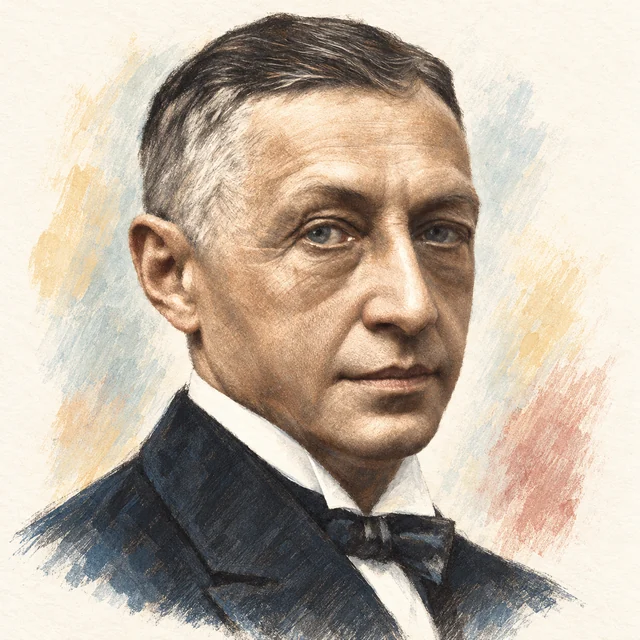
Illustrated portrait of Ivan Bunin

Ivan Bunin

Prize share · 1

Bunin received the full Literature Prize for the artistry of his prose and his continuation of Russian classical literary traditions. His concentrated descriptions connect landscape, memory, social relations and loss.

Read the biography ↗

03 · Years in the making

The path here

  1. 1910

    The Village is published.

  2. 1920

    Bunin emigrates from Russia and later settles in France.

  3. 1930

    The first part of The Life of Arseniev appears in book form.

  4. 1933

    Bunin receives the Literature Prize.

  5. 1939

    Lika continues The Life of Arseniev after the award.

04 · Read further

From the original sources

Original explanations by Curionode, based on the official records below. Biographical details and affiliations refer to the award year.

  1. Official award summary nobelprize.org
  2. Award ceremony speech nobelprize.org
  3. Official recipient bibliography nobelprize.org
  4. Official recipient biography nobelprize.org

More in Literature

Browse this subject ↗