01 · The contribution
The idea, in everyday language
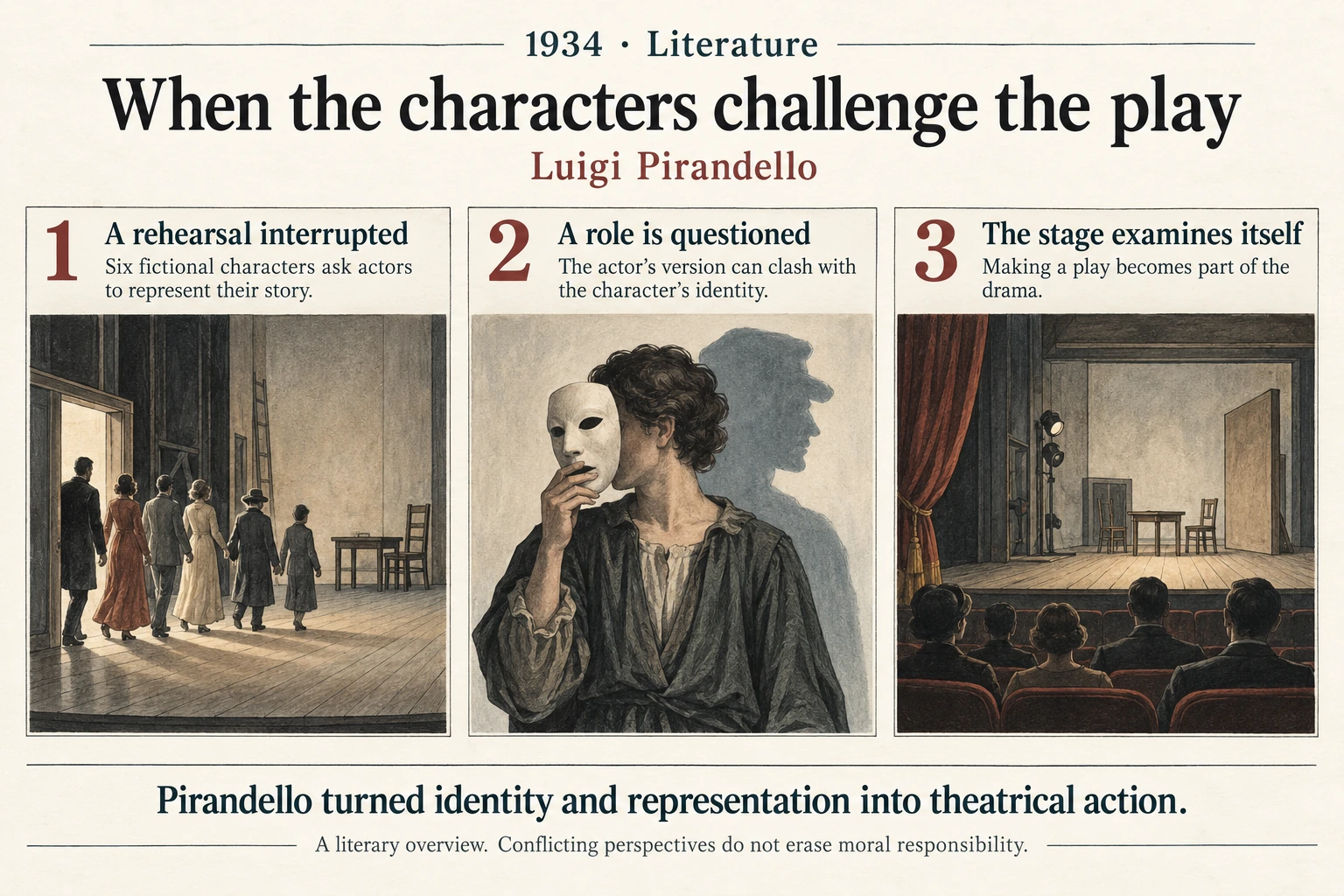
A conventional play can invite an audience to accept the stage as a self-contained world. Pirandello exposes the work of making that world. In Six Characters in Search of an Author, six fictional characters interrupt a theatrical rehearsal and insist that their unfinished drama be represented. Actors attempt to embody them, while the characters dispute whether a performance can express their experience. The boundary between the play and its making becomes the action.
The concern extends across his writing. In Henry IV, a man’s assumed historical identity unsettles judgments about madness and deliberate performance. The Late Mattia Pascal and One, None and a Hundred Thousand also explore how social recognition can hold a person in an identity that feels inadequate. Humour and tragedy often coexist. The 1934 prize recognized a renewal of dramatic and scenic art, rather than a single philosophical proposition or one novel alone.
Why it matters
By putting the rehearsal, the role and the act of representation on stage, Pirandello expanded what modern theatre could investigate. His plays helped make the theatre’s own conventions available for dramatic conflict. Their humour and unease can lead audiences to reconsider the labels they put on others.