01 · The contribution
The idea, in everyday language
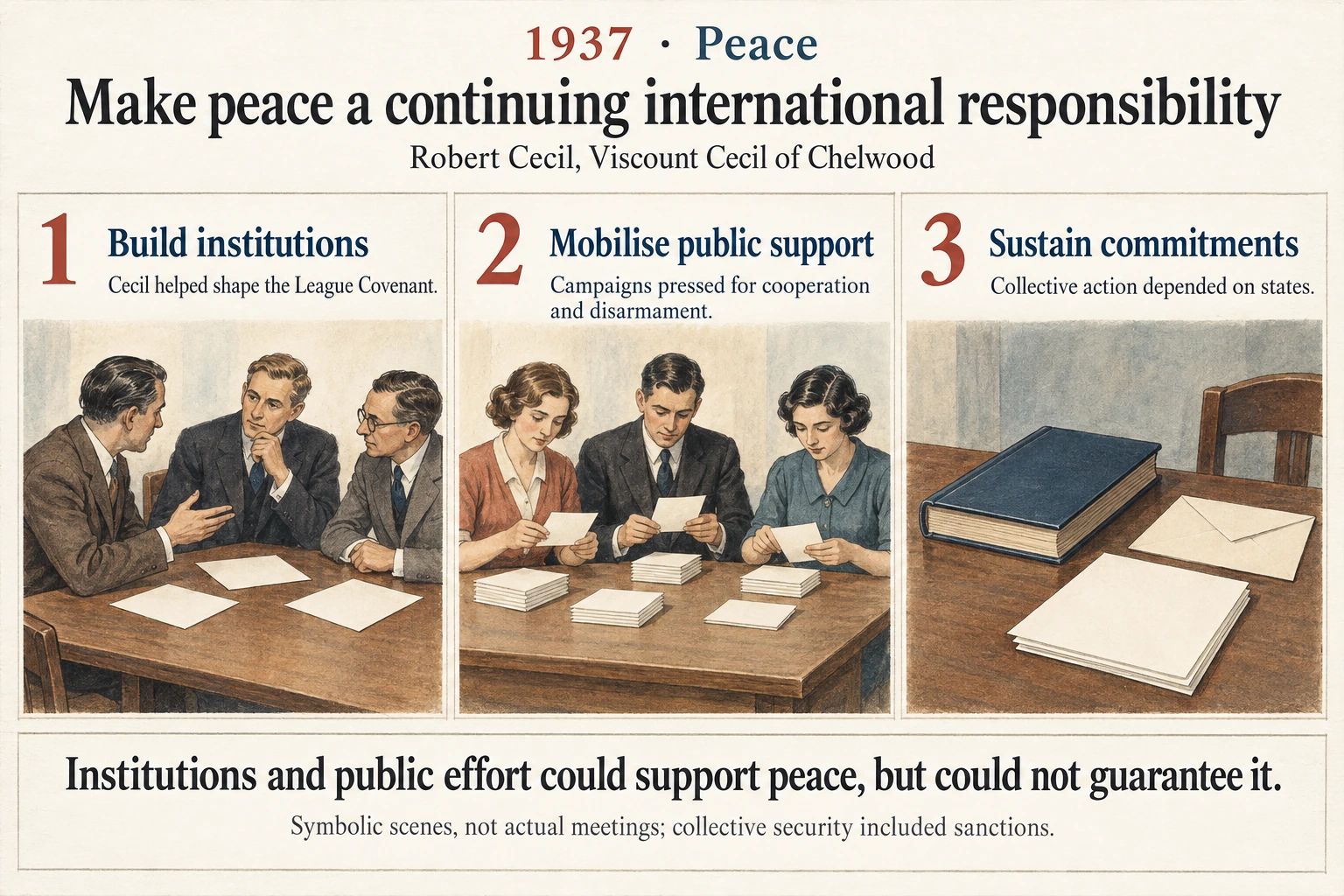
Ending a war did not by itself create institutions capable of preventing the next one. Cecil helped shape the League Covenant in 1919 and argued for sustained cooperation among states. Negotiation, public discussion and a pause before resorting to arms were central to his approach; collective economic and, if necessary, military action could restrain aggression.
He also worked outside government. As president of the League of Nations Union he supported public education and campaigning. The unofficial Peace Ballot of 1934–1935 gathered more than eleven million responses; its results were announced on 27 June 1935. With Pierre Cot he then helped organise the International Peace Campaign in 1936. He treated public opinion as a force that could keep international institutions active, rather than leaving peace to occasional diplomatic meetings.
Why it matters
Cecil’s work linked institutional design, disarmament and civic participation. It helped make the preservation of peace a continuing public responsibility. The 1937 prize honoured tireless advocacy, not proof that the League had overcome aggression. The limits of government commitment and collective action were already painfully visible in the 1930s.