01 · The discovery
The idea, in everyday language
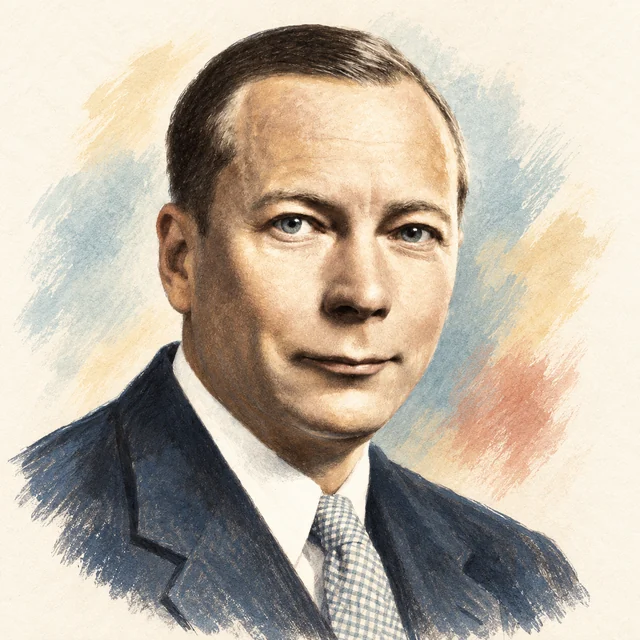
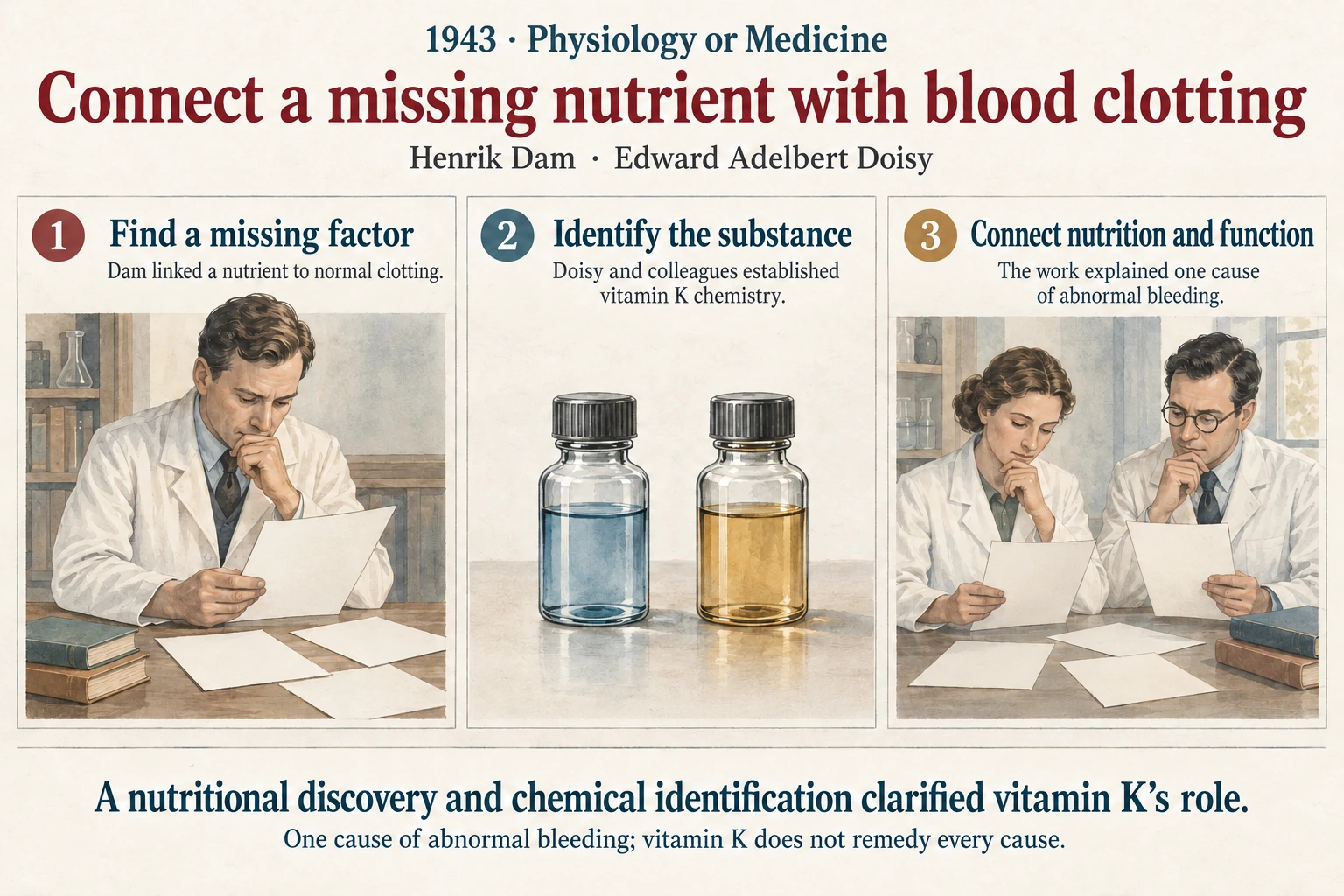
Why could blood fail to clot normally even when the known nutrients seemed accounted for? Dam’s studies beginning in 1929 revealed abnormal bleeding under particular dietary conditions. Continued investigation, including work with Schønheyder in 1934, pointed to a previously unrecognised nutritional factor. Dam called it vitamin K.
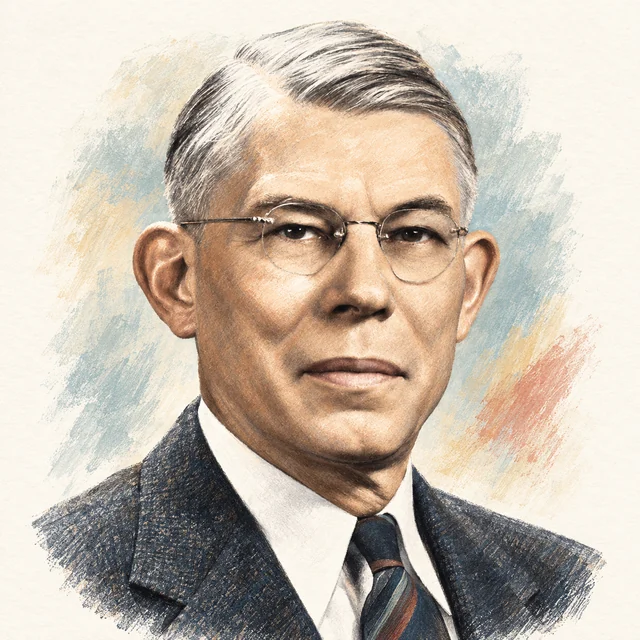
Recognising an activity in food was different from identifying the responsible substance. Dam, Karrer and other investigators pursued purification, while Doisy’s team obtained crystalline forms, determined chemical structure and achieved synthesis in 1939. Parallel work by other researchers also mattered. The two halves of the prize distinguish linked contributions: Dam’s discovery of the vitamin and Doisy’s elucidation of its chemistry.
Why it matters
The discoveries connected nutrition, biochemistry and a cause of abnormal bleeding, helping make prevention and treatment of vitamin K deficiency possible. This was one important part of understanding coagulation. Bleeding has many causes; recognising vitamin K deficiency does not explain or remedy all of them.