c.curionodeThe Nobel Archive

1953 · Literature

Give history a forceful narrative voice

Churchill’s historical and biographical writing and public oratory earned the 1953 Literature Prize, not the Peace Prize.

Historical narrativeBiographyOratory
1953Literature

Visual guide

The prize, pictured

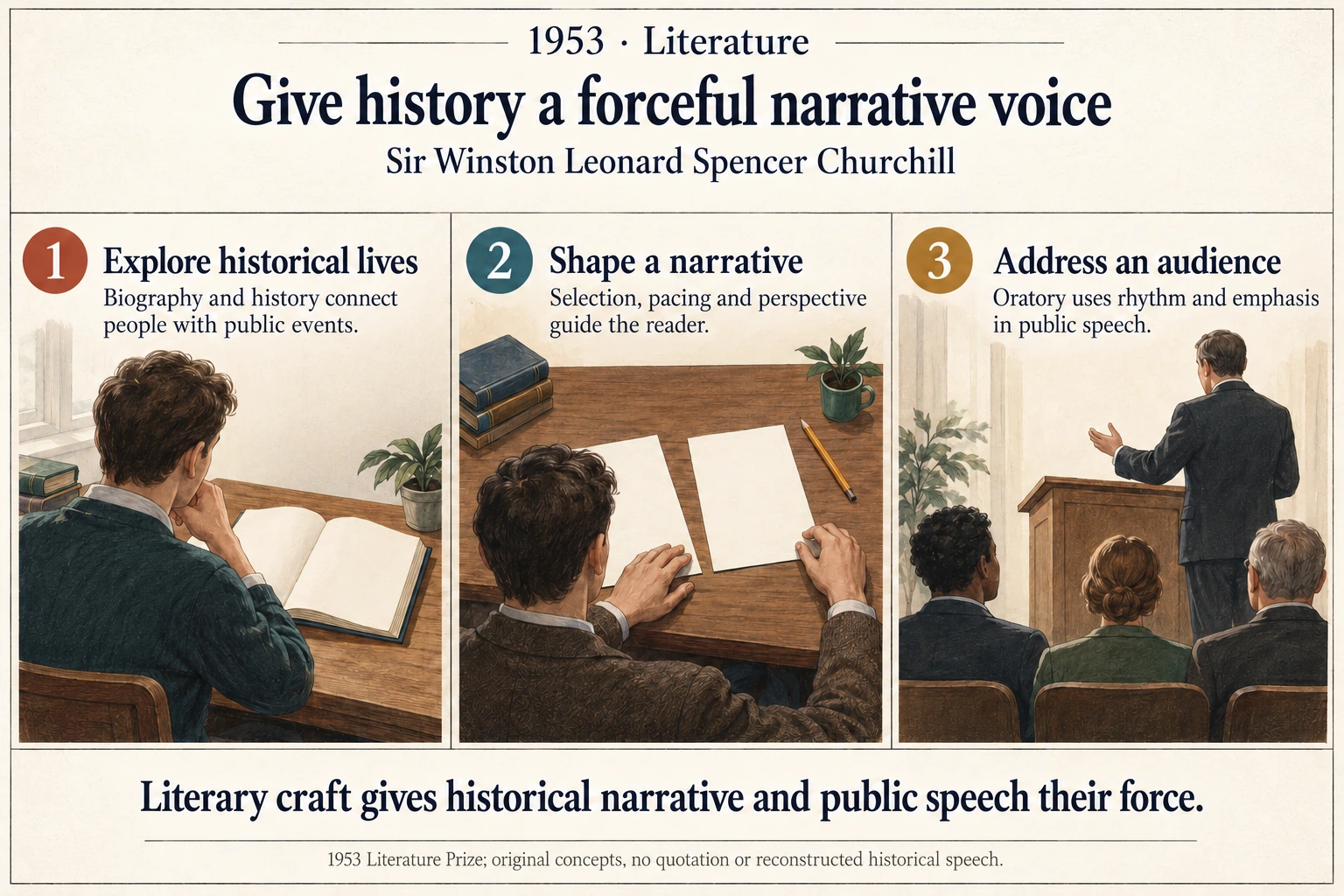
Infographic explaining Give history a forceful narrative voice
Original AI-generated infographic. A conceptual overview; the explanations and sources below provide context.
Read the poster text

Literary craft gives historical narrative and public speech their force.

  1. Explore historical lives

    Biography and history connect people with public events.

  2. Shape a narrative

    Selection, pacing and perspective guide the reader.

  3. Address an audience

    Oratory uses rhythm and emphasis in public speech.

1953 Literature Prize; original concepts, no quotation or reconstructed historical speech.

01 · The contribution

The idea, in everyday language

How can an account of public events hold a reader’s attention while presenting people, decisions and consequences? Churchill combined historical narration, biography and the perspective of a political participant. His writing extended from early campaign reports to Lord Randolph Churchill, The World Crisis and Marlborough, as well as wartime memoirs.

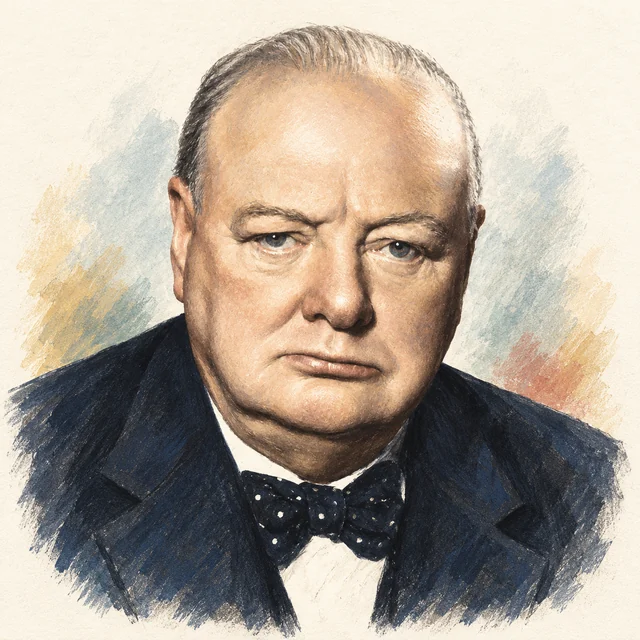
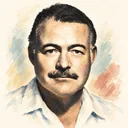
His speeches used rhythm, emphasis and images to address public audiences. The award recognised both prose and oratory. Churchill was prime minister again in 1953, and Clementine Churchill accepted the prize on his behalf. The recognition concerned a literary body of work rather than a single scientific finding, and the 1953 Peace Prize went to George C. Marshall.

Why it matters

The work connected public life with widely read historical narrative and demonstrated how spoken language can shape collective attention. Readers can study the craft of argument, portraiture and pacing while examining the author’s role in the events described.
02 · The people

Who brought the idea to life?

03 · Years in the making

The path here

  1. 1874

    Churchill is born at Woodstock.

  2. 1900

    He is elected to Parliament.

  3. 1906

    Lord Randolph Churchill appears.

  4. 1923–1931

    The six-volume World Crisis is published.

  5. 1933–1938

    The four-volume Marlborough is published.

  6. 1948

    The Second World War memoir series begins publication.

  7. 1951

    He becomes prime minister again.

  8. 1953

    He receives the full Literature Prize.

04 · Read further

From the original sources

Original explanations by Curionode, based on the official records below. Biographical details and affiliations refer to the award year.

  1. Official award summary nobelprize.org
  2. Award ceremony speech nobelprize.org
  3. Official selected bibliography nobelprize.org
  4. Official biography: Sir Winston Leonard Spencer Churchill nobelprize.org

More in Literature

Browse this subject ↗