01 · The contribution
The idea, in everyday language
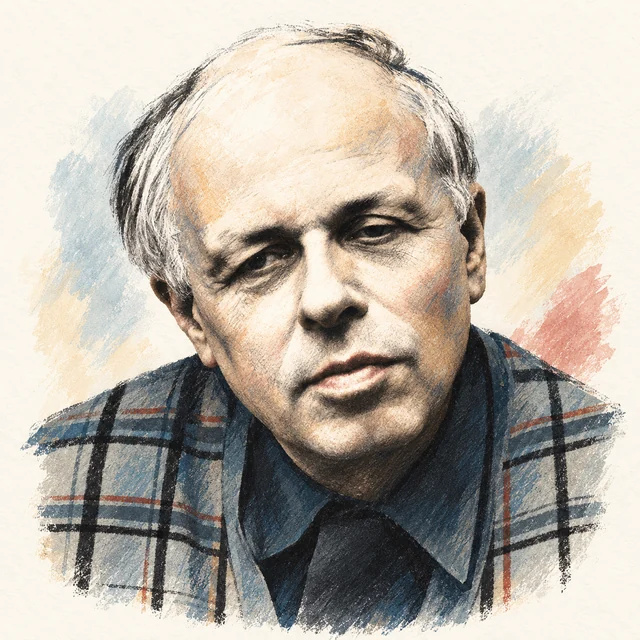
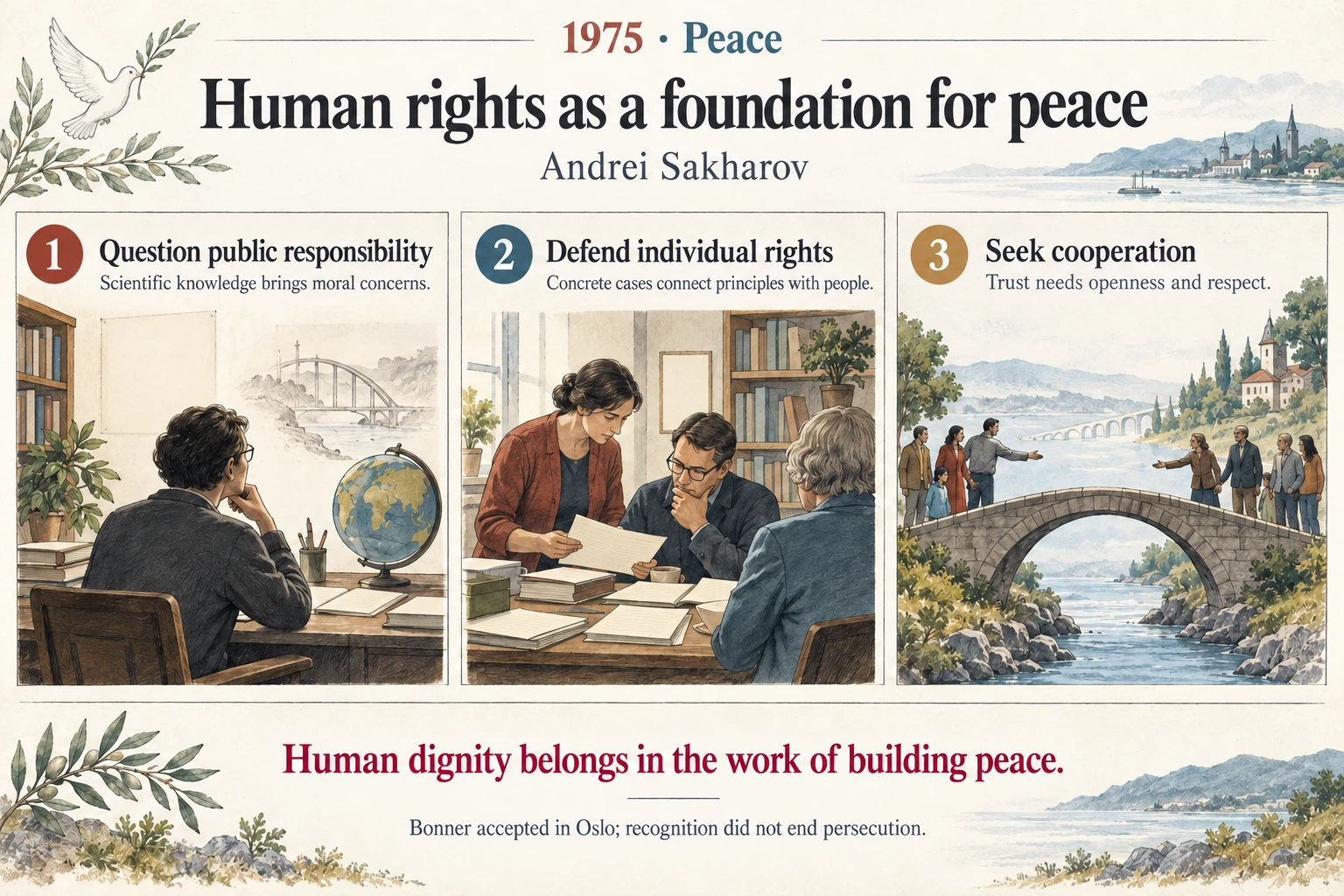
Work on Soviet nuclear weapons placed Sakharov close to the destructive possibilities of modern science. Concern about fallout and the arms race grew into a public argument about responsibility. His 1968 essay connected progress, peaceful coexistence and intellectual freedom. He argued that durable cooperation required openness and respect for people, rather than trust in military balance alone. The Peace Prize recognised this subsequent advocacy, not the development of nuclear weapons.
From 1970, work in a human-rights committee and support for victims of political trials made the argument concrete. Defending access to information, legal safeguards and freedom of thought connected international ideals with everyday treatment of individuals. Sakharov was refused permission to travel to Oslo in 1975, so Elena Bonner accepted the prize on his behalf. Recognition did not end persecution: exile in Gorky followed in 1980, and their return to Moscow came in 1986.
Why it matters
The award placed human rights alongside disarmament and cooperation in the understanding of peace. Sakharov’s work gave visibility to people facing political repression and to the moral responsibilities of scientists. Its influence should not be confused with a claim that one person alone produced later political changes.