c.curionodeThe Nobel Archive

1975 · Peace

Human rights as a foundation for peace

Sakharov connected disarmament and international cooperation with the rights of individuals. His public defence of those facing persecution challenged the idea that peace means only an absence of war.

Human rightsDisarmamentPublic responsibility
1975Peace

Visual guide

The prize, pictured

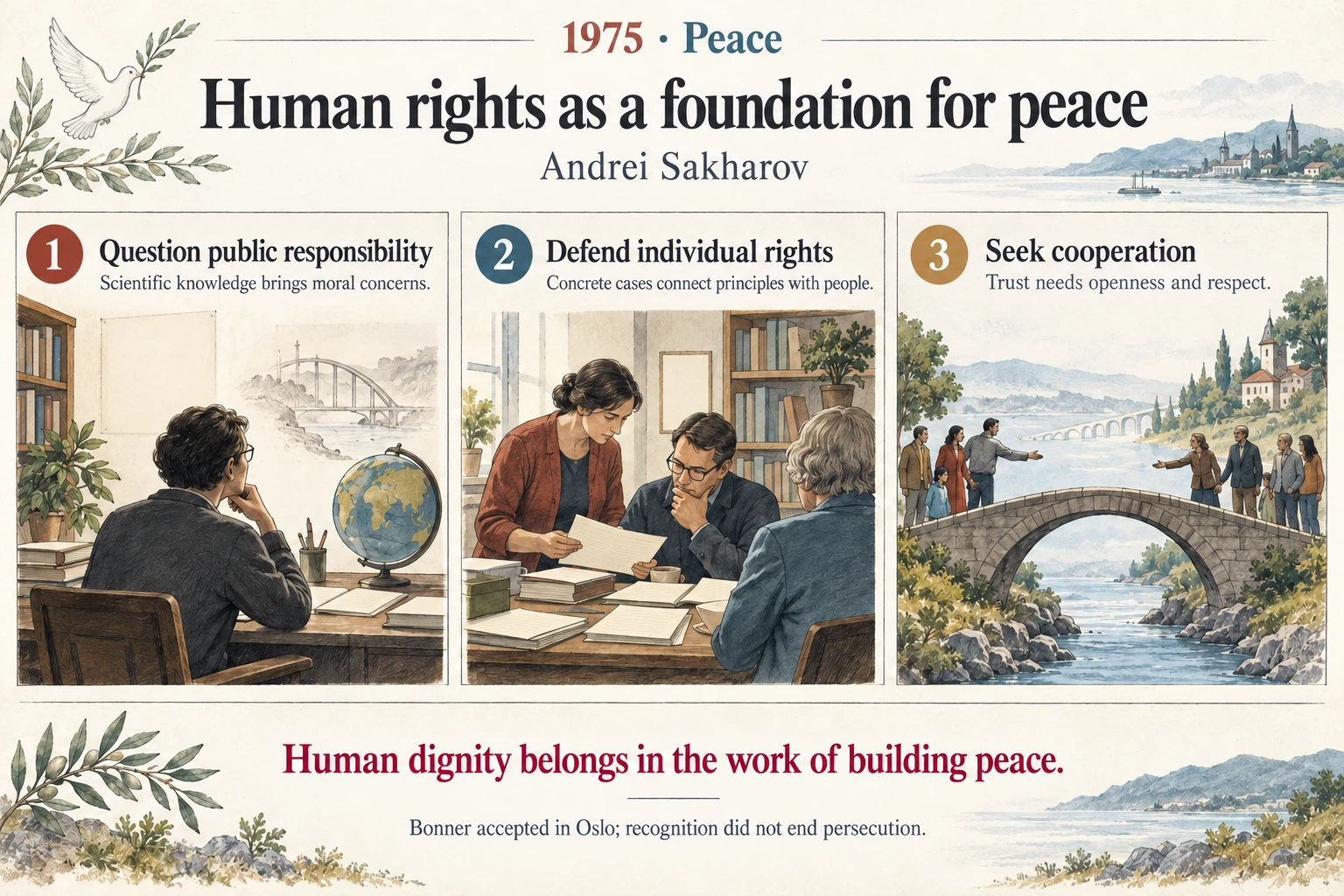
Infographic explaining Human rights as a foundation for peace
Original AI-generated infographic. A conceptual overview; the explanations and sources below provide context.
Read the poster text

Human dignity belongs in the work of building peace.

  1. Question public responsibility

    Scientific knowledge brings moral concerns.

  2. Defend individual rights

    Concrete cases connect principles with people.

  3. Seek cooperation

    Trust needs openness and respect.

Bonner accepted in Oslo; recognition did not end persecution.

01 · The contribution

The idea, in everyday language

Work on Soviet nuclear weapons placed Sakharov close to the destructive possibilities of modern science. Concern about fallout and the arms race grew into a public argument about responsibility. His 1968 essay connected progress, peaceful coexistence and intellectual freedom. He argued that durable cooperation required openness and respect for people, rather than trust in military balance alone. The Peace Prize recognised this subsequent advocacy, not the development of nuclear weapons.

From 1970, work in a human-rights committee and support for victims of political trials made the argument concrete. Defending access to information, legal safeguards and freedom of thought connected international ideals with everyday treatment of individuals. Sakharov was refused permission to travel to Oslo in 1975, so Elena Bonner accepted the prize on his behalf. Recognition did not end persecution: exile in Gorky followed in 1980, and their return to Moscow came in 1986.

Why it matters

The award placed human rights alongside disarmament and cooperation in the understanding of peace. Sakharov’s work gave visibility to people facing political repression and to the moral responsibilities of scientists. Its influence should not be confused with a claim that one person alone produced later political changes.

02 · The people

Who brought the idea to life?

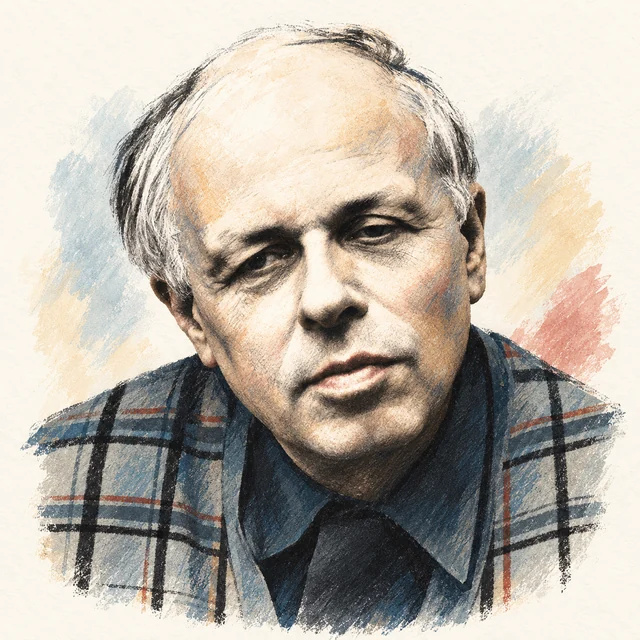
Illustrated portrait of Andrei Sakharov

Andrei Sakharov

Prize share · 1

Sakharov received the full Peace Prize for defending human rights in the Soviet Union and promoting disarmament and international cooperation. Bonner accepted the prize on his behalf in Oslo.

Read the biography ↗

03 · Years in the making

The path here

  1. 1947

    Sakharov defends his physics doctorate after beginning study in1945.

  2. 1968

    His essay links progress, coexistence and intellectual freedom.

  3. 1970

    He helps establish the Committee for Human Rights.

  4. 1975

    The Peace Prize is accepted in Oslo by Elena Bonner.

  5. 1980

    Later exile in Gorky begins.

  6. 1986

    Sakharov and Bonner return to Moscow.

04 · Read further

From the original sources

Original explanations by Curionode, based on the official records below. Biographical details and affiliations refer to the award year.

  1. Official award summary nobelprize.org
  2. Official presentation speech nobelprize.org