c.curionodeThe Nobel Archive

1976 · Peace

Neighbours choose a first step toward peace

After three children died in Belfast in 1976, Williams and Corrigan mobilised ordinary people against violence. Their movement sought cooperation across divisions rather than another cycle of retaliation.

NonviolenceCommunity trustReserved prize
1976Peace

Visual guide

The prize, pictured

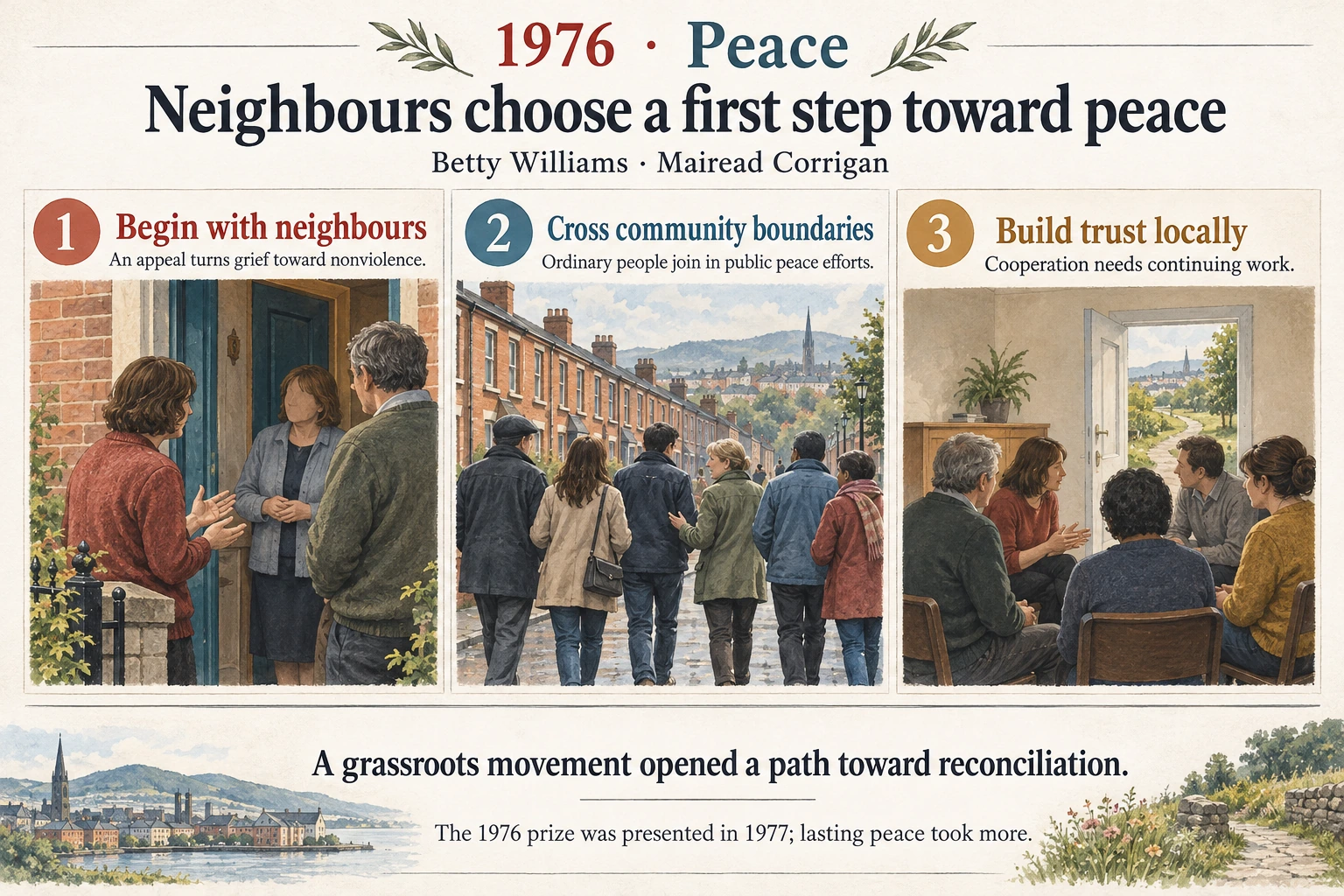
Infographic explaining Neighbours choose a first step toward peace
Original AI-generated infographic. A conceptual overview; the explanations and sources below provide context.
Read the poster text

A grassroots movement opened a path toward reconciliation.

  1. Begin with neighbours

    An appeal turns grief toward nonviolence.

  2. Cross community boundaries

    Ordinary people join in public peace efforts.

  3. Build trust locally

    Cooperation needs continuing work.

The 1976 prize was presented in 1977; lasting peace took more.

01 · The contribution

The idea, in everyday language

A tragedy in August 1976 brought Betty Williams, a witness, together with Mairead Corrigan, the children’s aunt. With journalist Ciaran McKeown they formed the movement later known as the Peace People. Public appeals, marches and local groups encouraged Catholic and Protestant neighbours to reject violence and meet across community boundaries. The work responded to a desire for safety already present among many people; the leaders did not invent that desire or represent every political position in Northern Ireland.

The Nobel ceremony praised their effort to begin reconciliation through ordinary citizens. Building local trust could challenge the idea that people had no alternative to confrontation. But an appeal against violence did not by itself resolve political disputes or create a lasting settlement. Support later declined and internal disagreement affected the movement, while further community work continued. The prize is the 1976 Peace Prize: it had been reserved that year and was awarded and presented in 1977. This is separate from Amnesty International’s 1977 prize, even though the awards shared a ceremony.

Why it matters

Their initiative gave public visibility to nonviolent participation and helped people act together across community lines. The award recognised a courageous starting point, not a completed peace. Both Williams and Corrigan received one half; McKeown and the wider movement made important contributions without being laureates.
02 · The people

Who brought the idea to life?

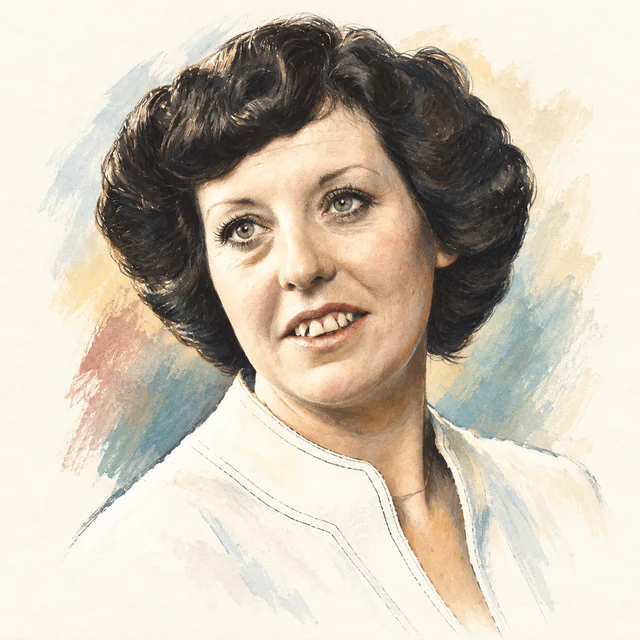
Illustrated portrait of Betty Williams

Betty Williams

Prize share · 1/2

Williams helped mobilise cross-community opposition to violence after the 1976 Belfast tragedy. She received half the 1976 Peace Prize, presented in 1977, alongside Corrigan. McKeown was a co-founder but not a recipient.

Read the biography ↗
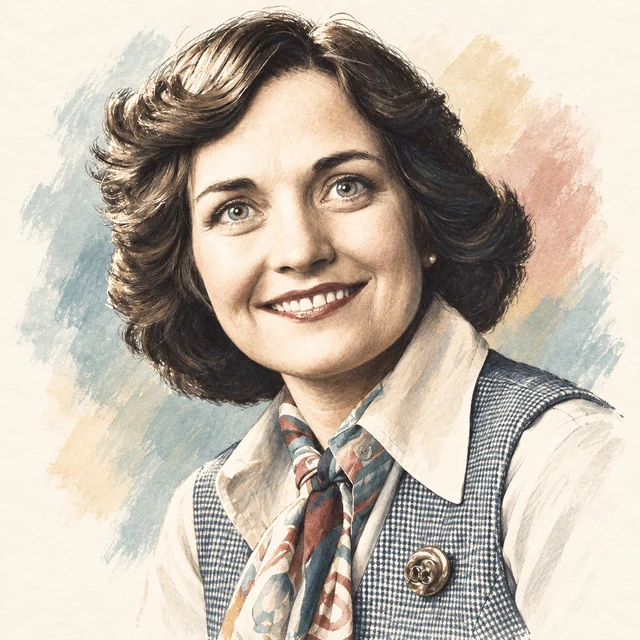
Illustrated portrait of Mairead Corrigan

Mairead Corrigan

Prize share · 1/2

Corrigan helped establish and sustain community peace efforts across Northern Ireland’s divisions. She received half the reserved 1976 Peace Prize alongside Williams, recognising nonviolent mobilisation rather than the completion of a peace settlement.

Read the biography ↗

03 · Years in the making

The path here

  1. August 1976

    The deaths of three children in Belfast prompt appeals against violence.

  2. 14 August 1976

    Williams, Corrigan and McKeown establish the movement described in their official biographies.

  3. 1976

    Marches and local groups draw participants across community boundaries; the Peace Prize is reserved.

  4. 1977

    The reserved 1976 prize is awarded to Williams and Corrigan.

  5. 10 December 1977

    The 1976 prize is presented in Oslo, separately from the 1977 award.

04 · Read further

From the original sources

Original explanations by Curionode, based on the official records below. Biographical details and affiliations refer to the award year.

  1. Official award summary nobelprize.org
  2. Official presentation speech nobelprize.org