c.curionodeThe Nobel Archive

1977 · Peace

Make hidden cases visible

Amnesty International linked investigation with coordinated public concern for people imprisoned or mistreated. The 1977 award recognised defence of human dignity as part of building peace.

Human rightsCase researchInternational advocacy
1977Peace

Visual guide

The prize, pictured

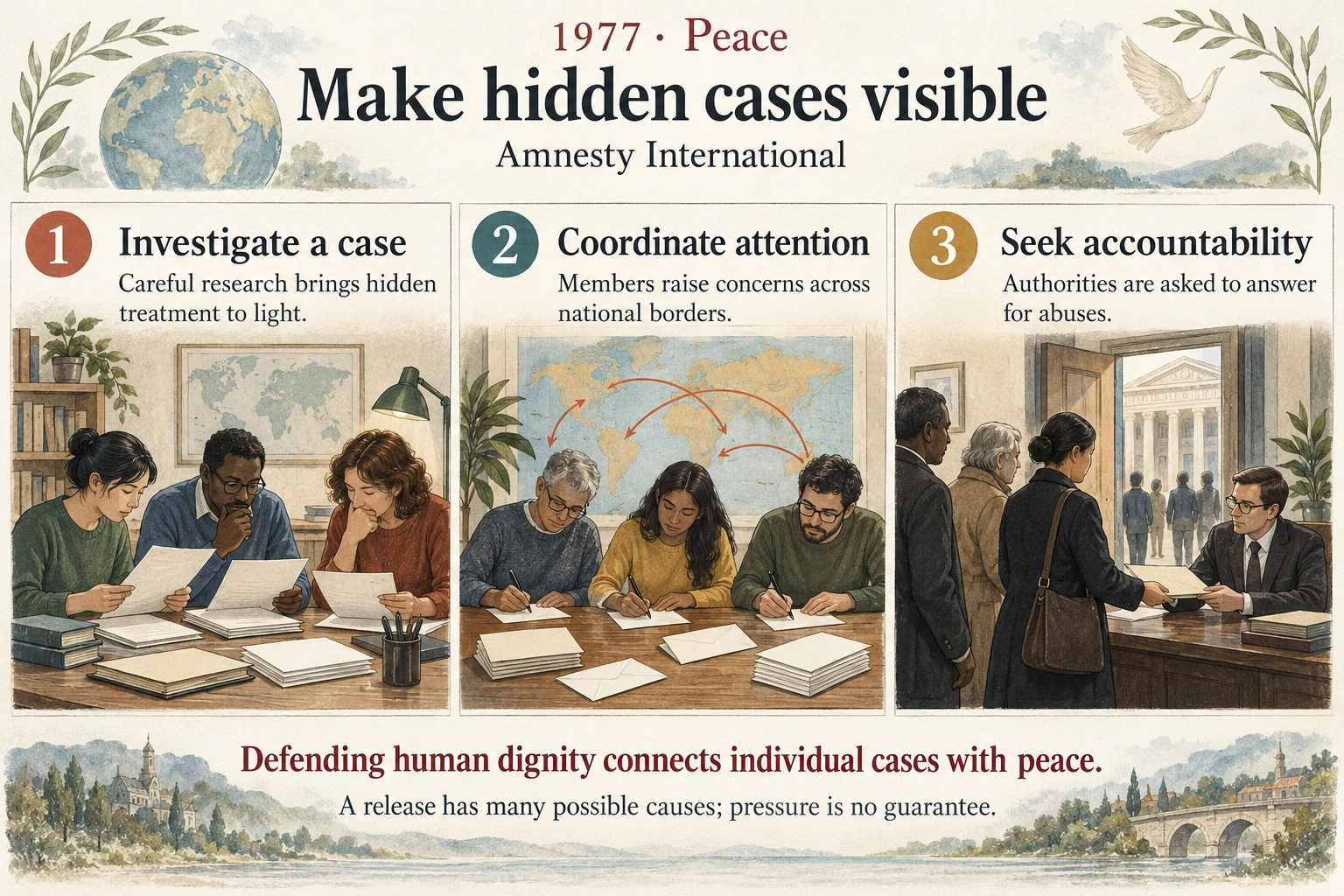
Infographic explaining Make hidden cases visible
Original AI-generated infographic. A conceptual overview; the explanations and sources below provide context.
Read the poster text

Defending human dignity connects individual cases with peace.

  1. Investigate a case

    Careful research brings hidden treatment to light.

  2. Coordinate attention

    Members raise concerns across national borders.

  3. Seek accountability

    Authorities are asked to answer for abuses.

A release has many possible causes; pressure is no guarantee.

01 · The contribution

The idea, in everyday language

A case that remains hidden is harder for outsiders to challenge. Amnesty developed a network to gather information, publish reports and raise individual cases with authorities. Its prisoner-of-conscience work concerned people held for their opinions who had not used or advocated violence; demands for fair trials and humane treatment extended more broadly. Opposition to torture addressed the treatment of people regardless of whether they fit that narrower category.

Members organised letters and other public pressure across national boundaries. The Nobel ceremony emphasised respect for human rights and the importance of making governments answerable for abuses. This is a collective organisational achievement: the prize was awarded to Amnesty International, not Benenson. The same ceremony presented the deferred 1976 Northern Ireland Peace Prize, which must not be confused with Amnesty’s 1977 award.

Why it matters

The work helped connect individual cases with international concern about torture, persecution and prisoner treatment. The award treated protection of human dignity as relevant to peace beyond negotiations between states. Changes in a case may have several causes, including other advocates and political developments.

02 · The recipients

Who brought the idea to life?

Symbolic illustration representing Amnesty International

Amnesty International

Prize share · 1

Amnesty International received the full Peace Prize for promoting worldwide respect for human rights. The award recognised an organised international effort to investigate abuses and defend people against persecution and torture.

Read the biography ↗

03 · Years in the making

The path here

  1. 1961

    Benenson’s newspaper appeal launches a campaign that develops into Amnesty International.

  2. 1973

    Amnesty issues its first full Urgent Action on an individual case.

  3. 1977

    The organisation’s work on prisoners and torture receives the full Peace Prize.

  4. December 1977

    The ceremony also presents the separate deferred 1976 Peace Prize.

04 · Read further

From the original sources

Original explanations by Curionode, based on the official records below. Biographical details and affiliations refer to the award year.

  1. Official award summary nobelprize.org
  2. Official presentation speech nobelprize.org
  3. Amnesty: origins of the 1961 campaign amnesty.org
  4. Amnesty UK: historical timeline amnesty.org.uk
  5. Amnesty: first Urgent Action in 1973 amnesty.org