c.curionodeThe Nobel Archive

1984 · Peace

Insist on equal rights without racial revenge

Tutu’s nonviolent opposition to apartheid joined public witness with a vision of a shared future.

apartheidequal rightsnonviolencereconciliation
1984Peace

Visual guide

The prize, pictured

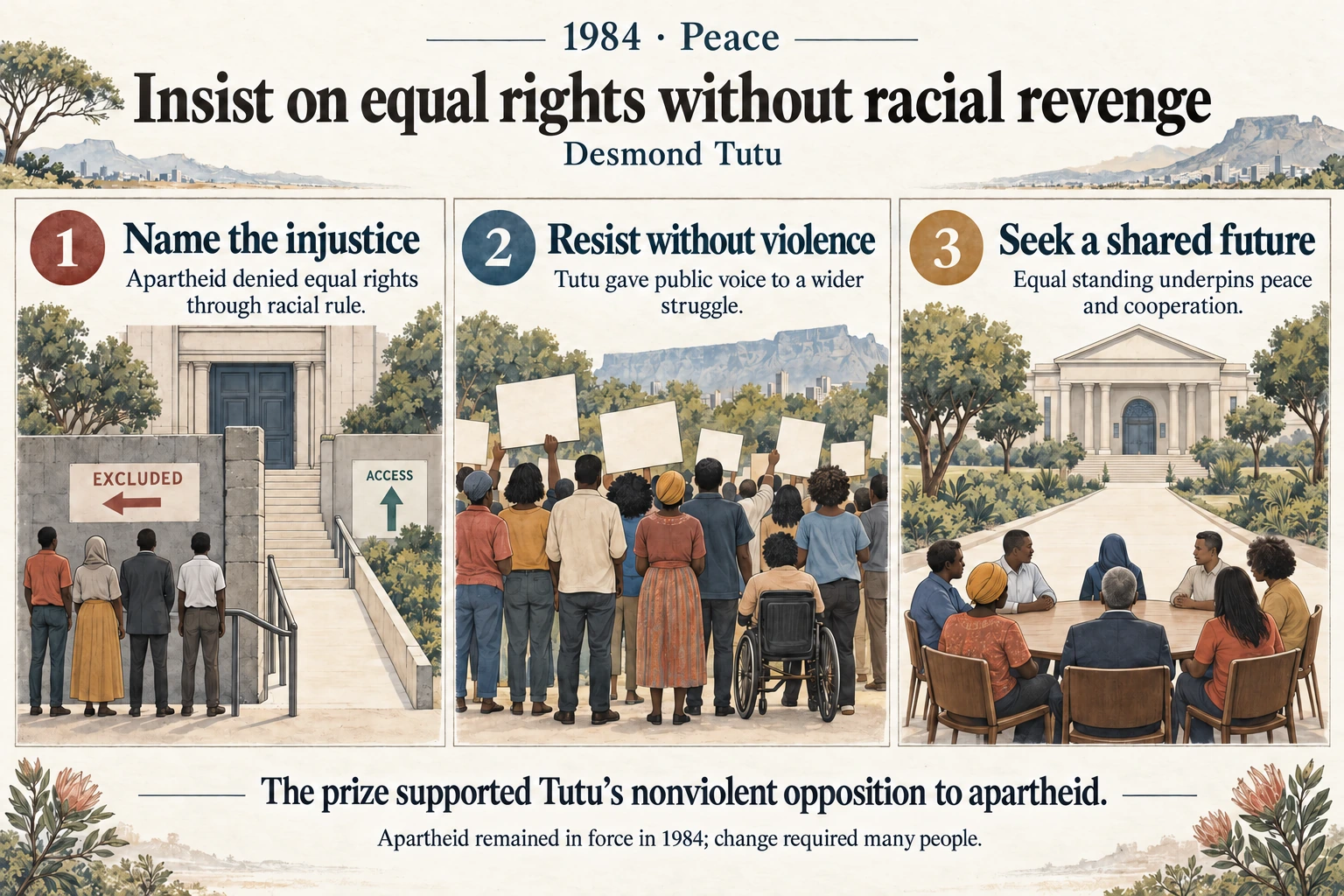
Infographic explaining Insist on equal rights without racial revenge
Original AI-generated infographic. A conceptual overview; the explanations and sources below provide context.
Read the poster text

The prize supported Tutu’s nonviolent opposition to apartheid.

  1. Name the injustice

    Apartheid denied equal rights through racial rule.

  2. Resist without violence

    Tutu gave public voice to a wider struggle.

  3. Seek a shared future

    Equal standing underpins peace and cooperation.

Apartheid remained in force in 1984; change required many people.

01 · The contribution

The idea, in everyday language

Apartheid organised South African life through racial inequality, excluding the Black majority from equal political rights and enforcing discriminatory restrictions. Tutu used church leadership to oppose the system publicly and advocate equal human rights. As general secretary of the South African Council of Churches, he gave an influential voice to that struggle.

His approach combined nonviolent resistance, international attention and cooperation across racial divisions. He opposed racial domination while appealing to a common humanity. The 1984 Nobel Peace Prize supported this work at a time when apartheid remained in force. It recognised leadership within a much wider movement, not the completed end of the system.

Why it matters

The award amplified opposition to apartheid and affirmed equal rights as a basis for peace. Tutu later became Archbishop of Cape Town and chaired the Truth and Reconciliation Commission. Those later roles belong to the subsequent history, distinct from his position when the prize was announced.

02 · The people

Who brought the idea to life?

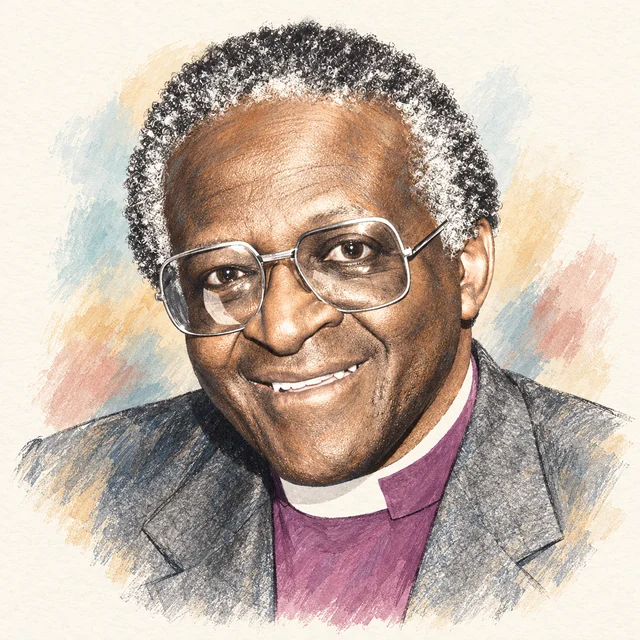
Illustrated portrait of Desmond Tutu

Desmond Tutu

Prize share · 1

Tutu opposed apartheid through nonviolent advocacy, insisting on equal political and human rights and cooperation across racial divisions. His religious leadership gave public voice to people excluded by the system and sought a shared future rather than racial revenge. The full Peace Prize supported this struggle; apartheid had not ended in 1984, and its eventual dismantling involved many people and organisations.

Read the biography ↗

03 · Years in the making

The path here

  1. 1975

    Tutu becomes Dean of Johannesburg.

  2. 1978

    He becomes general secretary of the South African Council of Churches.

  3. 1984

    The Peace Prize supports his nonviolent struggle against apartheid.

  4. 1986

    Later, he becomes Archbishop of Cape Town.

04 · Read further

From the original sources

Original explanations by Curionode, based on the official records below. Biographical details and affiliations refer to the award year.

  1. Official announcement nobelprize.org
  2. Nobel: Tutu curriculum vitae nobelprize.org
  3. Tutu Legacy Foundation: life and work tutu.org.za