01 · The contribution
The idea, in everyday language
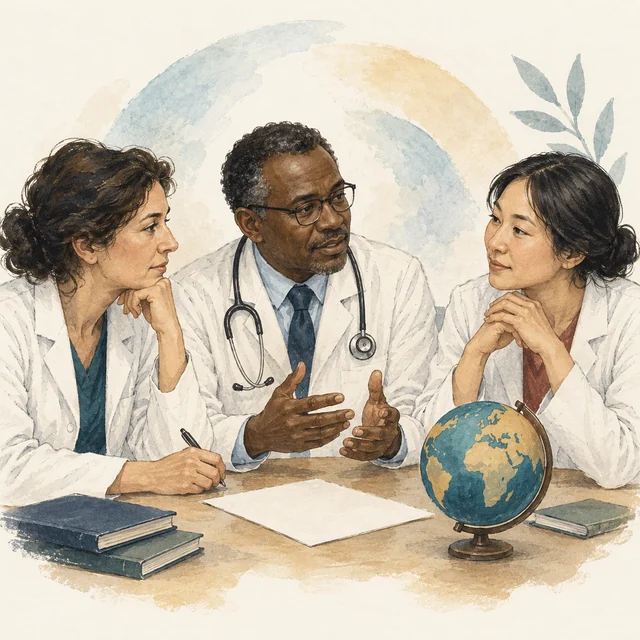
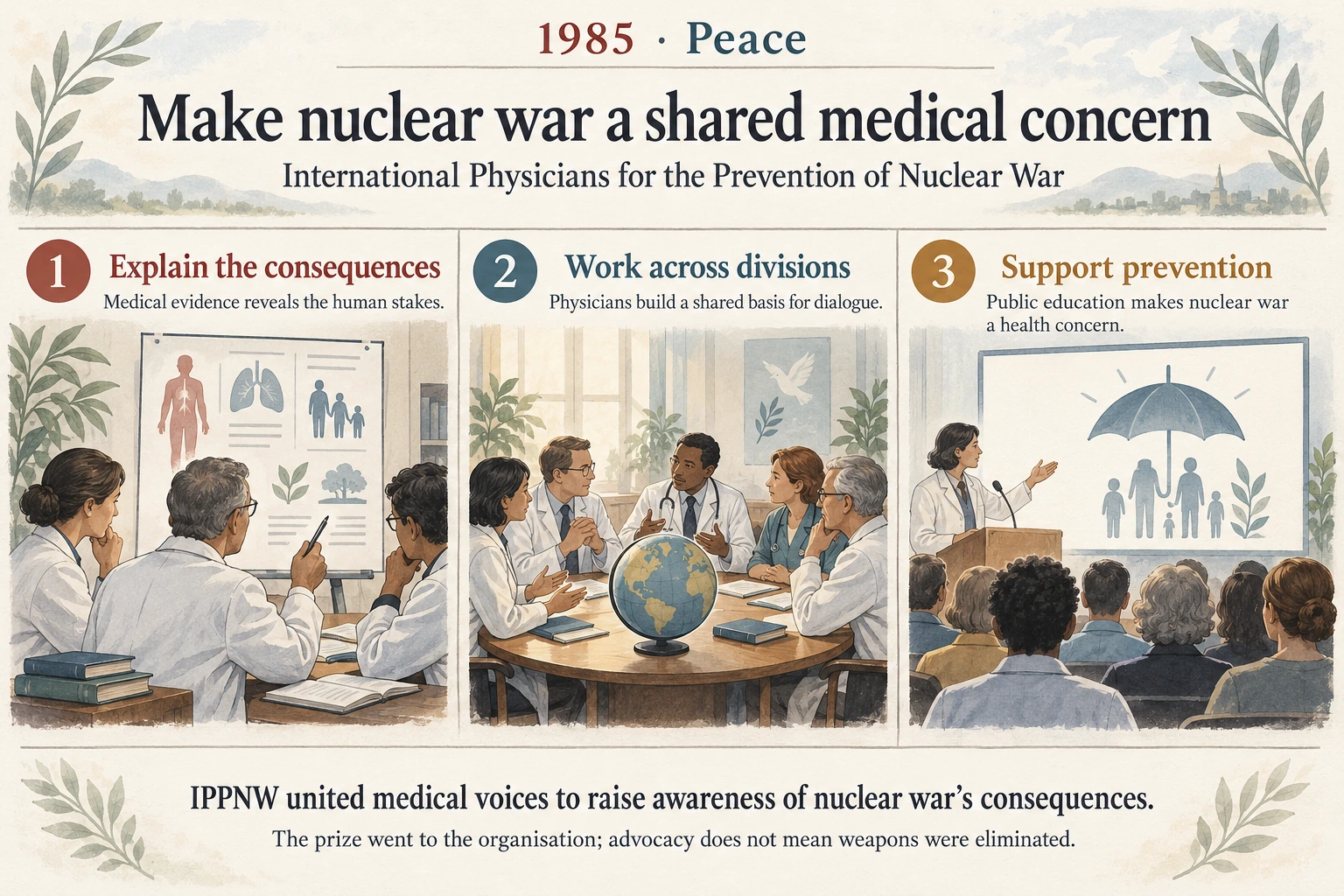
Debates about nuclear weapons often focus on strategy and military power. IPPNW asked what nuclear war would mean for bodies, health services and communities. Its physicians drew on evidence about blast, burns and radiation, including research by Japanese colleagues, to explain catastrophic consequences and the limits of medical response.
Founded through Soviet–American cooperation in 1980, the federation organised congresses and public education across national divisions. Shared medical responsibilities offered a basis for dialogue despite political disagreements. The Nobel Committee recognised the organisation’s authoritative information and contribution to public awareness, rather than awarding the founders as individuals.
Why it matters
IPPNW helped make the humanitarian consequences of nuclear weapons part of public discussion. International medical cooperation showed that professional responsibilities could support dialogue across hostile blocs. The full Peace Prize went to the federation as one organisation.