c.curionodeThe Nobel Archive

1986 · Economic Sciences

Study the rules of collective choice

Buchanan examined how agreed rules shape economic and political decisions.

The Sveriges Riksbank Prize in Economic Sciences in Memory of Alfred Nobel.

public choiceconstitutional rulesincentivesagreement
1986Economic Sciences

Visual guide

The prize, pictured

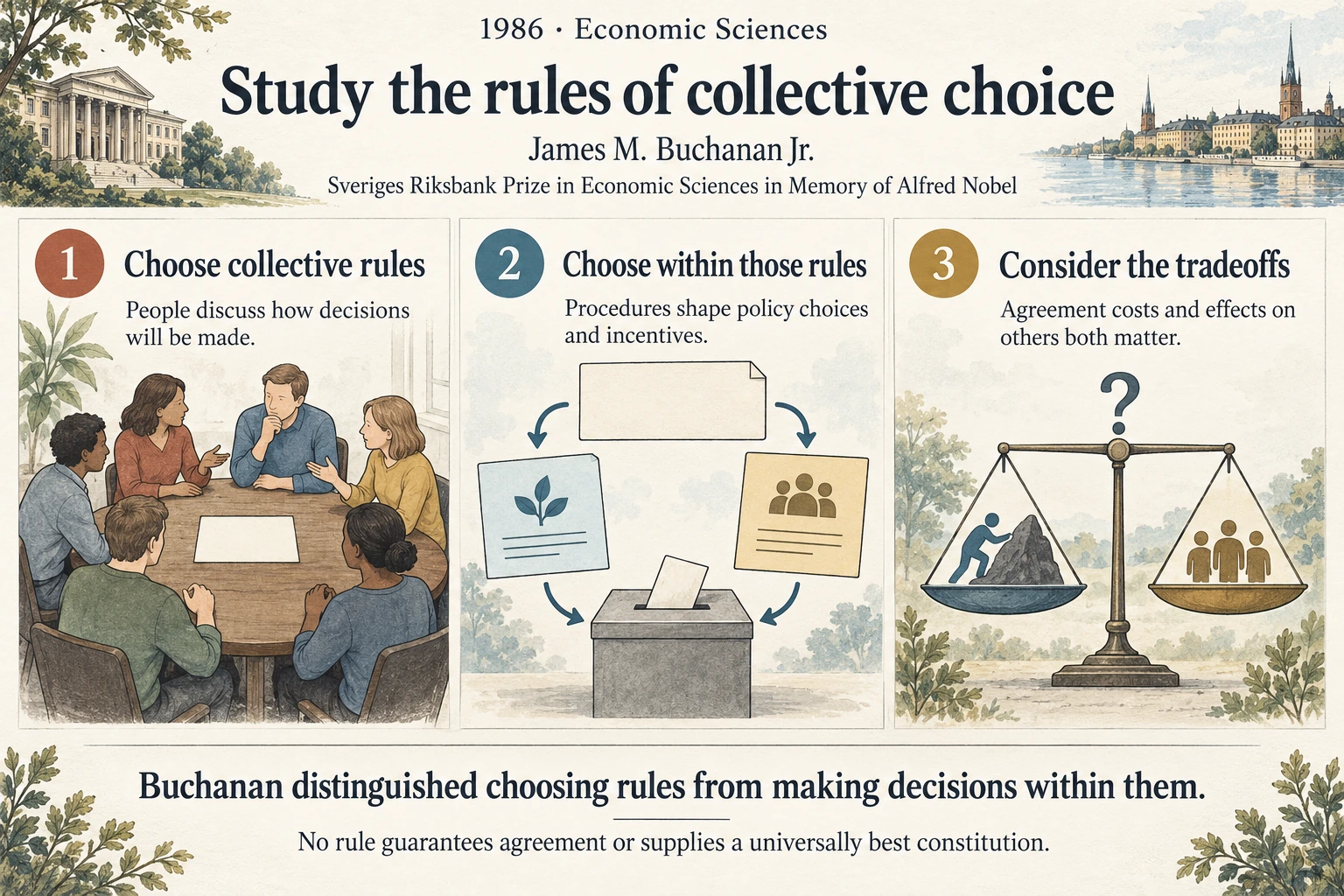
Infographic explaining Study the rules of collective choice
Original AI-generated infographic. A conceptual overview; the explanations and sources below provide context.
Read the poster text

Buchanan distinguished choosing rules from making decisions within them.

  1. Choose collective rules

    People discuss how decisions will be made.

  2. Choose within those rules

    Procedures shape policy choices and incentives.

  3. Consider the tradeoffs

    Agreement costs and effects on others both matter.

No rule guarantees agreement or supplies a universally best constitution.

01 · The discovery

The idea, in everyday language

Collective decisions involve people with preferences and incentives: voters, officials and other participants. Buchanan applied economic reasoning to these processes while asking a separate constitutional question: what rules should people agree to use? Choosing a rule differs from choosing a policy after that rule is in place.

The Calculus of Consent, written with Gordon Tullock in 1962, examined agreement, decision costs and costs imposed on others. A demanding agreement rule can limit imposed costs while making decisions harder to reach. Buchanan’s contractual approach considered mutual advantage and the conditions for cooperation, rather than treating government as an actor automatically serving one shared interest.

Why it matters

The work helped establish public choice and constitutional economics, connecting public finance, incentives and collective rules. Collaboration with Tullock and later Geoffrey Brennan extended the approach. Buchanan received the full Sveriges Riksbank Prize in Economic Sciences in Memory of Alfred Nobel for the contractual and constitutional foundations of decision-making.

02 · The people

Who brought the idea to life?

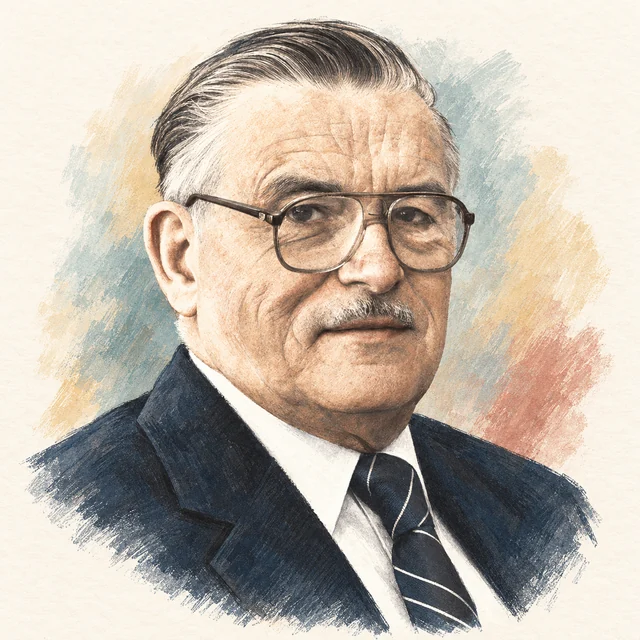
Illustrated portrait of James M. Buchanan Jr.

James M. Buchanan Jr.

Prize share · 1

Buchanan developed the contractual and constitutional foundations of economic and political decision-making. He distinguished choosing collective rules from choosing policies within them, examining incentives, agreement and costs imposed on others. The work includes collaboration with Tullock and Geoffrey Brennan. He received the full Sveriges Riksbank Prize in Economic Sciences in Memory of Alfred Nobel; his award institution was George Mason, rather than the University of Virginia.

Read the biography ↗

03 · Years in the making

The path here

  1. 1948

    Buchanan completes his Chicago doctorate.

  2. 1962

    The Calculus of Consent appears with co-author Gordon Tullock.

  3. 1983

    The public-choice centre moves from Virginia Tech to George Mason.

  4. 1986

    Buchanan receives the full memorial prize at George Mason.

04 · Read further

From the original sources

Original explanations by Curionode, based on the official records below. Biographical details and affiliations refer to the award year.

  1. Official announcement nobelprize.org
  2. George Mason public-choice centre history publicchoice.gmu.edu

More in Economic Sciences

Browse this subject ↗