c.curionodeThe Nobel Archive

1986 · Peace

Turn remembrance into a call for dignity

Wiesel used testimony and public advocacy to challenge indifference to persecution.

testimonyHolocaust remembrancehuman dignityindifference
1986Peace

Visual guide

The prize, pictured

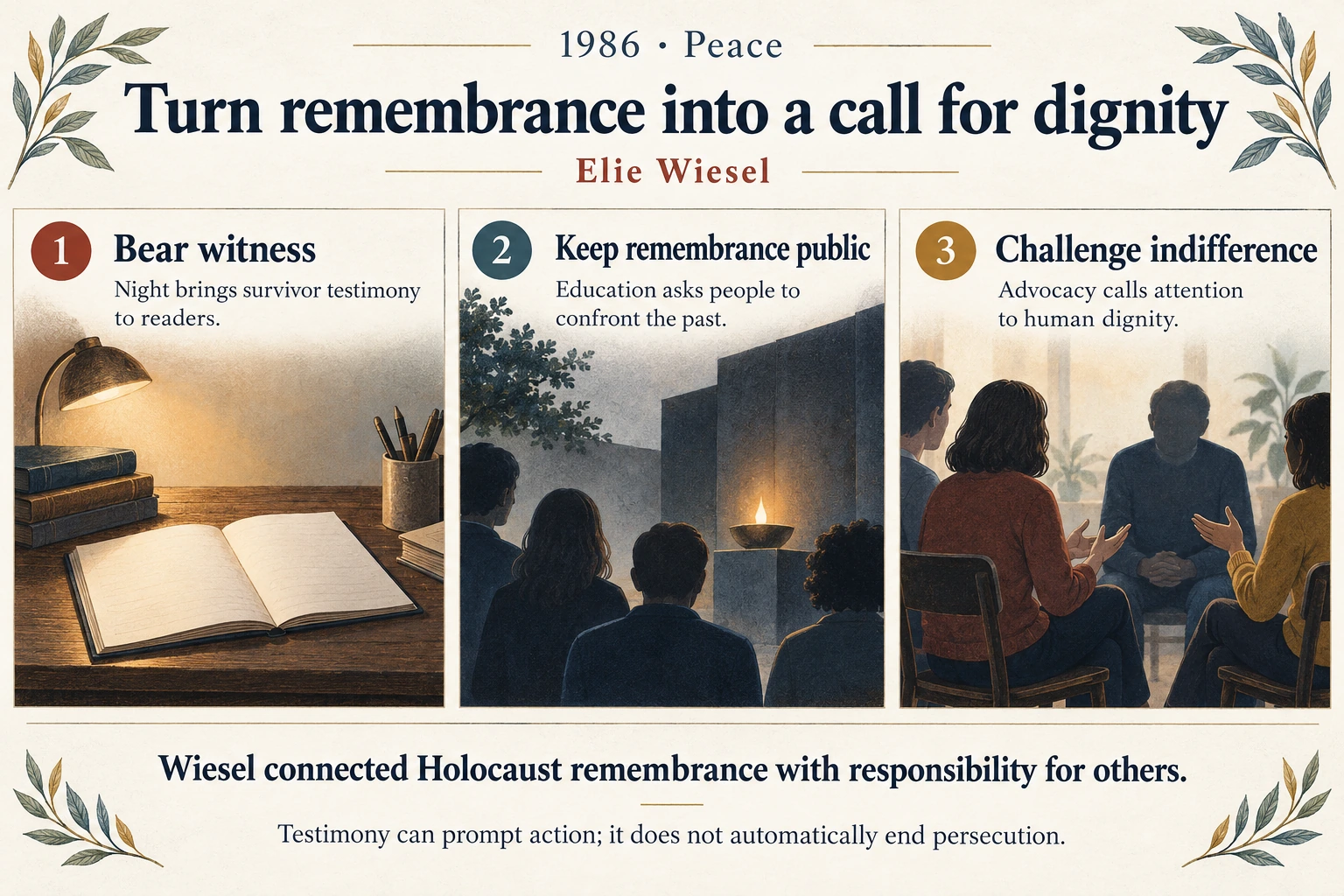
Infographic explaining Turn remembrance into a call for dignity
Original AI-generated infographic. A conceptual overview; the explanations and sources below provide context.
Read the poster text

Wiesel connected Holocaust remembrance with responsibility for others.

  1. Bear witness

    Night brings survivor testimony to readers.

  2. Keep remembrance public

    Education asks people to confront the past.

  3. Challenge indifference

    Advocacy calls attention to human dignity.

Testimony can prompt action; it does not automatically end persecution.

01 · The contribution

The idea, in everyday language

A survivor of the Holocaust, Wiesel wrote about persecution, loss and survival. His memoir Night, first published in French in 1958, made personal testimony part of wider public remembrance. Writing and teaching invited readers to confront what happened and consider their responsibilities toward others.

His advocacy linked the memory of victims with attention to people facing oppression. He helped develop Holocaust remembrance in the United States and chaired the Holocaust Memorial Council from 1980 to 1986. The Peace Prize recognised his role as a messenger to humanity, highlighting dignity, resistance to indifference and responsibility for the persecuted.

Why it matters

Wiesel helped make survivor testimony and Holocaust remembrance central to public education. His efforts contributed to the U.S. Holocaust Memorial Museum, opened in 1993. The 1986 prize honoured his message and advocacy while that institution was still being developed. He received the full Peace Prize.
02 · The people

Who brought the idea to life?

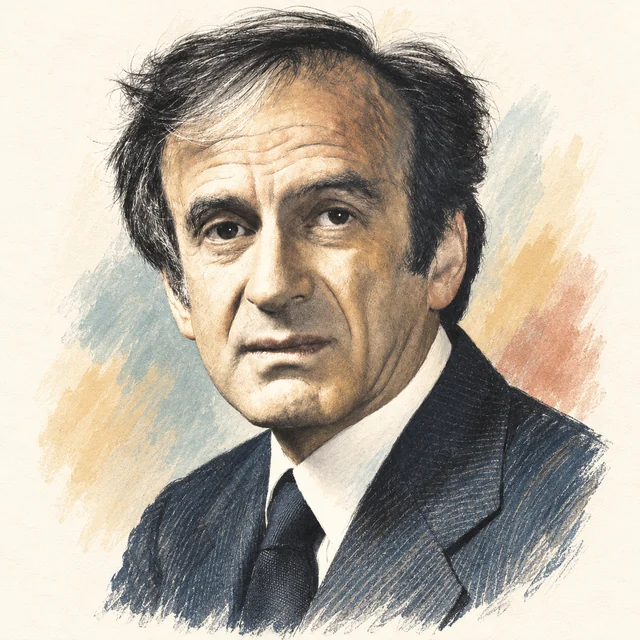
Illustrated portrait of Elie Wiesel

Elie Wiesel

Prize share · 1

Through testimony, writing and public advocacy, Wiesel challenged indifference to persecution and connected Holocaust remembrance with human dignity. He chaired the U.S. Holocaust Memorial Council from 1980 to 1986, following an earlier presidential commission. The Peace Prize recognised his role as a messenger to humanity and advocate for the oppressed. He received the full prize; the museum opened after the award.

Read the biography ↗

03 · Years in the making

The path here

  1. 1945

    Wiesel is liberated from Buchenwald at sixteen.

  2. 1958

    The French memoir Night is published.

  3. 1980–1986

    He chairs the U.S. Holocaust Memorial Council.

  4. 1986

    The Peace Prize recognises his message and advocacy.

04 · Read further

From the original sources

Original explanations by Curionode, based on the official records below. Biographical details and affiliations refer to the award year.

  1. Official announcement nobelprize.org
  2. U.S. Holocaust Memorial Museum biography of Wiesel encyclopedia.ushmm.org