01 · The contribution
The idea, in everyday language
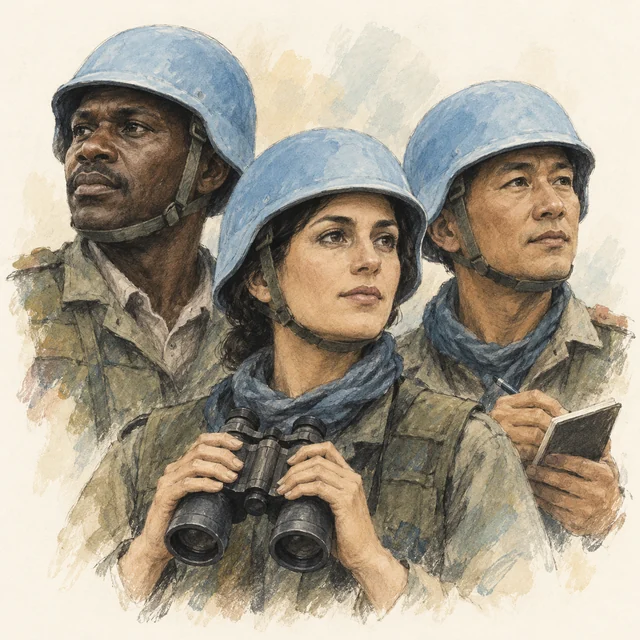
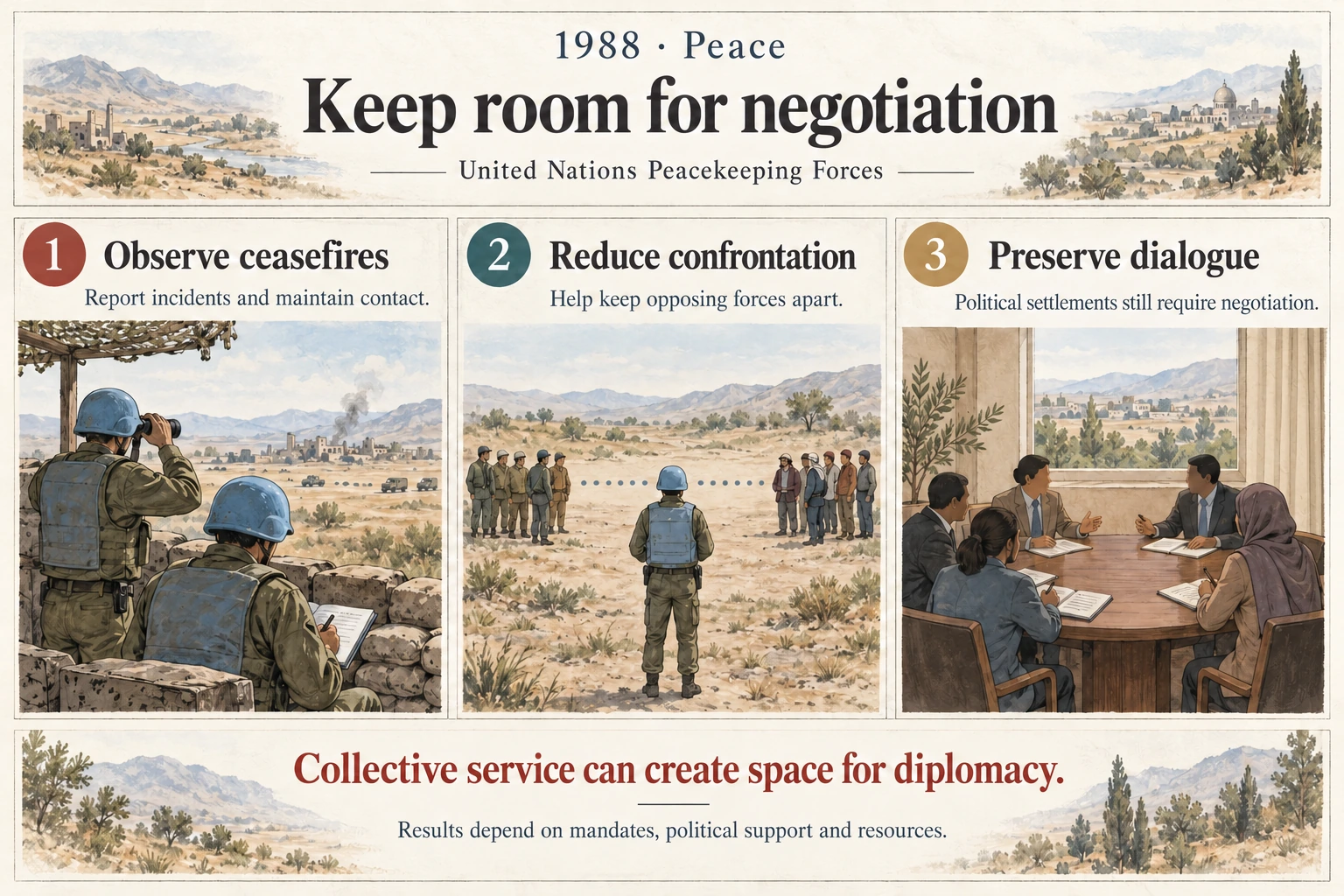
A ceasefire can reduce fighting without ending the underlying conflict. Peacekeeping personnel observe agreed lines, report incidents, maintain contact and help prevent local confrontations from growing. UN operations depend on political decisions and personnel contributed by member states. Peacekeeping began with unarmed observers in 1948; the first armed force followed in 1956.
The 1988 prize recognised this collective service. Monitoring and separating forces can preserve space for diplomacy, but do not by themselves deliver a lasting political settlement. Peacekeepers operate under different mandates and face risks and limits. The recipient was the UN Peacekeeping Forces, not a single leader and not the whole United Nations.
Why it matters
The prize recognised international cooperation through practical service. Later missions took on wider civilian and security tasks. Failures to protect civilians in Rwanda and Srebrenica during the 1990s led to UN inquiries and reassessment, and belong in the history alongside achievements.