c.curionodeThe Nobel Archive

1988 · Literature

Tell a changing city through its lives

Mahfouz’s Arabic fiction connects Cairo’s neighbourhoods, families and social questions.

Arabic literatureCairofamily narrativeallegory
1988Literature

Visual guide

The prize, pictured

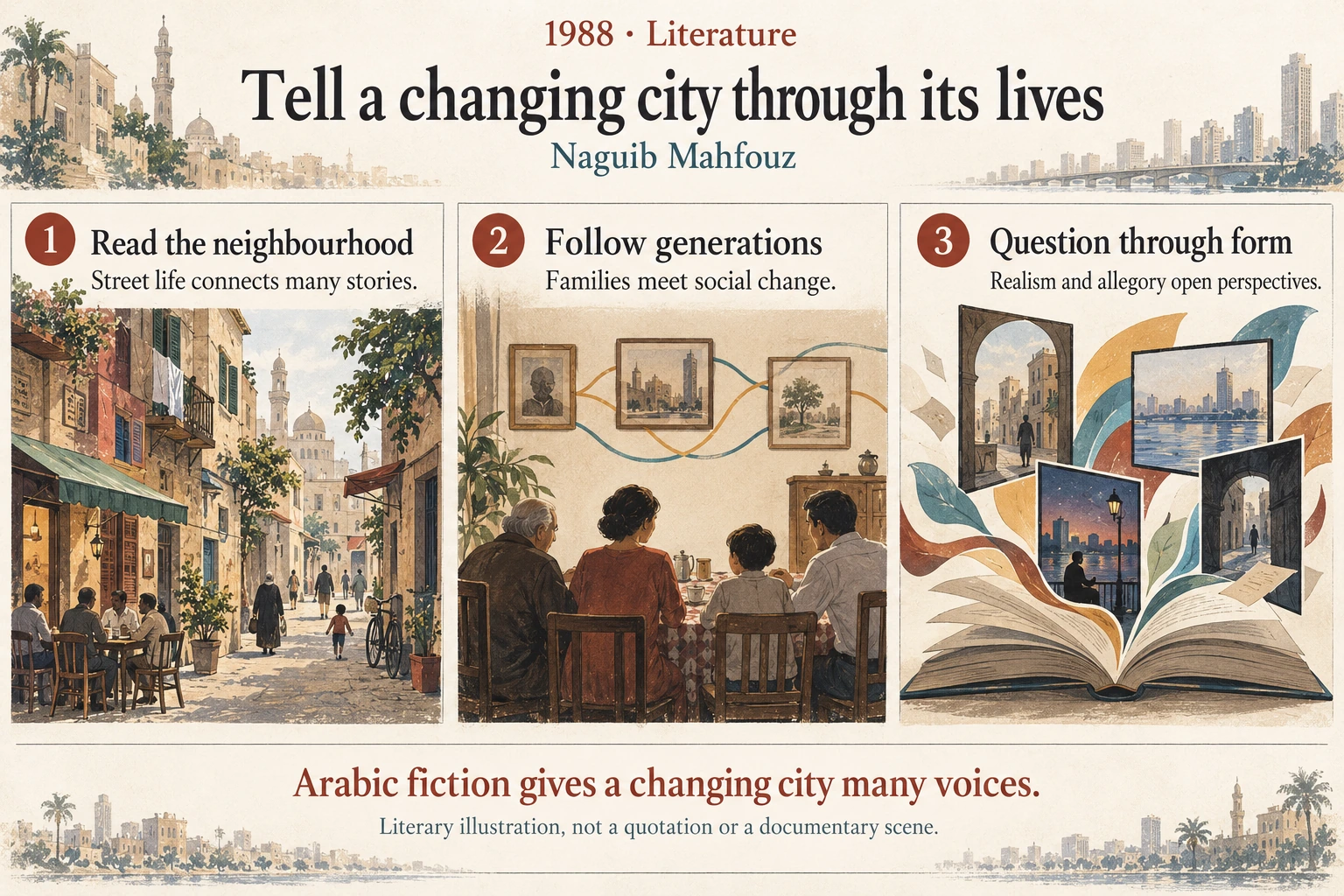
Infographic explaining Tell a changing city through its lives
Original AI-generated infographic. A conceptual overview; the explanations and sources below provide context.
Read the poster text

Arabic fiction gives a changing city many voices.

  1. Read the neighbourhood

    Street life connects many stories.

  2. Follow generations

    Families meet social change.

  3. Question through form

    Realism and allegory open perspectives.

Literary illustration, not a quotation or a documentary scene.

01 · The contribution

The idea, in everyday language

Mahfouz gave a changing Cairo many voices. His novels follow households, streets and competing hopes, linking intimate choices to social pressures. Midaq Alley and the Cairo Trilogy offer different scales of this attention: a neighbourhood and a family across generations.

His work also moves beyond straightforward realism. Allegory, shifting viewpoints and experimental forms ask how belief, authority and freedom shape human life. Short stories belong to this achievement alongside novels. In 1988 he became the first Arabic-language recipient of the Literature Prize.

Why it matters

The award brought international attention to a major Arabic literary body of work and to translation across languages. Mahfouz’s long career included civil service, censorship disputes and formal experimentation. Recognition of his literature does not make him the inventor of the Arabic novel or the representative of every Arabic writer.

02 · The people

Who brought the idea to life?

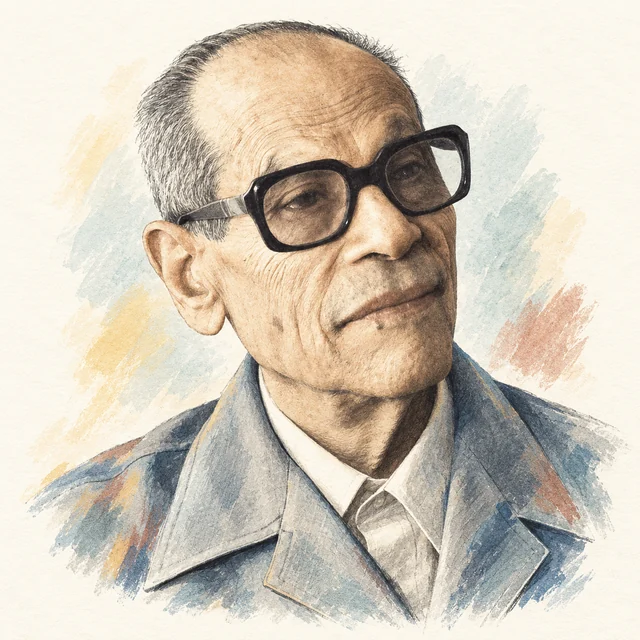
Illustrated portrait of Naguib Mahfouz

Naguib Mahfouz

Prize share · 1

Mahfouz made ordinary lives, family tensions and social change central to a large body of Arabic fiction. Realist scenes coexist with symbolic and questioning narratives. His achievement includes sustained portrayals of a changing city and experiments in how stories can examine belief, authority and freedom. The award recognised his literary work as a whole, rather than treating novels as factual reports on every Egyptian or Arab community.

Read the biography ↗

03 · Years in the making

The path here

  1. 1934

    Mahfouz graduates in philosophy and develops a writing career alongside civil service.

  2. 1947

    Midaq Alley appears in Arabic.

  3. 1956–1957

    The Cairo Trilogy appears in Arabic.

  4. 1988

    Mahfouz receives the Literature Prize.

04 · Read further

From the original sources

Original explanations by Curionode, based on the official records below. Biographical details and affiliations refer to the award year.

  1. Official announcement nobelprize.org
  2. Official bibliography and translation records nobelprize.org

More in Literature

Browse this subject ↗