c.curionodeThe Nobel Archive

1989 · Literature

Make many lives visible through prose

Cela used confession, montage and formal experimentation to explore human vulnerability.

Spanish proseThe Hivemontagehuman vulnerability
1989Literature

Visual guide

The prize, pictured

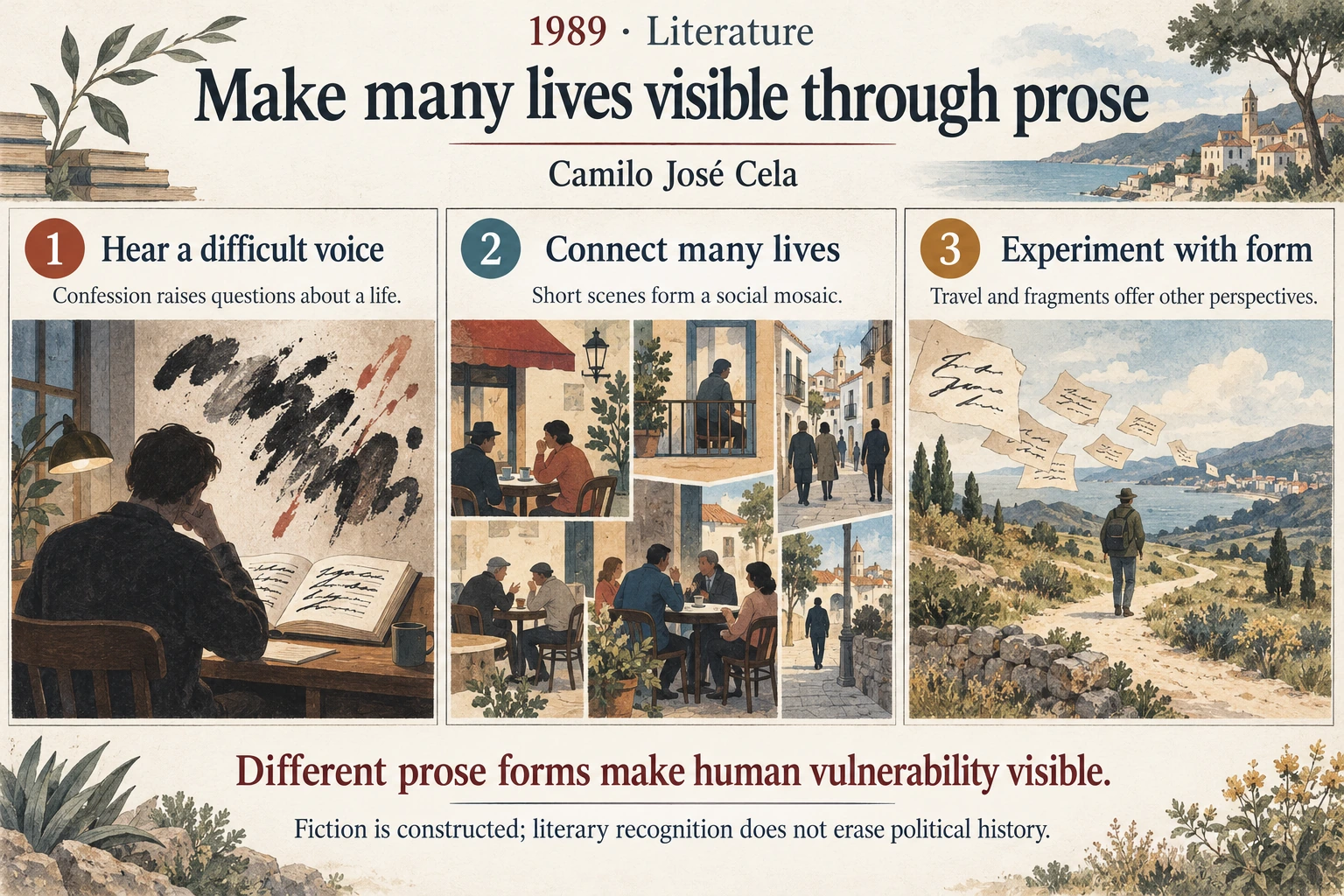
Infographic explaining Make many lives visible through prose
Original AI-generated infographic. A conceptual overview; the explanations and sources below provide context.
Read the poster text

Different prose forms make human vulnerability visible.

  1. Hear a difficult voice

    Confession raises questions about a life.

  2. Connect many lives

    Short scenes form a social mosaic.

  3. Experiment with form

    Travel and fragments offer other perspectives.

Fiction is constructed; literary recognition does not erase political history.

01 · The contribution

The idea, in everyday language

Cela’s prose changes form across works. The Family of Pascual Duarte uses a violent life narrated as a confession, confronting readers with deprivation and choices without making the speaker’s account an unquestionable explanation. The Hive assembles numerous short scenes and voices in postwar Madrid. Cafés, streets and conversations connect many lives rather than organising the city around one hero.

Travel writing such as Journey to the Alcarria attends to places and people through observation, while later novels extend experiments with time, voice and fragmentation. The Nobel award recognised a wider body of prose marked by a vision of human vulnerability. His literary career took place amid dictatorship and censorship, with a complicated personal relationship to that system: his writing faced censorship, and he also worked as a censor.

Why it matters

Cela expanded ways of representing social life through Spanish prose, moving among confession, ensemble narration and fragmented forms. The Hive first appeared in Buenos Aires in 1951 because Spanish censorship blocked it. Different editions followed; an official Spanish edition appeared in 1963 after earlier Barcelona printings carried a Mexican imprint. The award recognises literary work and does not erase his service on Franco’s side or his censorship work.

02 · The people

Who brought the idea to life?

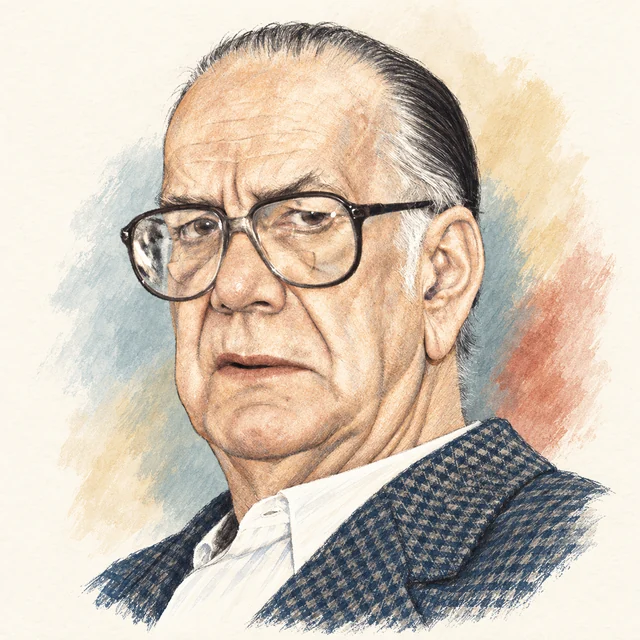
Illustrated portrait of Camilo José Cela

Camilo José Cela

Prize share · 1

Cela experimented with confession, many-voiced montage, travel observation and fragmented prose to depict vulnerability, deprivation and violence. The Hive brings together numerous lives in postwar Madrid rather than following one heroic protagonist. The award recognised his wider body of prose and its vision of human vulnerability, not a single novel or an endorsement of his political conduct. His own censorship work complicates a simple picture of him as an opponent of censorship.

Read the biography ↗

03 · Years in the making

The path here

  1. 1942

    The Family of Pascual Duarte is published.

  2. 1948

    Journey to the Alcarria is published after a 1946 journey.

  3. 1951

    The Hive first appears in Buenos Aires.

  4. 1989

    Cela receives the Literature Prize for his wider prose achievement.

04 · Read further

From the original sources

Original explanations by Curionode, based on the official records below. Biographical details and affiliations refer to the award year.

  1. Official announcement nobelprize.org
  2. Cela Foundation chronology cervantesvirtual.com
  3. Academies’ history of The Hive editions asale.org
  4. Instituto Cervantes biographical account blogs.cervantes.es

More in Literature

Browse this subject ↗